Incheon Chinatown & Korea’s Gaehangjang Street (Open Port District)
A rainy day walk through red streets, a jajangmyeon museum, a hidden cathedral, and 140 years of Korean modern history
April 8th. Raining. We parked at the public lot and walked in — and Incheon Chinatown opened up around us in red and gold. But this place is so much more than Jajangmyeon and lanterns. By the end of the day, we’d walked through 140 years of Korean history — Chinese settlers, Catholic martyrs, Japanese colonial banks, and Korea’s very first national flag.
This is Slow & Healing Travel. No rush. No highlights reel. Just real streets, real stories, and everything in between.
👉 Watch the full Incheon Chinatown tour below!
Incheon Chinatown Street


Everything is red here — because of course it is. 🔴🏮 In Chinese culture, red means luck, prosperity, and joy, and Chinatown wears it proudly from the road surface to the lanterns overhead.
The streets are lined with vendors selling everything from Gonggal-ppang (hollow crispy bread), freshly cut sugarcane juice, whole fried squid, lamb skewers, to tanghulu — and every single vendor was so kind, always eager to explain everything. That’s rare. 🏮
You’ll also spot Gonggal-ppang free samples, Bian Lian masks on display — the ancient art of face-changing Peking opera 🎭 — and a black & white photo studio where you can get a print with a paper frame for just ₩5,000 (~$3.33). Total steal.
“전품목 3,900원 for everything” stores are EVERYWHERE here 🛍️
Is this a thing now?
Gonghwachun Jajangmyeon Museum
🚫 Closed Mondays
🎟️ ₩1,000 (~$0.67) entry
📸 No filming inside — photos only
Est. 1911. From elite dining hall to the birthplace of Jajangmyeon — now a museum. 🍜
The building was constructed in 1908 by craftsmen from Shandong, China. The restaurant Gonghwachun opened in 1912 — renamed to celebrate the founding of the Republic of China, meaning “Spring of the Republic.” It was one of the finest Chinese restaurants in the region for over 70 years, before closing in 1983. In 2012, Incheon Jung-gu acquired the building and reopened it as the Jajangmyeon Museum — Korea’s first Jajangmyeon-themed museum and a National Registered Cultural Heritage Site. 🏛️
The OG Korean-style black bean paste. No this sauce, no Jajangmyeon. 🖤
From the 60s to now — the glow up is real. The variety? Insane. 🍜
Wooden box → iron box → bicycle. Old school grind. 🚲
A piece of history — the OG stock certificate. 📜
A photography exhibit capturing 1960s Incheon Chinatown through two iconic photographers. 📷
Back in the day, graduation meant the whole family gathering for Jajangmyeon. A tradition. 🍜 Walked in curious. Walked out a Jajangmyeon historian. No cap.
Haean Catholic Cathedral
Stumbled upon the cutest little cathedral. Totally unexpected. 😍⛪
Haean Cathedral, est. 1960 — the heart of Chinatown’s Catholic community. A rainy day hidden gem. It was founded for Incheon’s Chinese Hwagyo community by American Maryknoll missionaries. As the Hwagyo population declined, it became a joint Korean-Chinese parish in 1972, and eventually a Korean Catholic church. Today, it also oversees the nearby Chemulpo Martyrs’ Shrine. ⛪
Small church, big beauty. Hidden details that stay with you.
Small. Quiet. Sacred. There’s something about praying in an empty church. Pure peace. 🙏
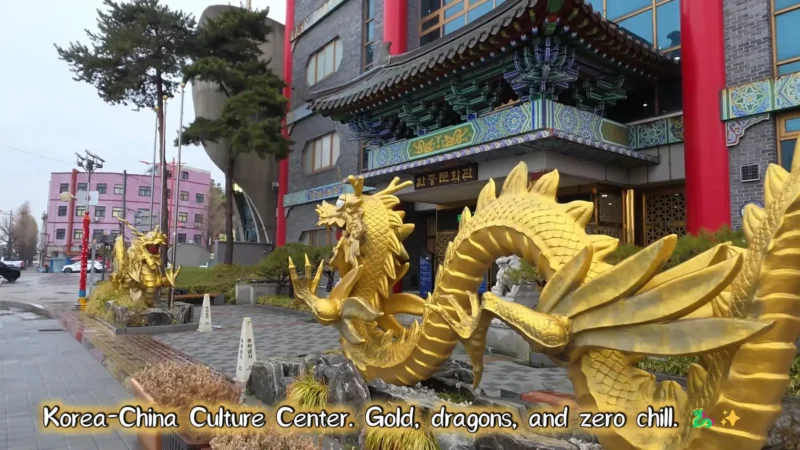
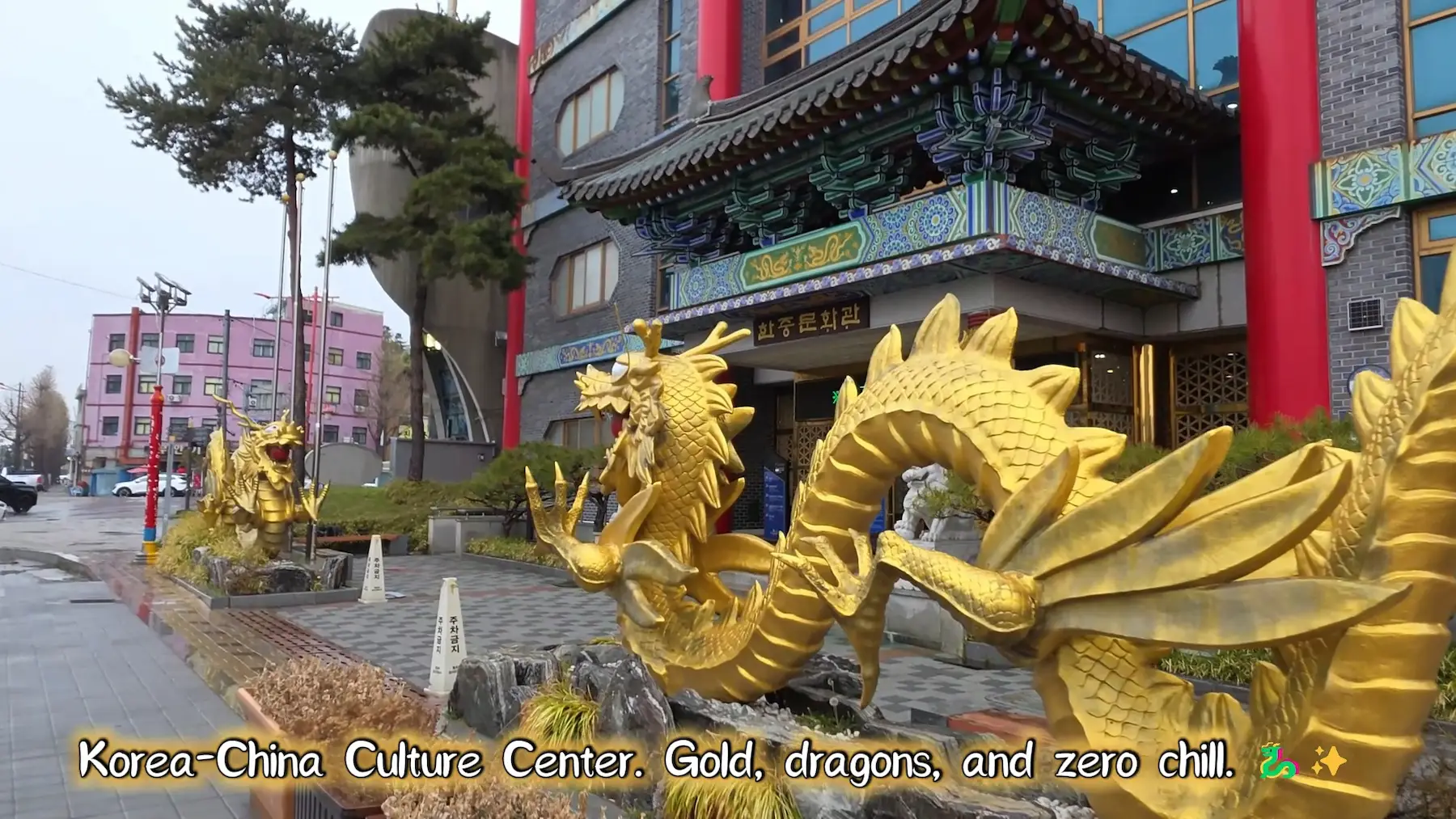
Korea-China Culture Center (한중문화관)
Est. 2005. Four floors of Chinese history, culture, and art — gallery, exhibition halls, a Qipao dress experience, and a 200-seat performance hall. Everything is larger than life here. 🐉✨
Chemulpo (Jemuljin) Martyrs’ Shrine
Chemulpo Martyrs’ Shrine — a boat-shaped monument marking one of Korea’s most sacred Catholic sites.
During the Joseon persecution of 1868 and 1871, 10 Catholic believers were executed for their faith right here. Ten lives. One conviction.
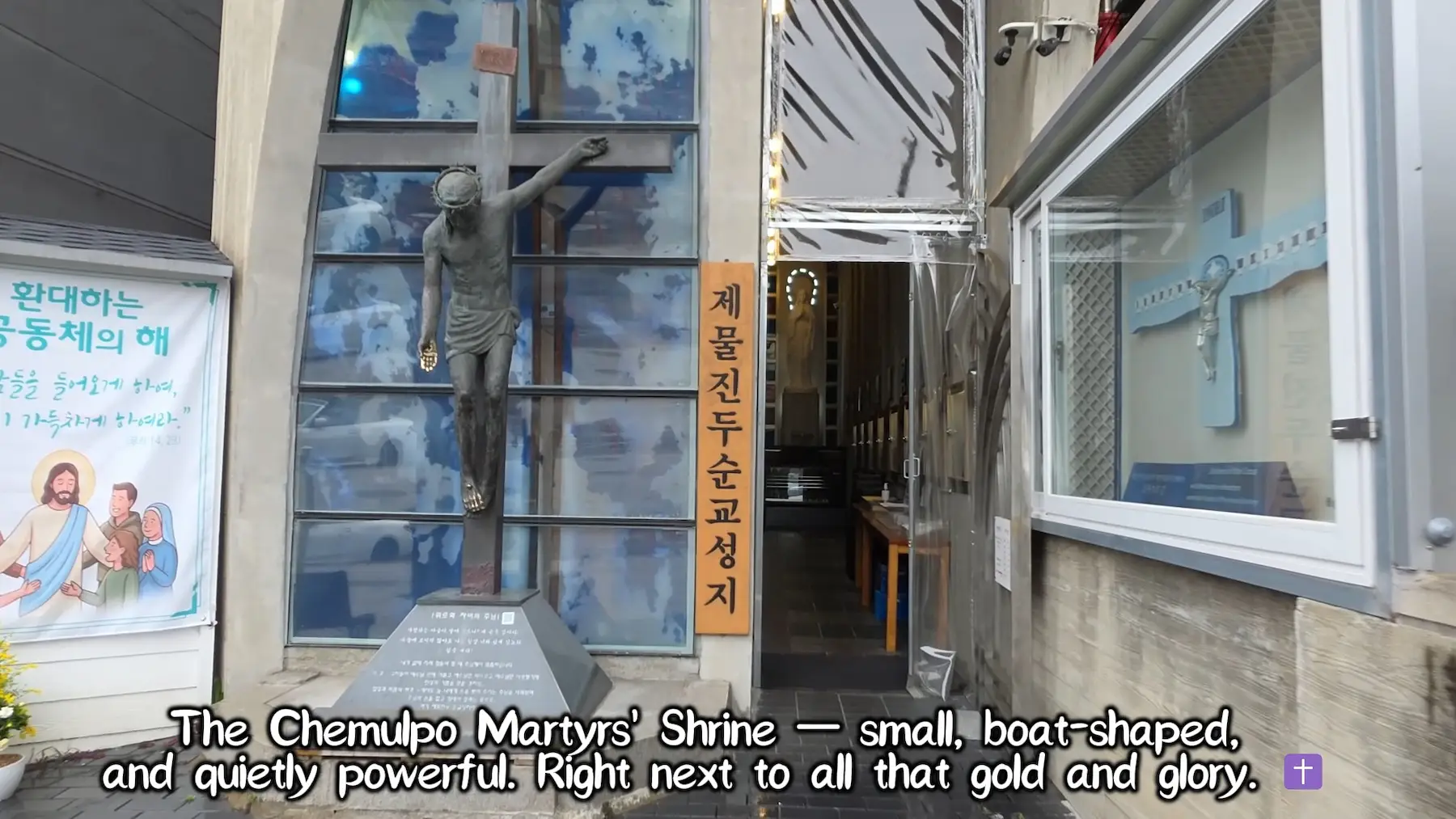
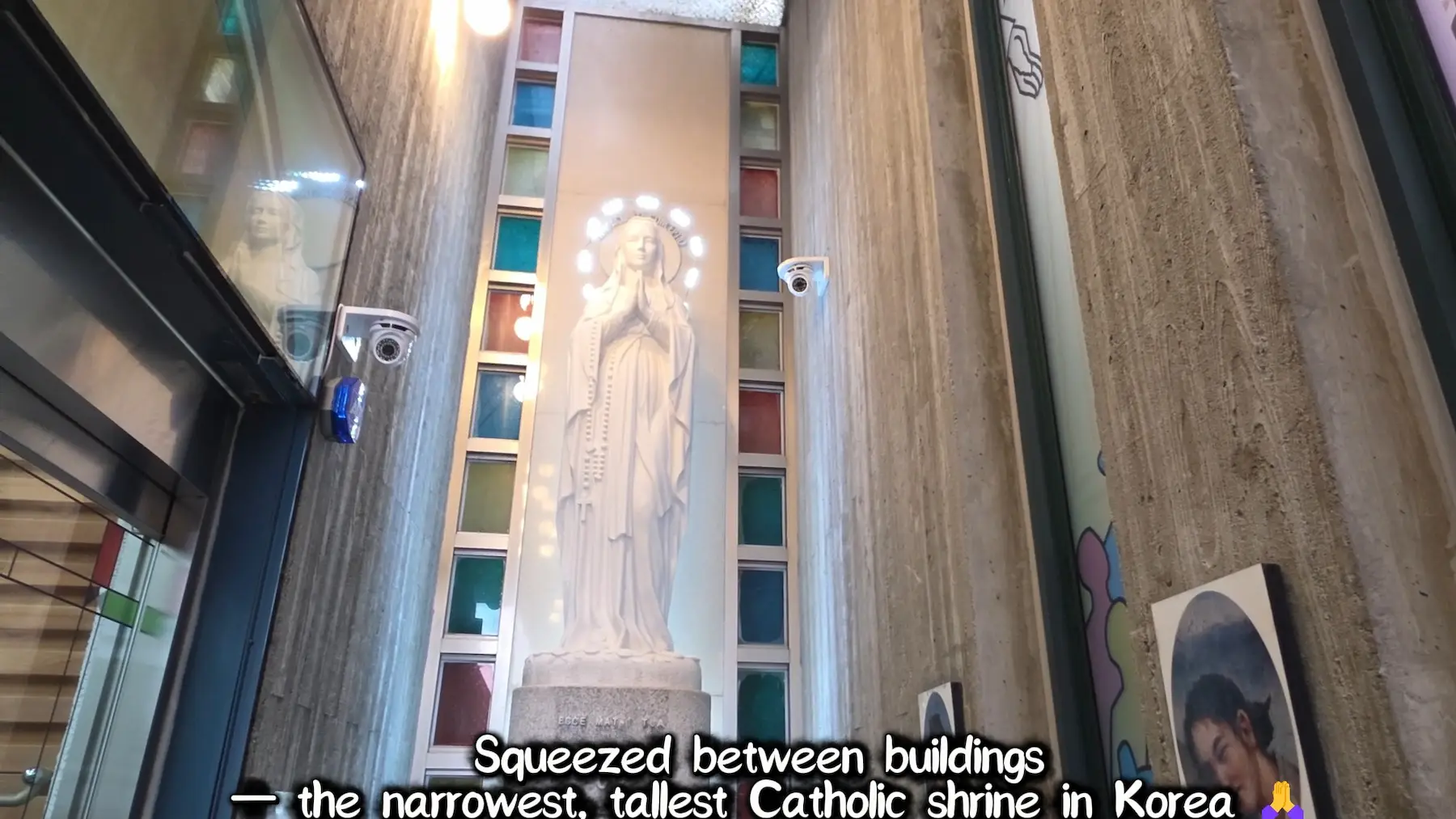
And from this very port, Korea’s first Catholic priest — Father Andrew Kim Dae-geon — set sail for Shanghai in 1845 to be ordained. A journey that changed Korean Catholic history.
The 15m-high chapel exterior is shaped like a blooming flower reaching toward heaven — and Jesus’s hands embracing the martyrs. At the entrance, the Lord of Comfort and Mercy extends his right arm to welcome pilgrims.
The smallest places sometimes carry the heaviest stories. 🙏✝️
Gaehangjang (Open Port) Street
Gaehangjang Street. 1883. The street that opened Korea to the world — and the buildings are still standing. 🚢🏛️
The Open Port Street divides two worlds: on one side, Chinatown (former Qing Dynasty concession). On the other, the old Japanese district — where colonial-era buildings still stand intact.
From Japanese shipping company to war headquarters to art space. History runs deep here. Now part of Incheon Art Platform. 🏛️

Built during King Gojong’s reign. Designed by Japanese architect Niinoi Takamasa — every material except sand, gravel, and lime was shipped from Japan. Late Renaissance style. Now the Incheon Open Port Museum. 🏛️

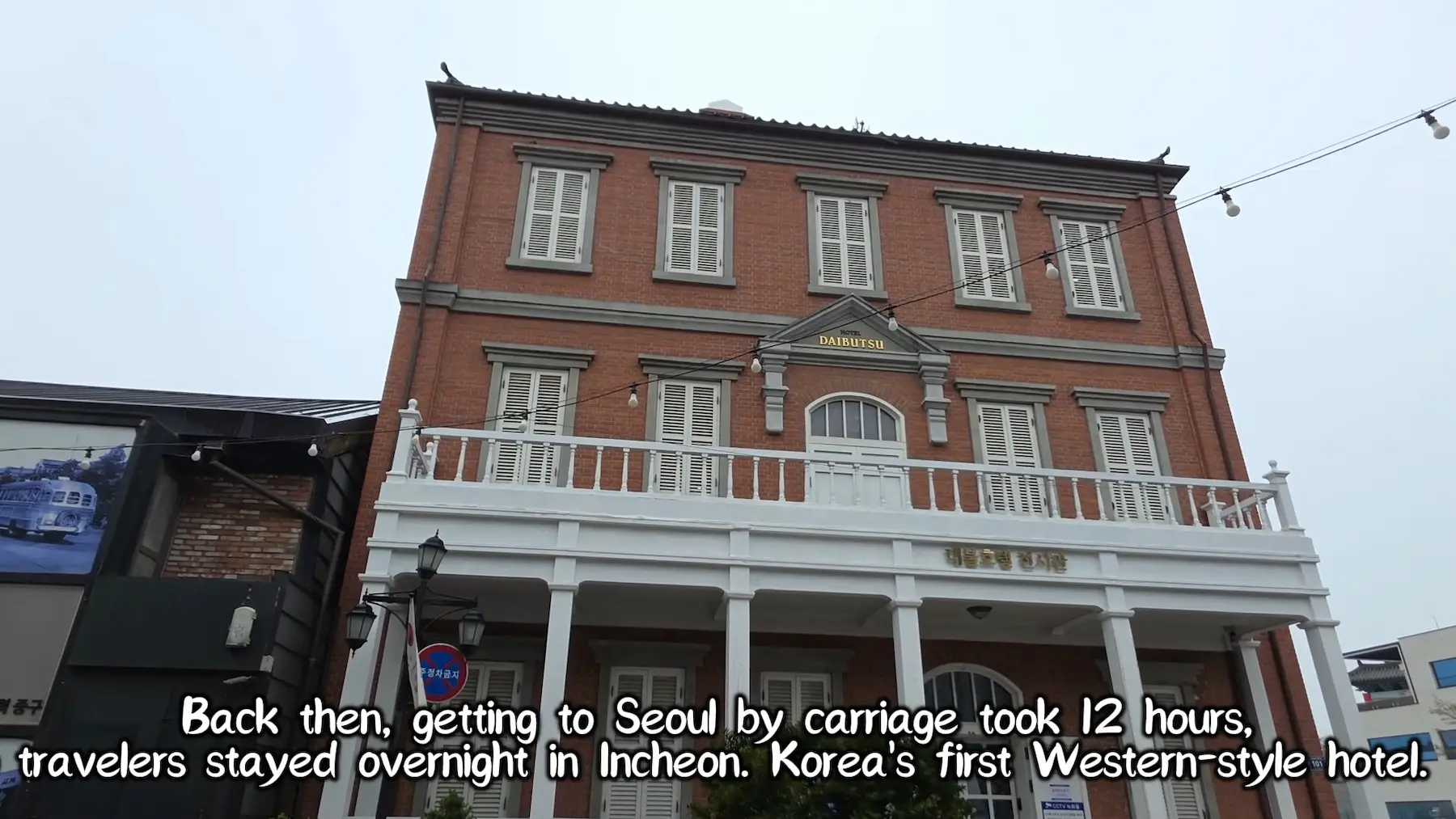
Korea’s first Western-style hotel, built for foreign visitors at Incheon Port. Back then, getting to Seoul by carriage took 12 hours. By 1918 it became Jungwha-ru, a famous Beijing cuisine restaurant. One building, two stories. 🏨
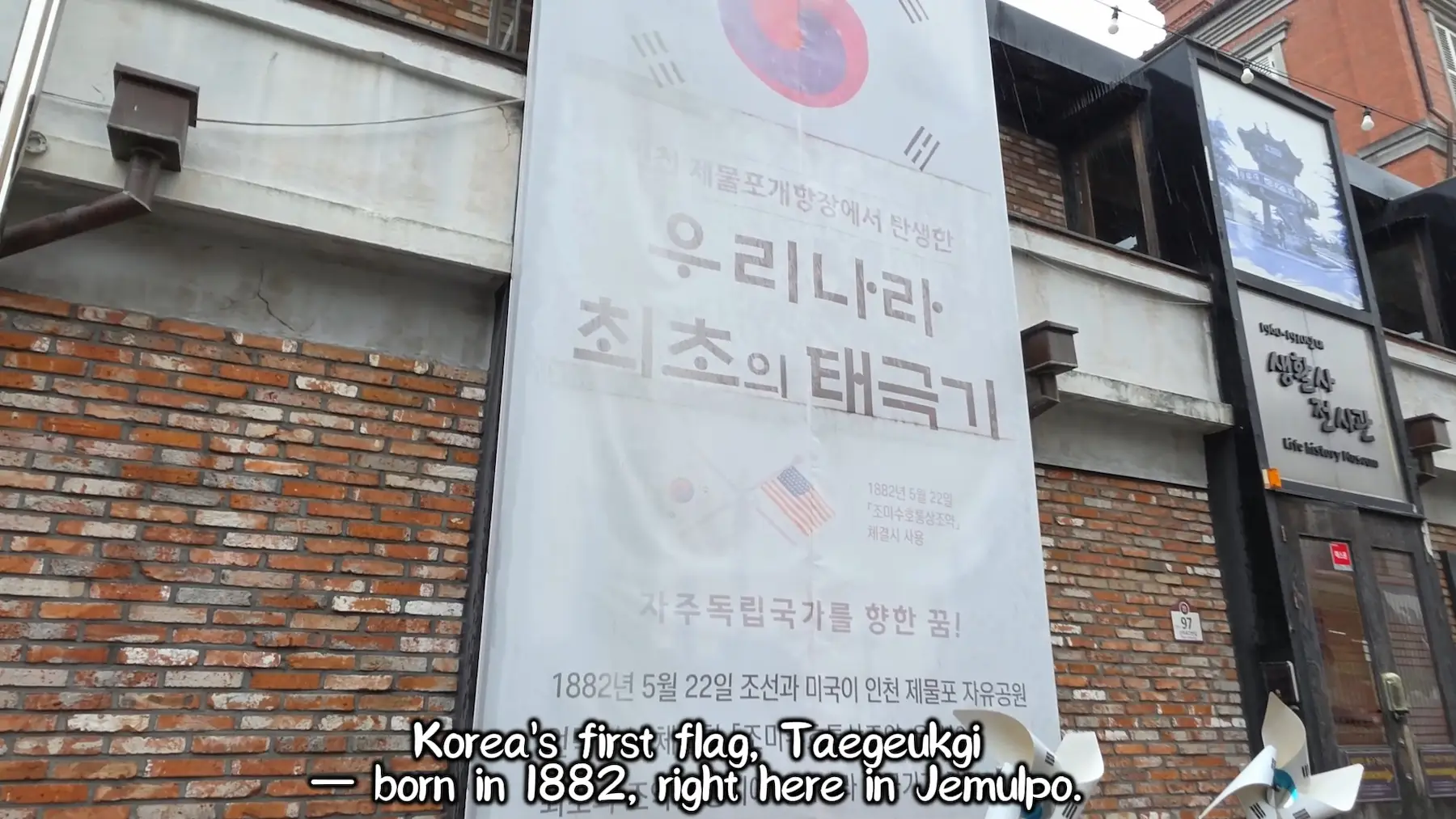
Korea’s First Taegukgi
Korea’s first flag — born in 1882, right here in Jemulpo. During the signing of the Korea-US Treaty, Korea raised its national flag for the first time. This is where Korea first showed its flag to the world.
Gonghwachun Restaurant — We Ate Here
The current Gonghwachun restaurant opened in 2004 and is a separate establishment from the original — but it carries on the Jajangmyeon legacy. Huge inside. Packed already — even on a rainy day. Gonghwachun stays winning. 🍜
Our Order: The Holy Trinity 🍜🥟
Travel Tips
More Korea Travel Guides