Introduction to Gongju Travel Guide
Gongju — An Ancient Capital Where Baekje Still Breathes
Gongju is a city located in the heart of Chungcheongnam-do (South Chungcheong Province), and one of Korea’s most historically significant ancient capitals. Known as Ungjin (熊津) during the Three Kingdoms period, it served as the capital of the Baekje Kingdom from 475 to 538 AD. The origin of the city’s name is a fascinating story in itself. According to legend, a female bear living on Yeonmisan Mountain near the Geumgang River abducted a fisherman and had children with him. When the fisherman eventually escaped across the river, the heartbroken bear threw herself into the water with her cubs. From this tale came the name “Gomnaru” (Bear Ferry), written in Chinese characters as Ungjin (熊津). After the Joseon Dynasty, the name evolved into Gongju (公州), with the character “gong (公)” chosen as a phonetic approximation of the word “gom,” meaning bear.

The Baekje Kingdom, founded in 18 BC and lasting until its fall in 660 AD — a span of 700 years — played a central role in spreading culture across East Asia through active exchange with China and Japan. Gongju was the royal capital during that Ungjin era, and the city remains rich with Baekje relics and heritage sites, set against the backdrop of Gyeryongsan Mountain and the Geumgang River. During the Joseon Dynasty, the provincial government office (Gamyeong) was established here, and Gongju served as the seat of South Chungcheong Province until 1932. In other words, Gongju is a city where thousands of years of history coexist — from Baekje royal capital to Joseon administrative center to modern city. It is home to three UNESCO World Heritage Sites: Gongsanseong Fortress, the Royal Tomb of King Muryeong and the Royal Tombs (formerly Songsan-ri Tomb Cluster), and Magoksa Temple. The city’s most beloved local specialty is the chestnut (밤, bam).
📍 Ungjin-dong Cluster — Hanok Village · Gomnaru · Gongsanseong
Gongju Hanok Village, Gomnaru, the Royal Tomb of King Muryeong, and the National Museum of Gongju are all clustered in the Ungjin-dong area — close enough to explore on foot or by bicycle.
🏡 Gongju Hanok Village
Nestled between the Royal Tomb of King Muryeong and the National Museum of Gongju, in the heart of Gongju’s tourism district, this traditional Korean house (hanok) experience facility was established in 2012. Built using eco-friendly pine and cedar laminated timber, the village comprises 22 buildings and 57 rooms in total. The accommodations are designed to offer ondol (Korean underfloor heating) experiences using traditional heated stone floors, making it a popular choice for family trips and group retreats. Beyond overnight stays, visitors can enjoy a wide range of Baekje cultural experience programs, including trying on hanbok (traditional clothing), traditional crafts, and Korean food-making. You can stroll along the village’s walking trail or rent a bicycle to reach nearby Gongsanseong Fortress or the Royal Tombs. Just on the other side of the village wall stands a restored building of Seonhwadang Hall, where Joseon-era provincial governors once conducted their official duties (Chungcheongnam-do Tangible Cultural Heritage No. 92), adding an extra layer of historical atmosphere. The village received the International Public Design Award in 2012 and was designated an Outstanding Hanok Stay by the Korea Tourism Organization in 2014.


📍 12 Gwangwangdanji-gil, Ungjin-dong, Gongju, Chungcheongnam-do 🕘 Open year-round / Check-in 15:00, Check-out 11:00 💰 Free admission / Accommodation fees vary (see official website) 📞 041-881-2828
🌊 Gomanaru (National Scenic Site No. 21)
This is where Gongju began. The name Gomanaru comes from “goma (固麻),” an ancient word for bear, written in Chinese as Ungjin (熊津). This was the crossing point used by King Munjuwang of Baekje when he relocated the capital to Ungjin, and later the site where Tang Dynasty general Su Dingfang stationed his forces during the Silla-Tang allied attack on Baekje. After Baekje’s fall, the Ungjin Protectorate was established here — making Gomanaru a central stage of Baekje history and a key gateway for international traffic. Today, a dense pine forest of over 450 trees lines the riverbank, offering a peaceful walking path. Within the grove stands the site of Ungjindan, an altar where ancestral rites were performed to the water deity of the Geumgang River from the Baekje period through the Joseon Dynasty. In 1975, a stone bear figurine was actually discovered near Gomanaru — it can now be seen at the National Museum of Gongju. Bear sculptures scattered throughout the forest bring the legend to life, making this a great spot to explore with children. Gomanaru was designated National Scenic Site No. 21 in 2006 in recognition of its outstanding historical, cultural, and scenic value.


📍 Gomanaru Area, Ungjin-dong, Gongju, Chungcheongnam-do 🕘 Always open / Free admission
🏯 Gongsanseong Fortress (Historic Site No. 12 / UNESCO World Heritage Site)
Gongsanseong is the royal fortress that defined the Ungjin Baekje era. It was built to protect Gongju, the capital of Baekje, during the 64 years spanning five reigns — from King Munjuwang’s relocation of the capital from Hanseong (present-day Seoul) to Ungjin in 475 AD, to King Seongwang’s move to Buyeo in 538 AD. In 2015, it was inscribed as part of the Baekje Historic Areas UNESCO World Heritage Site. The fortress walls stretch 2,660 meters along a ridgeline 110 meters above sea level. Originally an earthen rampart built during the Baekje period, it was reconstructed in stone during the Joseon Dynasty. Within the fortress, you can find the presumed royal palace site, the Imnyu Pavilion site and lotus pond from the Baekje era, and Joseon-era structures including Ssangsujeon Pavilion and Yeongeunsaa Temple. There are two trail options: a full one-hour circuit following the entire fortress wall, or a shorter 30-minute loop taking in Ssangsujong Pavilion and the presumed palace site. Either way, the scenery — the Geumgang River winding through the landscape, framed by lush forest — makes this a wonderful place to walk and breathe in the spirit of Baekje.


📍 53-51 Geumseong-dong, Gongju, Chungcheongnam-do 🕘 09:00 – 18:00 💰 Adults ₩3,000 / Teenagers ₩2,000 / Children ₩1,000
🛍️ Gongju Sanseong Market
A traditional market situated right at the foot of Gongsanseong Fortress. Established in 1937, it has long served as the everyday market for Gongju residents — and since there are no large chain supermarkets in the city, this market plays an especially vital role in local life. A five-day market (oiljang) is held on days ending in 1 and 6 each month. The market is a great place to pick up chestnut-based local products — including chestnut pies, chestnut snacks, and chestnut makgeolli (rice wine) — all showcasing Gongju’s most famous specialty. The food stalls and rice cake shops tucked into the market alleys are equally worth a browse. Designated as a Cultural Tourism Market, Gongsanseong Sanseong Market was selected as one of Korea’s Top 50 Traditional Markets Worth Visiting.


📍 22 Yongdang-gil, Sanseong-dong, Gongju, Chungcheongnam-do 🕘 08:00 – 20:00 (Winter hours until 19:00)
📍 Original Downtown Cluster — Jemicheon · Jungdong Cathedral · History Museum
Centered around the Jemicheon stream, this cluster brings together Jungdong Cathedral, the Chungcheongnam-do History Museum, and the Old Town Hall — all within easy walking distance of one another, making it a perfect half-day architectural stroll. In recent years, independent bookshops and hanok-style cafés have been quietly opening along Jemicheon, creating a charming neighborhood where tradition and contemporary culture coexist — a lovely addition to any historical sightseeing itinerary.
⛪ Gongju Jungdong Cathedral (Chungcheongnam-do Monument No. 142)
Wandering through the lanes of Gongju’s original downtown, you’ll come upon a striking building — a Gothic-style church of red brick that seems lifted straight from a European city. This is Gongju Jungdong Cathedral, the first Catholic church established in Gongju, founded in 1897 by French missionary Father Guinand. The current building was designed and built in 1937 by Father Choi Jong-cheol (Marco), who modeled it after Seoul’s Yakhyeon Cathedral. Its pointed arch windows, arched entrances, and central bell tower gaze quietly over the city. Inside, the three-nave structure and stained glass create a serene play of light when the sun shines through — a space that invites anyone, regardless of faith, to pause and find stillness. Scattered across the cathedral grounds are a statue of the Virgin Mary, the tomb of Father Choi Jong-cheol, and a martyrs’ memorial stone, making this a place where faith, history, and architecture come together. Standing at the front of the cathedral, you’re rewarded with a sweeping panoramic view over Gongju city. Designated Chungcheongnam-do Monument No. 142 in 1998.


📍 31 Jungdong, Gongju, Chungcheongnam-do 🕘 Open at all times (interior accessible outside Mass hours)
🏛️ Chungcheongnam-do (Chungnam) History Museum
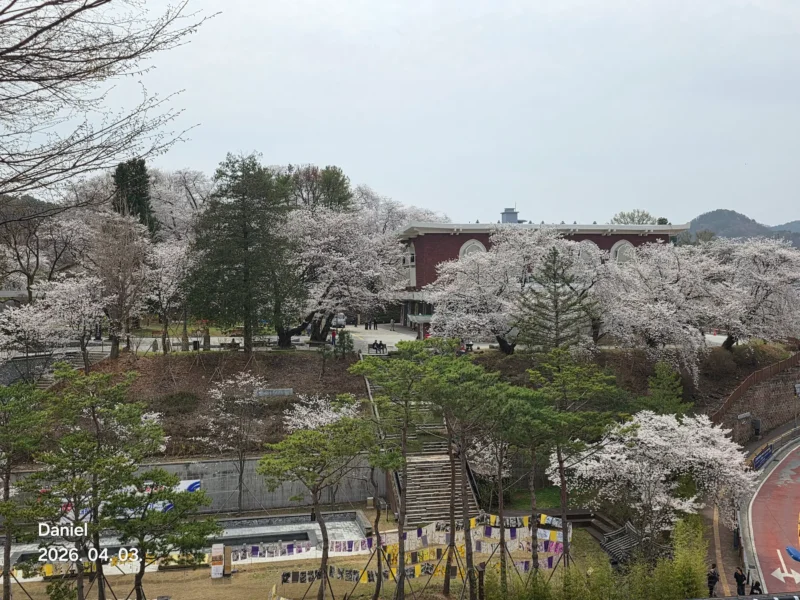
Located right across Jungdong Cathedral, in the heart of Gongju’s original downtown, this provincial museum opened in 2006 following a renovation of the former National Museum of Gongju building. Through more than 597 artifacts, it presents the history and culture of Chungcheongnam-do from the Joseon Dynasty through the modern era. The permanent exhibition is organized into five themes: Commoners, Magistrates, and Provincial Governors; Chungcheong — A Land of Loyalty and Confucian Learning; Modern and Contemporary Chungnam; The Lives and Culture of Chungnam People; and A Nostalgic Journey Through Old Photographs. Among the highlights are the Sinmi Tongsin Ilrok, a UNESCO Memory of the World inscribed document; artifacts of Kim I-gyo, the last Joseon envoy to Japan; and a portrait of Myeongjae Yun Jeung, one of the region’s most celebrated scholars. In spring, the cherry blossoms in front of the museum transform the grounds into one of Gongju’s most beloved seasonal spots. The museum also hosts special night programs and cultural heritage events throughout the year — check the Gongju City website before your visit for the latest schedule.


📍 284-1 Jungdong, Gongju, Chungcheongnam-do 🕘 Tue – Sun, 10:00 – 18:00 (Nov – Feb until 17:00) 🔒 Closed every Monday, January 1, Seollal (Lunar New Year), Chuseok 💰 Free admission
🏛️ Gongju Old Town Hall
A near-perfect example of the architectural hybridity of the colonial era — this building blends Western and Japanese architectural styles, constructed using timber framing and brick. It stands as a quiet but eloquent relic of Gongju’s modern history under Japanese rule. Best explored as part of the original downtown walking loop alongside Jungdong Cathedral and the History Museum.


📍 Jungdong area, Gongju, Chungcheongnam-do
📍 Yugu-eup & Sinpung-myeon Cluster — Catholic Pilgrimage Sites
Located a 20–30 minute drive from central Gongju, the Yugu-eup and Sinpung-myeon area carries the weight of history from the era of Catholic persecution during the Joseon Dynasty — a meaningful pilgrimage route for those retracing the footsteps of Korea’s early Christian martyrs.
⛪ Yugu Catholic Church
A Catholic parish church located in Yugueup, Gongju. During the era of Catholic persecution, several Catholic communities (gyouichon) formed in this area, including those in Dumbeongi, Jinbat, and Meokbang-i — but all were dissolved following the Byeongin Persecution of 1866. New communities later took root in the Myeonggok-ri area. Father Pailler established the Yugu public chapel (gongso) at its current location in 1958, and in 1968 it was officially elevated to a full parish — Yugu Catholic Church — with approval from the Holy See. A quiet place where the pain of persecution and the resilience of faith coexist.


📍 243 Yuguro, Yugueup, Gongju, Chungcheongnam-do
🌿 Surichigol Marian Shrine
Tucked deep into a valley at the foot of Guksabong Mountain in Sinpung-myeon, Bonggap-ri, this Catholic shrine is one of Korea’s most historically significant. During the Joseon-era persecution of Catholics, believers sought refuge in remote mountain communities, and Surichigol — the deepest and most secluded of them all — sheltered the largest number of faithful. On November 2, 1846, Bishop Ferréol and Father Daveluy consecrated Korea and the Korean Church to the Immaculate Heart of Mary here, and established the Confraternity of the Immaculate Heart of Mary — the first officially recognized Marian devotional association in Korean Catholic history. So deeply meaningful was this place that Pope John Paul II personally referenced Surichigol in his address at Myeongdong Cathedral during his 1984 visit to Korea. Today, the site is home to a cloistered convent, a retreat house, a Marian chapel, and an adoratorium. A 3.5 km pilgrimage trail winds through the grounds, welcoming not only pilgrims but also visitors who simply wish to walk in quiet nature.
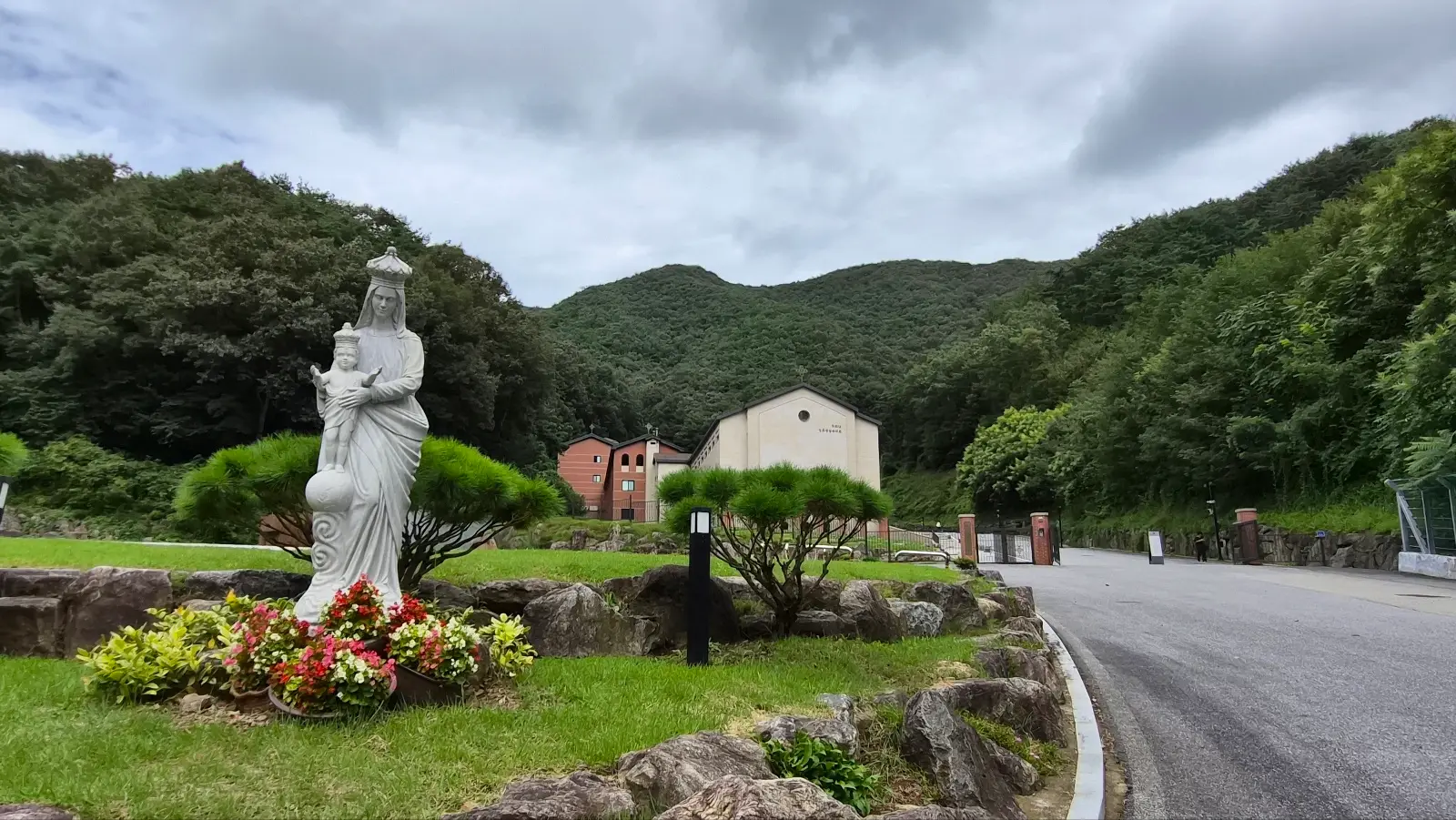
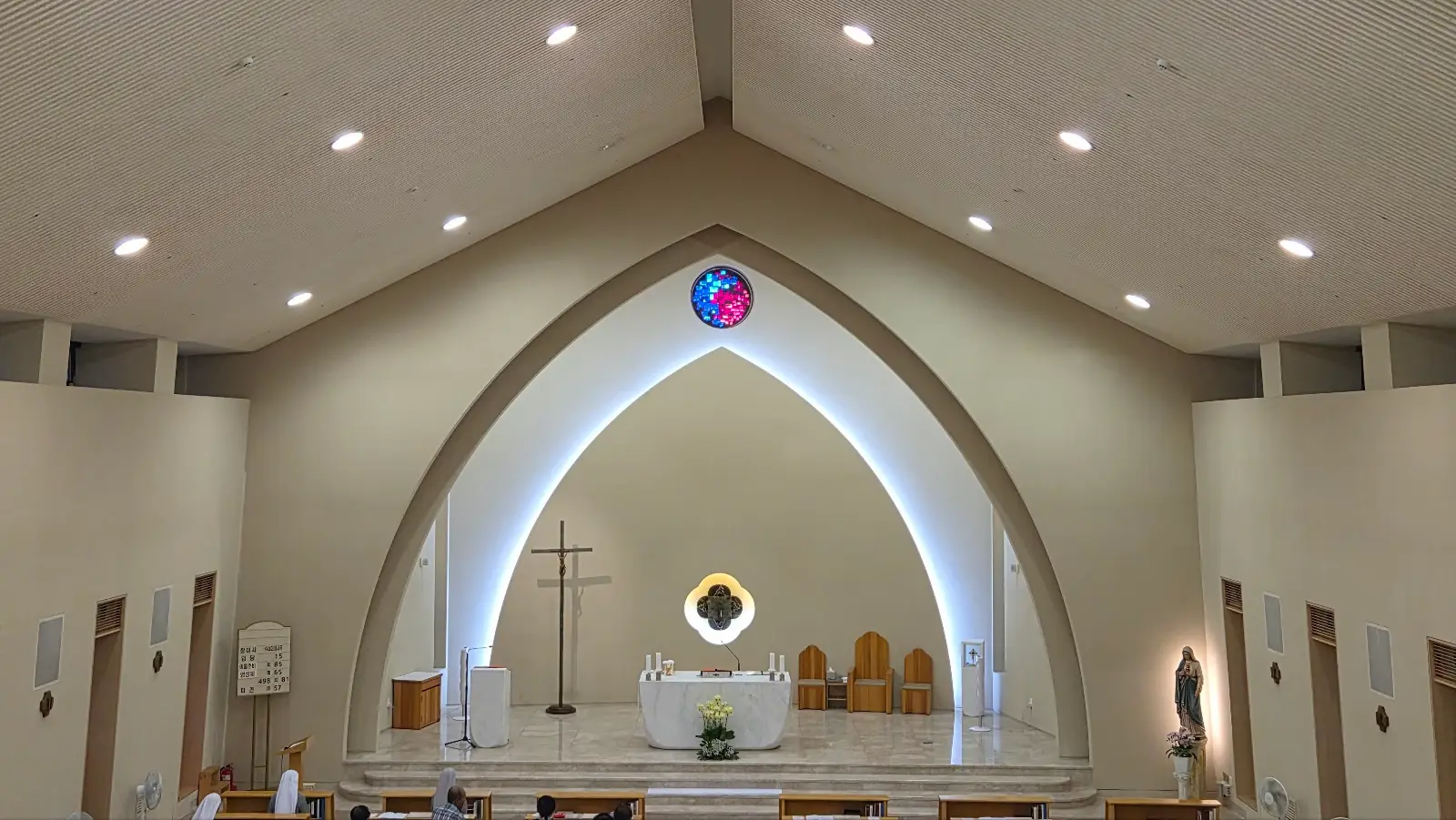
📍 522 Yongsubonggap-gil, Sinpungmyeon, Gongju, Chungcheongnam-do 🕘 Always open
🍽️ Where to Eat
Gomanaru 1999
Conveniently located near Gongju Hanok Village and Gomanaru, this restaurant is a natural stop on the Ungjin-dong sightseeing route. Specializing in ssambap (Korean rice and grilled meat with fresh wrapping greens), the signature dish is the Gomanaru Ssambap Set — a charcoal-grilled seasoned pork neck served alongside a stone pot rice (dolsotbap). Neatly presented side dishes and fresh ssam (wrapping) vegetables are refilled without limit, making it a popular choice for families and groups.


📍 5-8 Baengmigoeur-gil, Ungjin-dong, Gongju, Chungcheongnam-do 🕘 11:00 – 21:00 (Break time 15:00 – 17:00 / Closed every Monday) 💰 Gomnaru Set Menu approx. ₩17,000 per person (as of 2026)
Donghae-won
A longstanding Chinese restaurant that has earned a nationwide reputation as one of Korea’s Top 5 jjamppong (spicy seafood noodle soup) spots. Jjajangmyeon (black bean noodles) and jjamppong are the must-orders, but be prepared for long queues during lunch hours. To be honest, the taste is fairly ordinary compared to the hype, and the portions are smaller than expected. Worth a visit if you’re curious, but best to temper your expectations before you go.


📍 Gukgogae-gil area, Singwan-dong, Gongju, Chungcheongnam-do 🕘 Lunch hours only (check in advance before visiting)
📎 More from the Blog
If you enjoyed this guide, you might also love these posts:
👉 Ultimate Mr. Sunshine Filming Location Guide — Explore Korea’s Most Stunning K-Drama Set
🛒 Plan Your Gongju Trip — Tours & Activities Looking to make the most of your time in Gongju? Browse and book tours and activities in advance below.
👉 Book Gongju Tours on GetYourGuide
💬 Final Thoughts
Gongju is a city where layers of history run deep — ancient Baekje, Joseon administration, Catholic faith, and colonial-era architecture all quietly coexist within a single small city. Just 90 minutes from Seoul by car, it offers a travel experience that is unhurried, reflective, and genuinely moving. If you’re looking for somewhere off the beaten path that rewards slow exploration, Gongju is the answer.
For more travel guides on Korea’s hidden gems, visit 👉 enko.co.kr