Beopjusa Temple, Boeun — A Thousand-Year Temple Full of National Treasures of Korea
What is Beopjusa Temple?
Nestled in the foothills of Songnisan Mountain in Boeun, North Chungcheong Province, Beopjusa Temple was founded in 553 AD by Monk Uishin during the reign of Silla King Jinheung. The name “Beopju (法住)” means “the place where the Buddha’s teachings dwell” — named after Monk Uishin, who returned from India carrying Buddhist scriptures on a white donkey and settled here. Today, Beopjusa serves as the headquarters of the 5th District of the Jogye Order of Korean Buddhism and is designated as a UNESCO World Heritage Site. The temple grounds are home to 3 National Treasures, 13 Treasures, and 20 Regional Cultural Heritage assets — truly one of Korea’s most precious Buddhist sanctuaries.
Getting There — Ori Forest Path & Sejo-gil Trail
From the Songnisan National Park entrance to Beopjusa Temple stretches a 2km forest path known as “Ori-gil” (Five-ri Forest Path). Lined with towering trees forming a natural tunnel, this path is a healing walk in itself. In May, the lush green canopy is breathtaking, and with only birdsong filling the air, it’s the perfect place for quiet meditation.
Running alongside is the Sejo-gil Trail (2.4km), named after King Sejo of Joseon — a king who deeply revered Buddhism despite living in a Confucian society. This is the very path he walked to visit his mentor, Master Sinmi, at Bokcheonam Hermitage.
Along the way, you’ll encounter two historic steles. The Sasil-gibi Stele was erected during the reign of King Hyeonjong of Joseon, telling the story of a turtle rock on Sujeongbong Peak and the relationship between Buddhism and Confucianism. The Stele of Master Byeogam (Treasure No. 1254) honors the monk who fought in both the Imjin War and Byeongja War and led the restoration of Beopjusa Temple after it was destroyed during the Japanese invasions.


Iljumun Gate — Hoseo Jeil Garam
Beyond the forest path stands the Iljumun Gate, marking the entrance to the temple grounds — a reminder to enter with a mindful and respectful heart. Inscribed on the gate are the words “Hoseo Jeil Garam,” meaning “the greatest temple in the Hoseo region (Chungcheong Province).”


Exploring the Temple Grounds
Colorful Lanterns (오색연등)
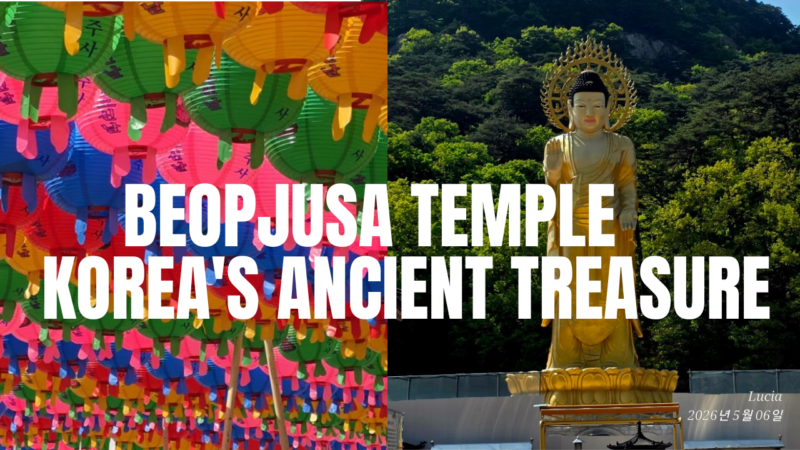
Visiting in May during Buddha’s Birthday, we were greeted by a breathtaking canopy of colorful lanterns stretching across the entire temple grounds. The sight was simply beyond words.


Glass Wish Chimes (유리 소원 풍경)
Throughout the temple grounds hang delicate glass wish chimes, each inscribed with a visitor’s prayer. Their gentle, crystalline sound in the breeze is beautiful — it is said that when the wind blows, the wishes of all beings rise up to the heavens.


Geumgang Gate
Geumgang Gate — the second gate of Beopjusa Temple, guarded by two powerful Geumgang Warriors (금강역사) who protect the temple from evil.
Alongside them stand Bodhisattvas Bohyeon and Munsu, watching over all who enter.


Geumdong Mireuk Daebul — Golden Maitreya Buddha
Standing 33 meters tall, the Geumdong Mireuk Daebul is the symbol of Beopjusa Temple. Originally cast in 776 AD under Silla King Hyegong by Monk Jinpyo, it was dismantled during the Joseon Dynasty to fund King Gojong’s reconstruction of Gyeongbokgung Palace. Restoration began in 1939, and in 1990 the statue was rebuilt in bronze and gilded. Its breathtaking scale stops you in your tracks.


Palsangjeon — Five-Story Wooden Pagoda (National Treasure)
Palsangjeon is the symbol of Beopjusa Temple and the only surviving pre-modern five-story wooden pagoda in Korea. Standing 21 meters tall, its walls are adorned with eight painted scenes depicting the life of the Buddha, hence the name “Palsangjeon.” Destroyed during the Japanese invasions, it was rebuilt under the leadership of Master Samyeong and completed in 1626 during the reign of King Injo. A fascinating side note: Bruce Lee was reportedly inspired by Palsangjeon when conceiving his film “Game of Death” — sadly, he passed away before he could film here.


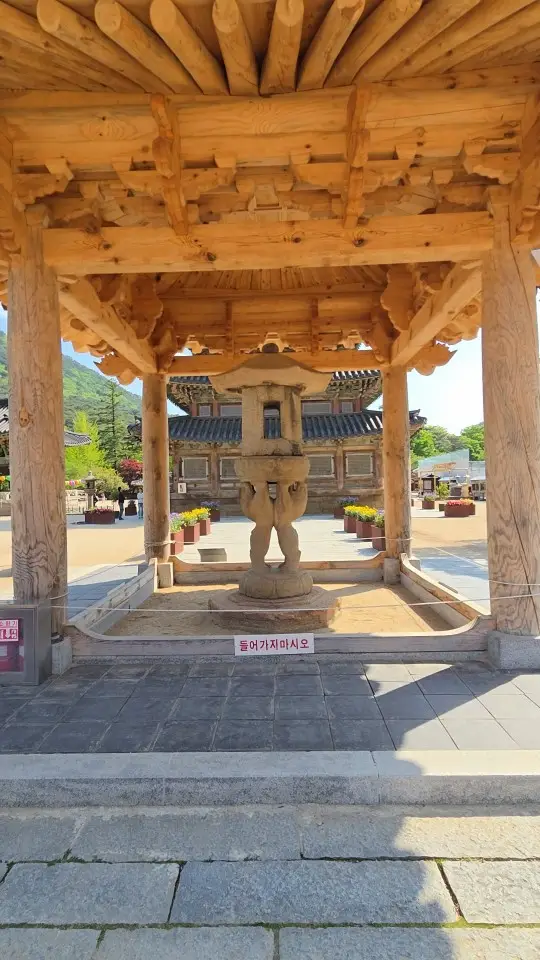
Twin Lion Stone Lantern — Ssangsajaseokdeung (National Treasure)
Standing between Palsangjeon and Daeungjeon Hall, the Twin Lion Stone Lantern is a National Treasure crafted in 720 AD during the Unified Silla period. Two lions face each other chest-to-chest, supporting the lantern with their forepaws — a remarkably innovative design that replaced the typical octagonal pillar. A breathtaking 1,300-year-old masterpiece of balance and craftsmanship.
Daeungjeon Hall (Daeungbojeon)
The impressive two-story Daeungjeon Hall is considered one of Korea’s Three Great Buddhist Halls, alongside Muryangsaji Geungnakjeon and Hwaeomsa Gakhwangjeon. Inside stands a Treasure-designated Buddha triad. Standing guard before the hall is the Sacheonwang Stone Lantern (Treasure), its four faces carved with Guardian Kings — a representative masterpiece of Unified Silla stone craft.


Beomjongak — Bell Pavilion
Beomjongak houses the four sacred instruments of Buddhist temples — Dharma Drum (법고), Bronze Bell (범종), Wooden Fish (목어), and Cloud Gong (운판).Each instrument saves a different realm of beings: the drum for land animals, the bell for souls in hell, the wooden fish for creatures of the water, and the cloud gong for beings of the sky. Every morning and evening, these four instruments are struck in sequence to open and close the daily Buddhist prayers.


Jinyeonggak
This hall enshrines the portrait paintings of 27 revered monks, including the temple’s founding monk Uishin of the Silla period.


Myeongbujeon — Hall of the Afterlife
Myeongbujeon enshrines the compassionate Jijang Bosal (Ksitigarbha) at its center, flanked by Domyeong Jonja and Mudok Gwirang. The hall is home to 29 statues in total, including the Ten Kings of the underworld and their attendants.


Samseonggak
This hall enshrines the Mountain Spirit, the Lonely Saint, and the Seven Stars. Three sacred paintings created in 1991 adorn the interior.


Wontongjeon & Gwanseeum Bosal
The perfectly square Wontongjeon Hall features a distinctive four-sided pyramidal roof. Inside stands a 2.8m golden wooden Gwanseeum Bosal (Goddess of Mercy), crowned with a floral headdress and wearing a gentle, compassionate smile.


Yaksajeon — Medicine Buddha Hall
Yaksajeon enshrines the Medicine Buddha, healer of all suffering and illness, flanked by two attendant Bodhisattvas. What makes this hall truly breathtaking is the entire wall lined with hundreds of small Medicine Buddha statues — each one individually dedicated, creating an awe-inspiring golden display. A radiant 1997 painting of the Medicine Buddha and his attendants adorns the altar behind.


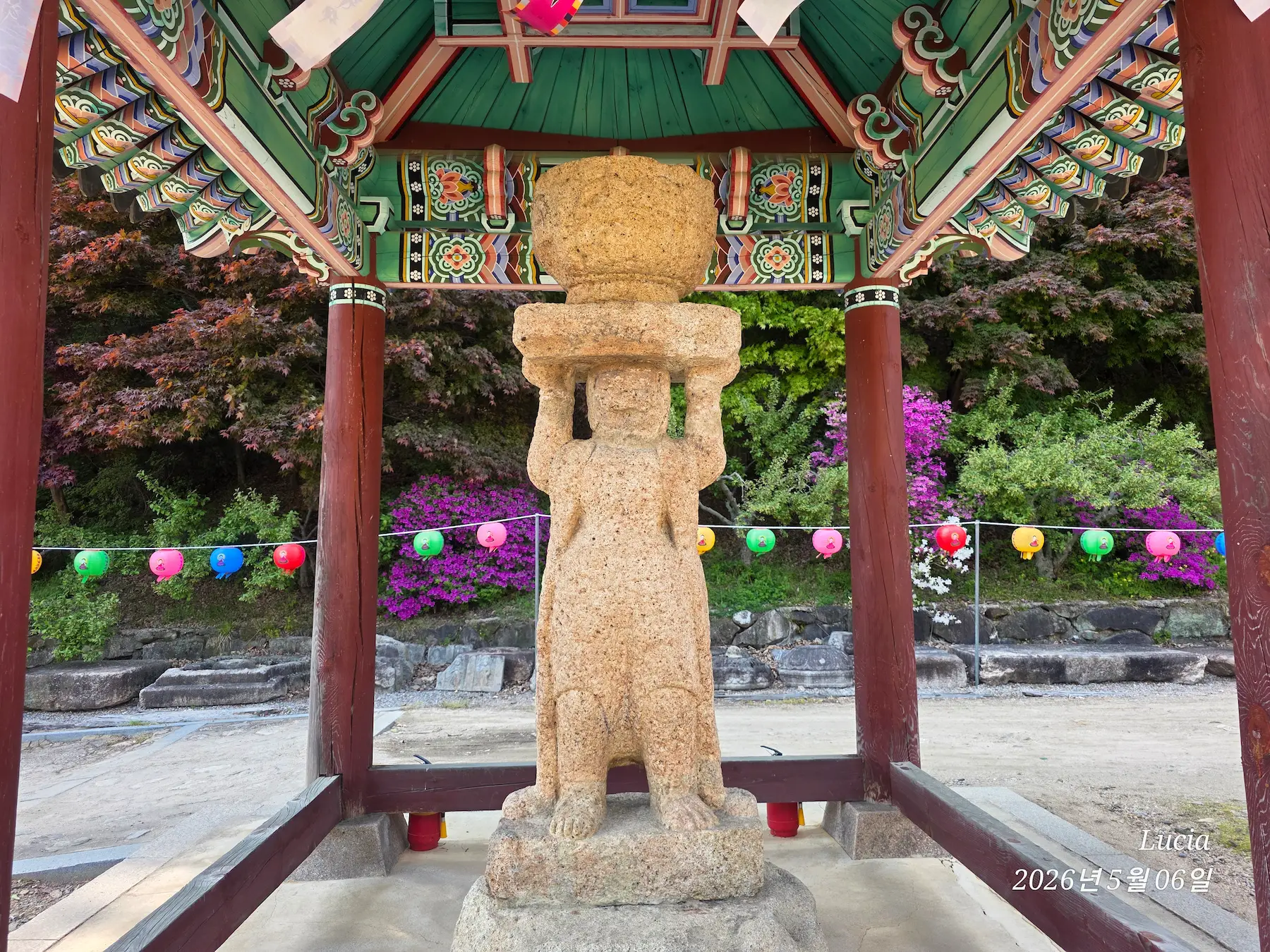
Huigyeon Bosal — Bodhisattva Statue (Treasure)
The Bodhisattva Huigyeon (Treasure No. 1417) carries an incense burner on his head — one of countless treasures you’ll encounter at every turn at Beopjusa. ✨
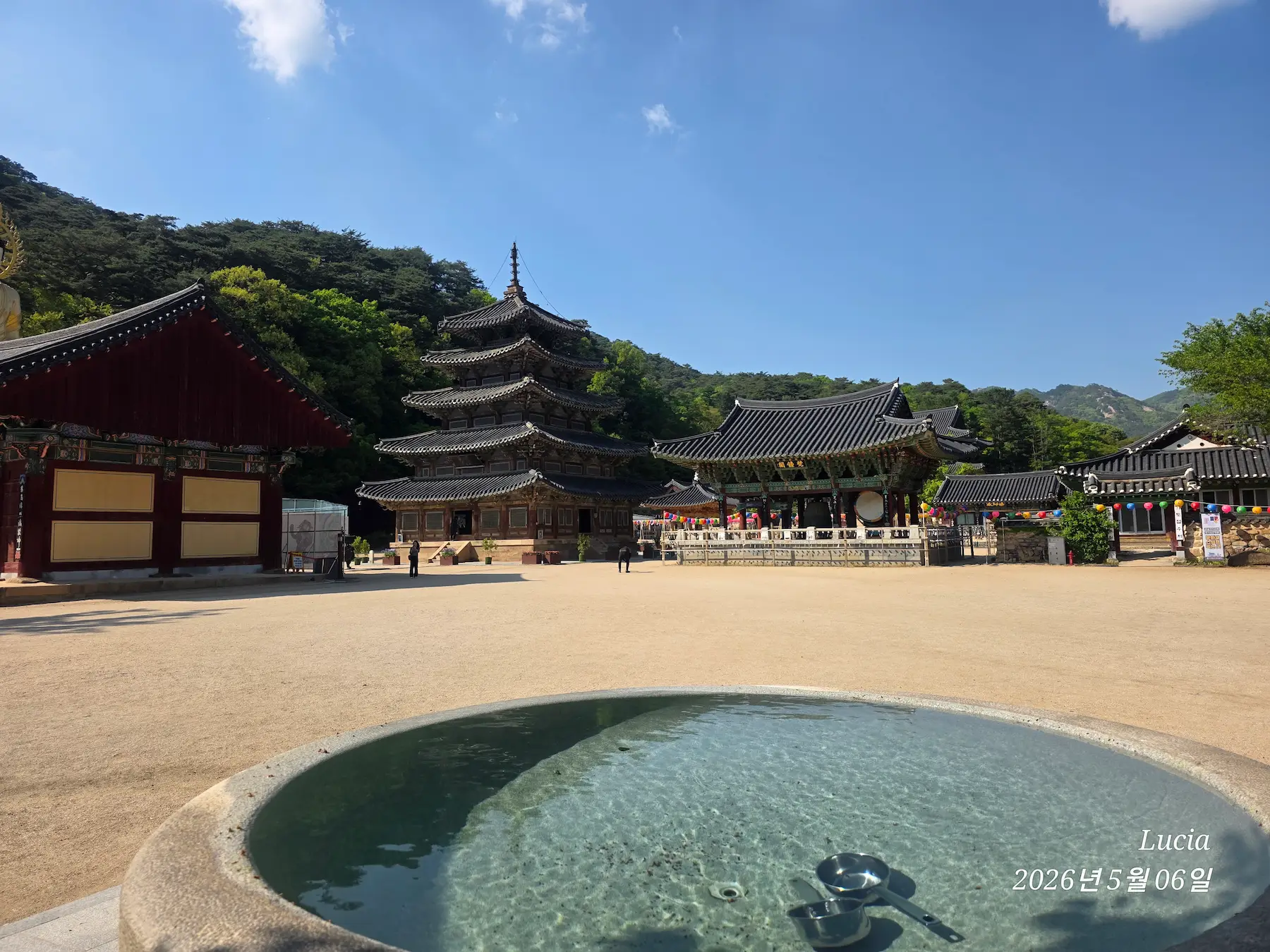
Gamnosu — Sacred Spring
Gamnosu, meaning “Sweet Dew,” is a sacred spring whose water is believed to cleanse all worldly suffering and desire. A cool sip feels like a purification of both body and soul.
Cheolhwak — Iron Cauldron (Treasure)
Sitting in one corner of the temple grounds is a massive iron cauldron (cheolhwak) — 1.2 meters tall, 2.7 meters in diameter, and weighing approximately 20 tons. This Unified Silla relic is designated as a National Heritage Treasure, and it is said that during Beopjusa’s golden era, it was used to prepare meals for over 3,000 monks.
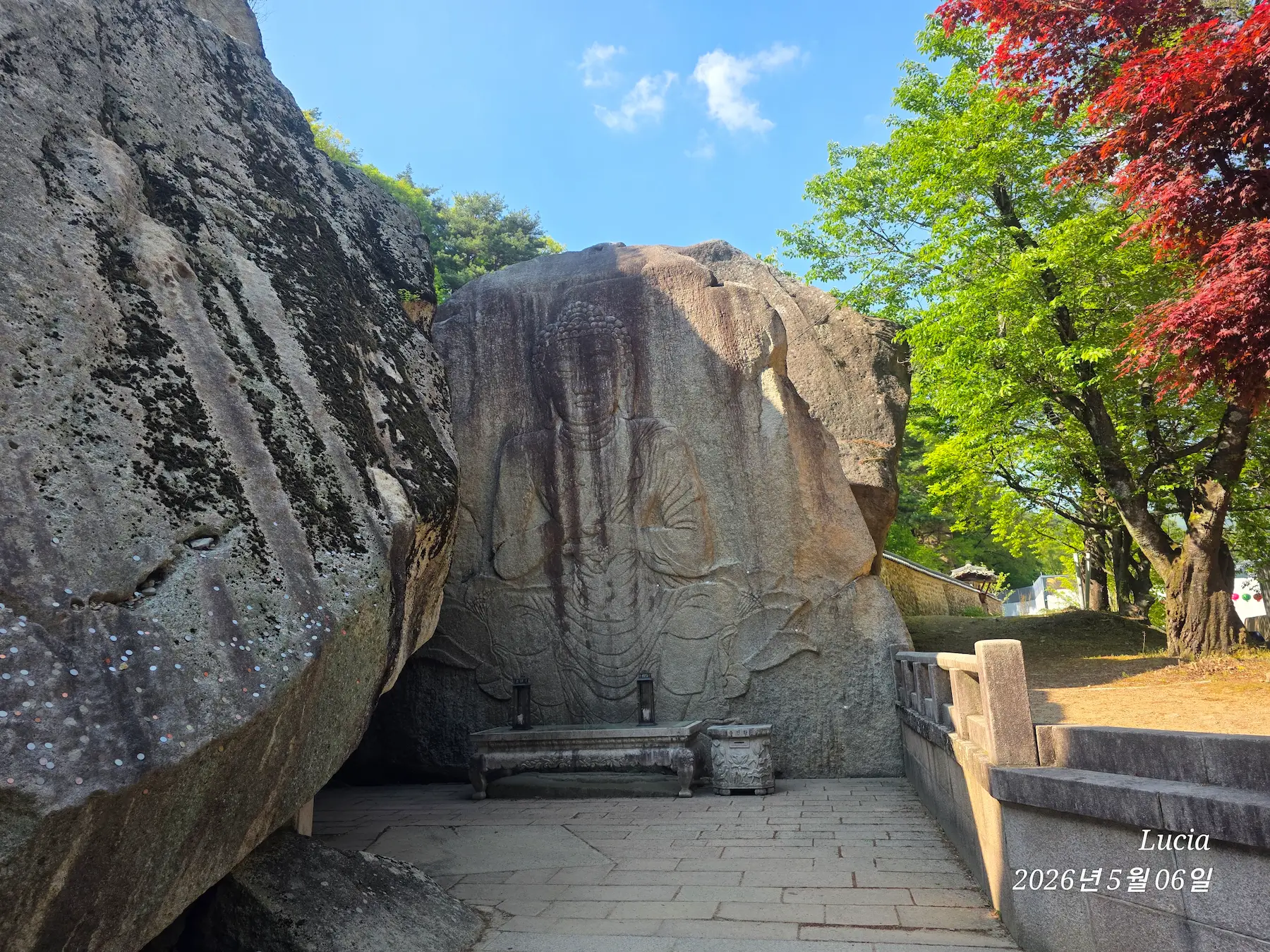
Rock-Carved Buddha — Maeae Yeorae Uijwasang
Carved into a large rock face within the temple grounds, this seated rock-carved Buddha is a rare sight in Korean Buddhist art — a seated pose unique in style. A representative Goryeo-era Maitreya Buddha, gently smiling from the stone cliff.
Budojeon & Stone Wish Towers
Beyond the Iljumun Gate lies Budojeon, a garden of stone stupas enshrining the relics of revered monks — notable for the remarkable variety of stupa shapes, each one unique. Along the nearby stream, countless small stone wish towers have been stacked by visitors, each one a quiet prayer. 🙏


Beopjusa Temple Stay
Beopjusa Temple offers a templestay program — a truly special opportunity to experience Buddhist culture surrounded by the natural beauty of Songnisan Mountain.


Program Types
- Rest Program — Follow the temple’s daily rhythm at your own pace, resting and reconnecting with nature.
- Experience Program — Participate in Buddhist rituals and cultural activities including morning prayers, meditation, and tea ceremony.
Activities
- Early morning Buddhist service
- Temple food experience (traditional temple cuisine)
- Seated meditation (Chamseon)
- Tea ceremony
- 108 prostrations
- Forest meditation walk
Reservations Book through the official Korean Buddhist Culture Service templestay website: 🔗Templestay | Finding your ‘True self’
Inquiries Beopjusa Temple Office: 043-543-3615
Travel Information
| 📍 Location | 379 Beopjusa-ro, Songnisan-myeon, Boeun-gun, North Chungcheong Province |
| 🎫 Admission | Free (free admission maintained since May 2023) |
| 🚗 Parking | Songnisan National Park main parking lot (parking fee applies) |
| 🌸 Best Time to Visit | Spring (fresh greenery & lanterns), Autumn (fall foliage) |
| 📞 Contact | 043-543-3615 |
Where to Stay Near Beopjusa Temple
Want to make the most of your visit? Consider staying overnight near Songnisan National Park.
🏨 Songnisan Grand Hotel & Condo — A large hotel conveniently located near Songnisan National Park entrance, perfect for families and groups. 👉 Book on Klook
🏡 Boeun Pension at 77 — A cozy pension nestled in nature, ideal for a peaceful retreat after a day of temple exploration. 👉 Book on Klook
Love Healing Travel in Korea?
If you enjoyed this journey through Beopjusa Temple, you’ll love our next destination — the tranquil wellness town of Sancheong, nestled in the heart of Jirisan Mountain. 🌿
👉 Sancheong Travel Guide 2026: A Peaceful & Authentic Wellness Journey