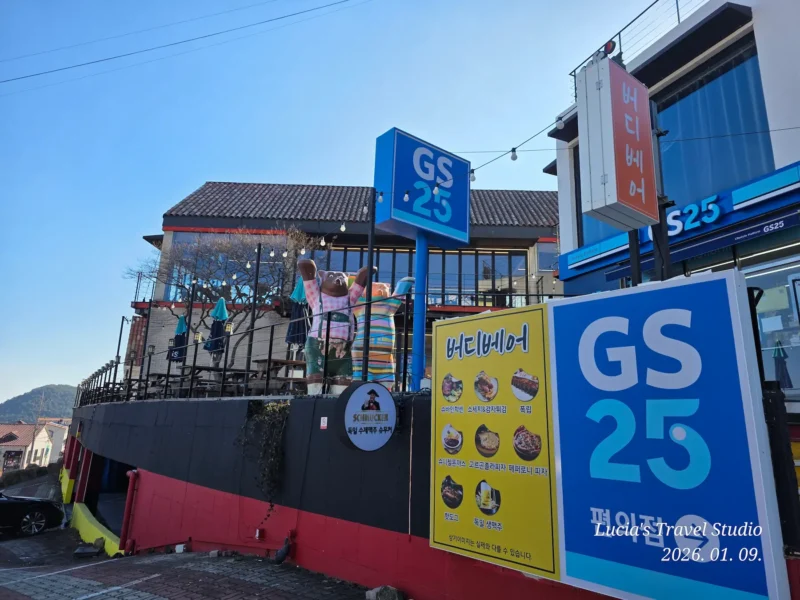
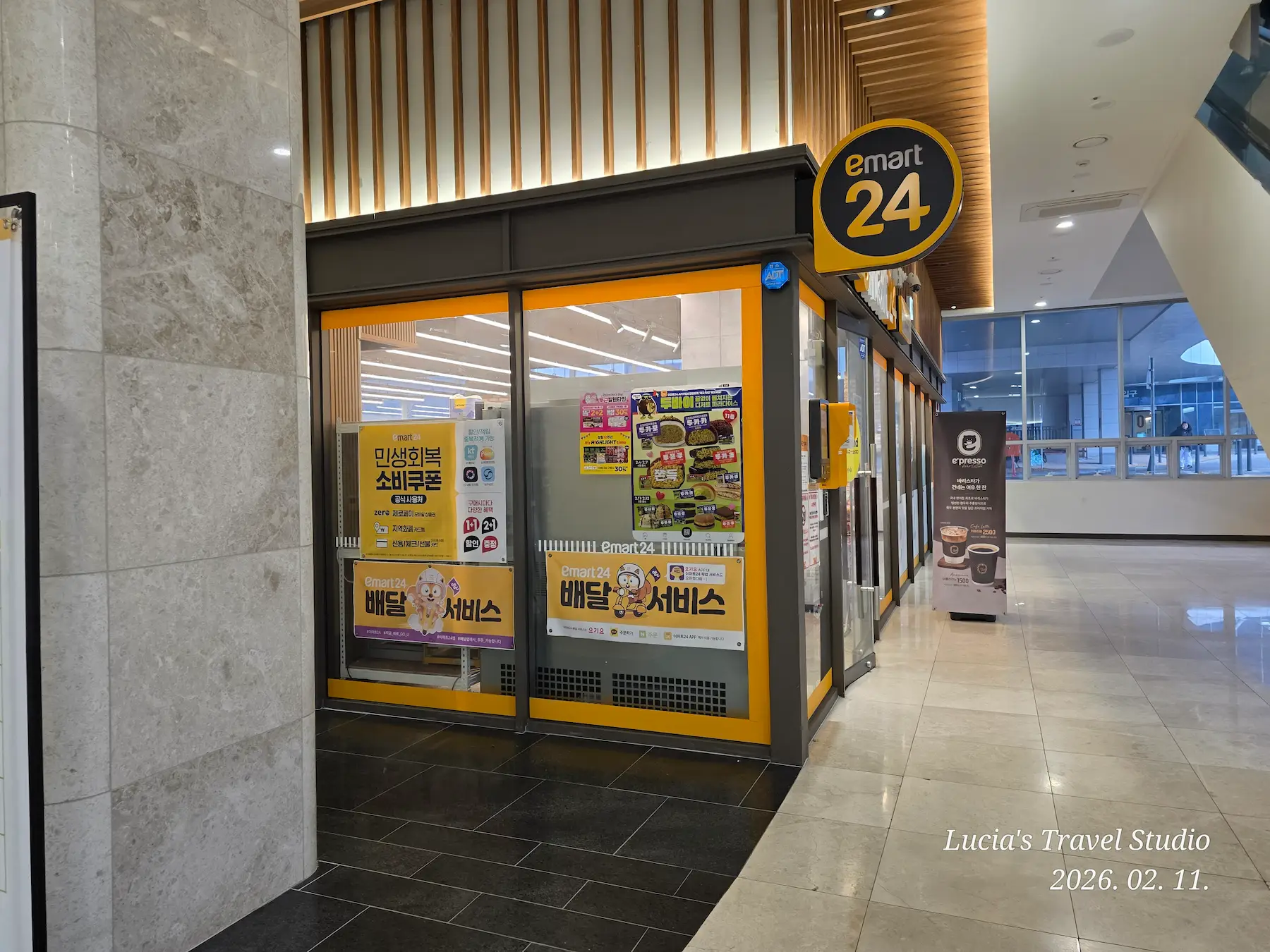
Korea has more convenience stores per person than almost anywhere in the world — and stepping into one is like stepping into everyday Korean life. Step into any GS25, CU, emart24 or 7-Eleven and inside those 30 square meters you’ll find Korean daily life, food trends, and almost everything you need as a traveler. Here are 8 things to know before your trip.
- If you’re planning your trip, check my complete Korea travel guide.




| 56,500+ Stores Nationwide | ₩31 Trillion Annual Sales (2024) | #1 In Korean Retail | 24 hrs Always Open |
01. The “Convenience Store Pilgrimage” — Where K-Food Trends Are Born – Korean Convenience Store
Korean convenience stores aren’t just shops — they’re launching pads for new products. A large portion of the K-snacks currently going viral on social media were born right here. Dubai chocolate, fresh lemon highball, Yonsei Milk cream bread — the convenience store was first for all of them.
Dozens of new items hit shelves every week, typically around Tuesday and Thursday. Something that doesn’t exist today can sell out within a week of launching.


💡 Traveler Tip: Download the CU or GS25 app before your trip. Both offer daily discounts, buy-one-get-one deals, and stamp rewards that add up quickly.
02. The “Han River Ramen” — Now Available Inside the Store
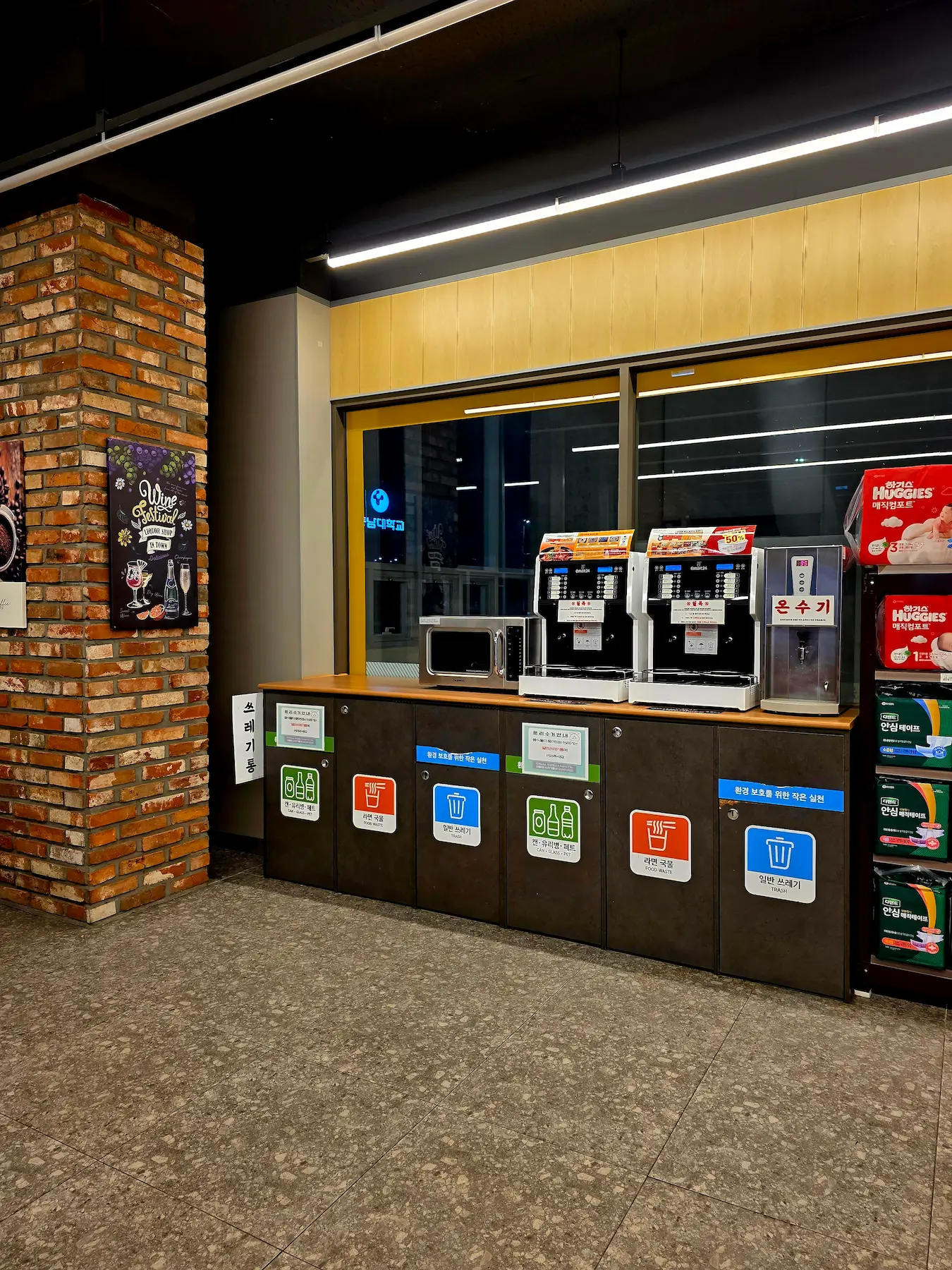
Many travelers assume the instant ramen cooker is only found at Han River parks. Not anymore. A growing number of urban convenience stores now have in-store ramen cooking stations — and fresh-cooked bag ramen has a completely different texture from cup ramen.


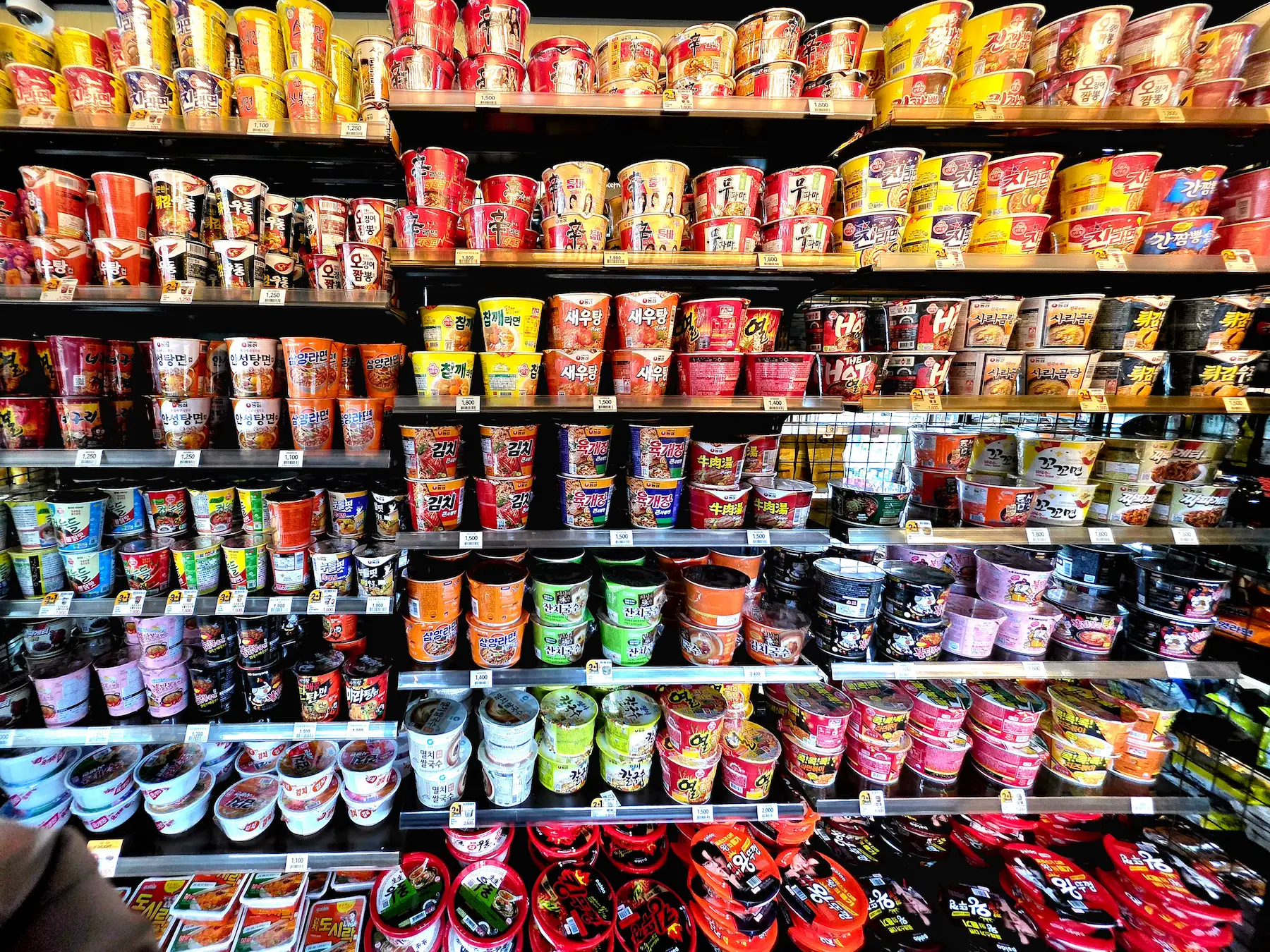

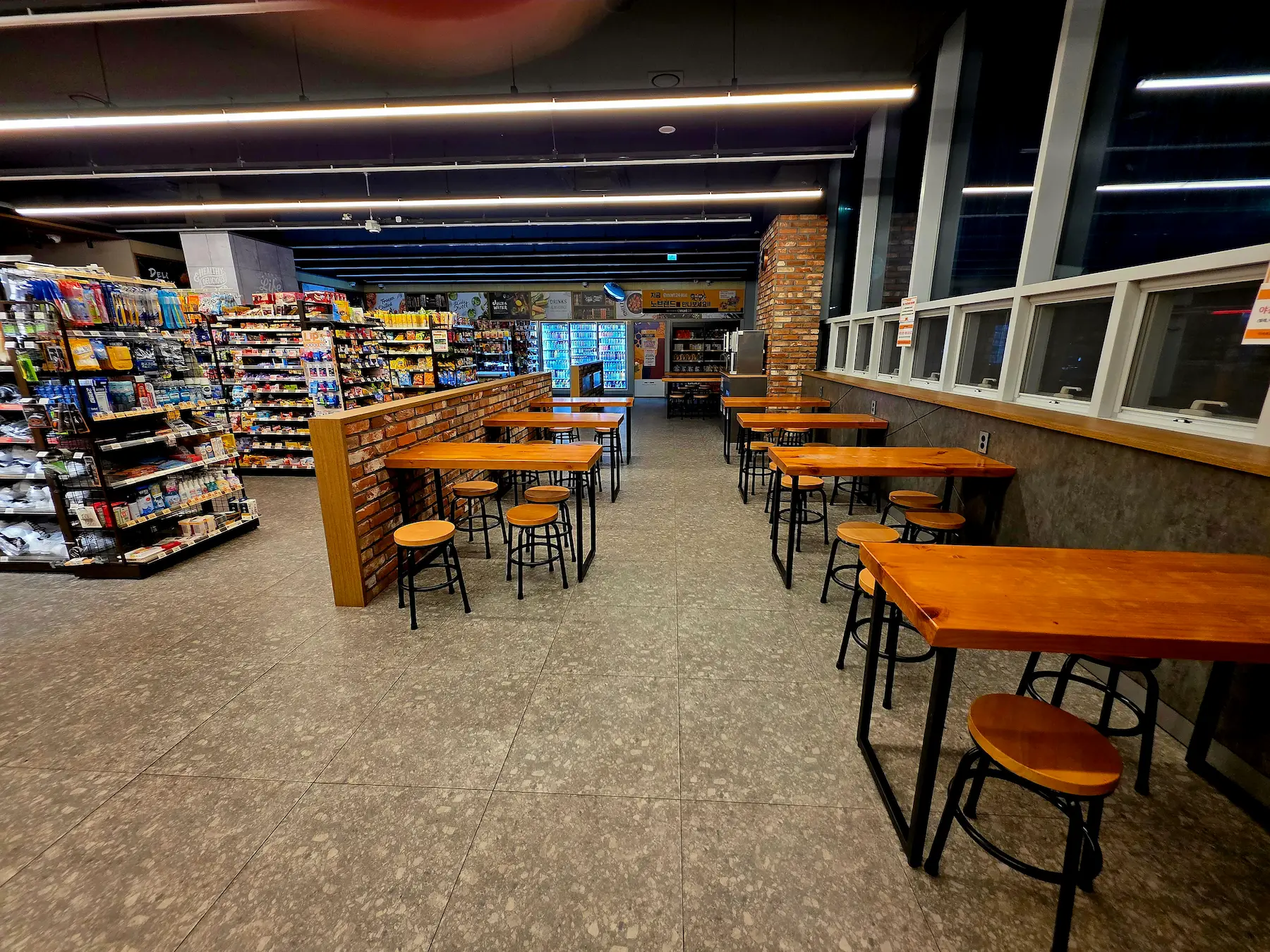
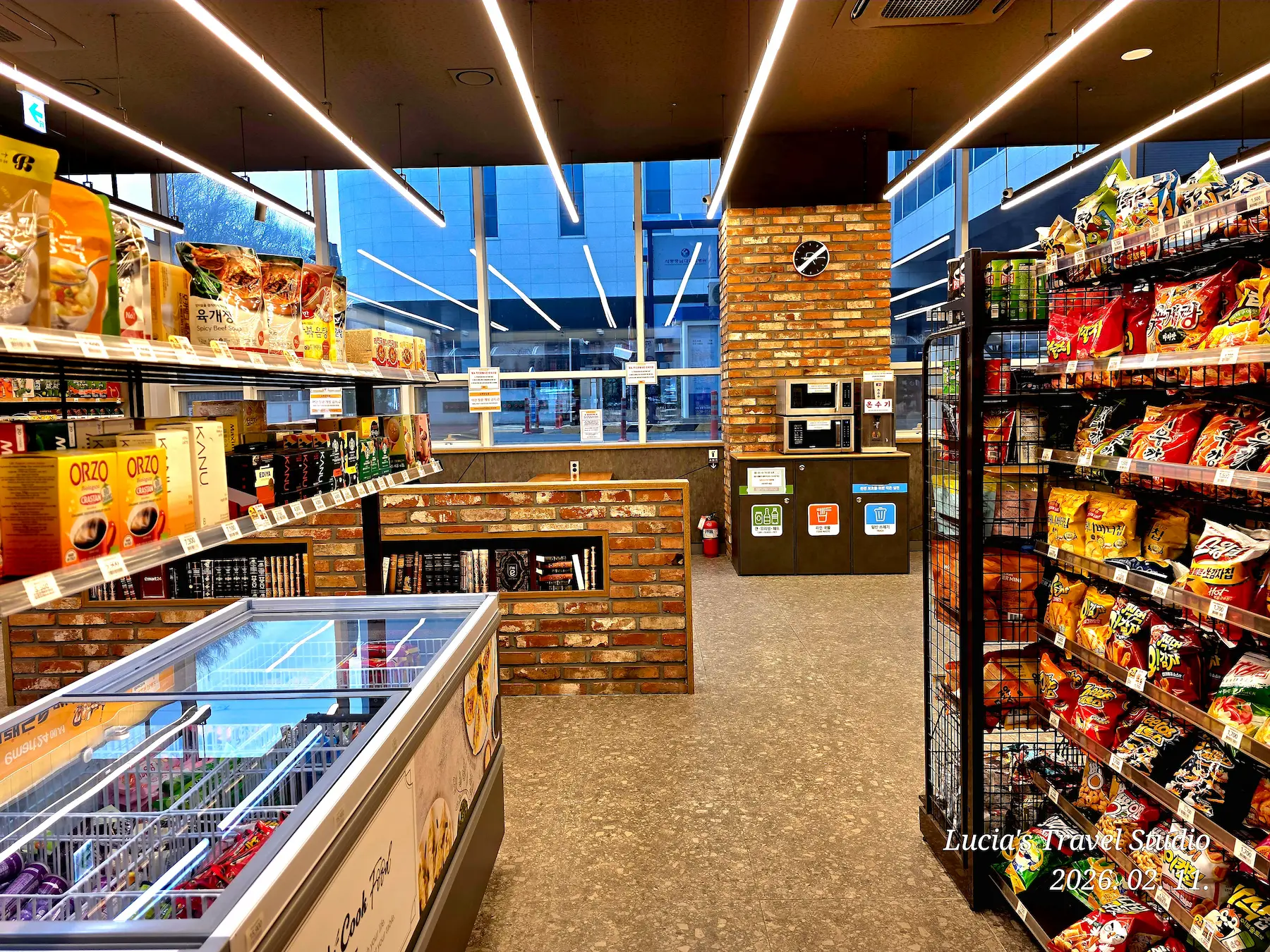
🛒 The Classic Convenience Store Meal
- 삼각김밥 Samgak Gimbap — Triangle rice balls with tuna mayo, kimchi, or bulgogi. ₩1,000–1,500. The definitive Korean snack.
- 컵라면 / 봉지라면 Cup & Bag Ramen — Try Shin Ramyun or Buldak (fire noodles — genuinely spicy). Use the hot water dispenser or in-store cooker.
- 바나나우유 Banana Milk — A national icon since the 1970s, still in the same bottle shape.
- 호빵 Hobang — Winter only. Steamed buns kept warm right next to the register.
- 하이볼 캔 Canned Highball — Ready-to-drink whisky highball. Best enjoyed at the outdoor seats out front.
- Estimated total: ₩3,000–5,000 (approx. $2–4 USD)

This isn’t just a budget option — it’s a familiar late-night meal for many Koreans. One of the most authentic food experiences in the country.
03. Build Your Own Drink — The Ice Cup Culture
One of the most distinctly Korean convenience store rituals: buy a cup of ice (얼음컵) for ₩500–800, then pour in any pouch drink you like — iced coffee, fruit ade, or a character collab drink. Instant café experience at half the price.
- 🧊 Ice Cup (얼음컵) — ₩500–800. Pairs with any pouch drink on the shelf.
- 🍹 DIY Cocktail — Mix a soju miniature or whisky with tonic water and ice. More and more travelers are doing this.
- ☕ PB Iced Coffee Pouches — Store-brand cold brew. Usually under ₩1,500. Remarkable value.
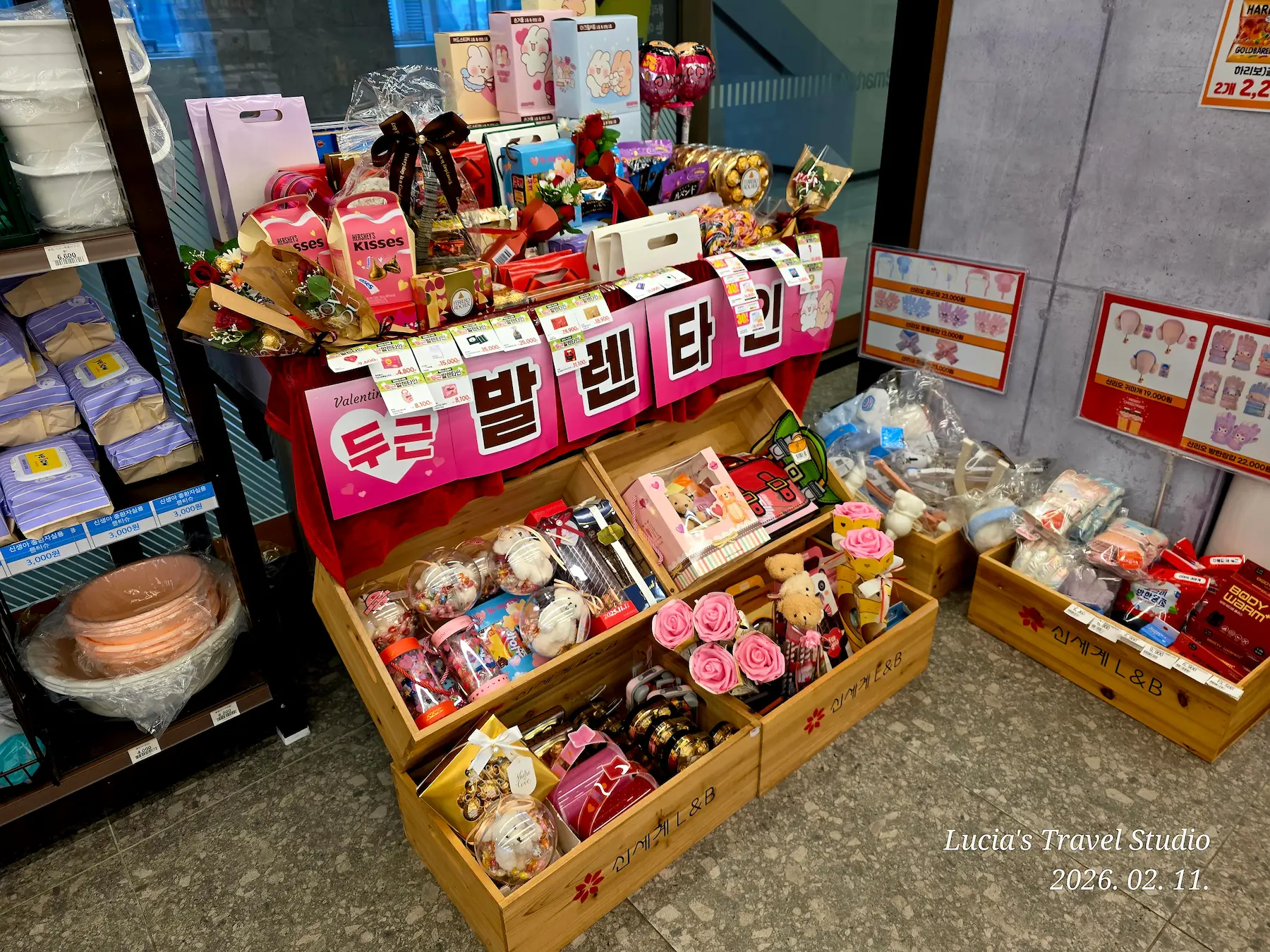
💡 Local Tip: Sitting outside the convenience store with your own drink is completely normal — even at 11pm. Pull up a plastic chair, don’t be shy. What looks like a casual hangout is actually a small expression of jeong (정) — the distinctly Korean sense of warmth and togetherness that forms between people who share the same space, even among strangers.
04. Your 24-Hour Traveler Services Hub
It’s not just snacks. Korean convenience stores solve real problems you’ll run into while traveling:
| 🚇 | T-Money Transit Card | Buy and top up your subway card right at the counter. No need to find a station machine. |
| 💳 | ATM (Foreign Cards OK) | Most stores have ATMs that accept Visa and Mastercard. Open 24/7, including holidays. |
| 📦 | Parcel Send & Pickup | Ship souvenirs home or send heavy luggage to your next accommodation. |
| 🖨️ | Print & Copy | Print tickets, documents, or photos directly from your phone via the in-store kiosk. |
| 🎟️ | Ticket Sales | Purchase concert, sports, and theme park tickets at the counter or self-service kiosk. |
| 💊 | Basic Medicine | Aspirin, antacids, cold medicine, bandages — available at 3am when you need them most. |
📖 New to the Seoul subway? Read next →
How to Use the Seoul Subway in 2026 — AREX choices, transfer rules,
and the apps locals actually use.
[How To Use Seoul Subway: 8 Local Tips That Save Time & Money]
05. Unmanned at 4am — One Card Gets You In
Many Korean convenience stores now operate on a fully unmanned or late-night unmanned system. When there’s no staff on shift (typically midnight to 6am), the front door is locked — but a single credit or debit card tap opens it.

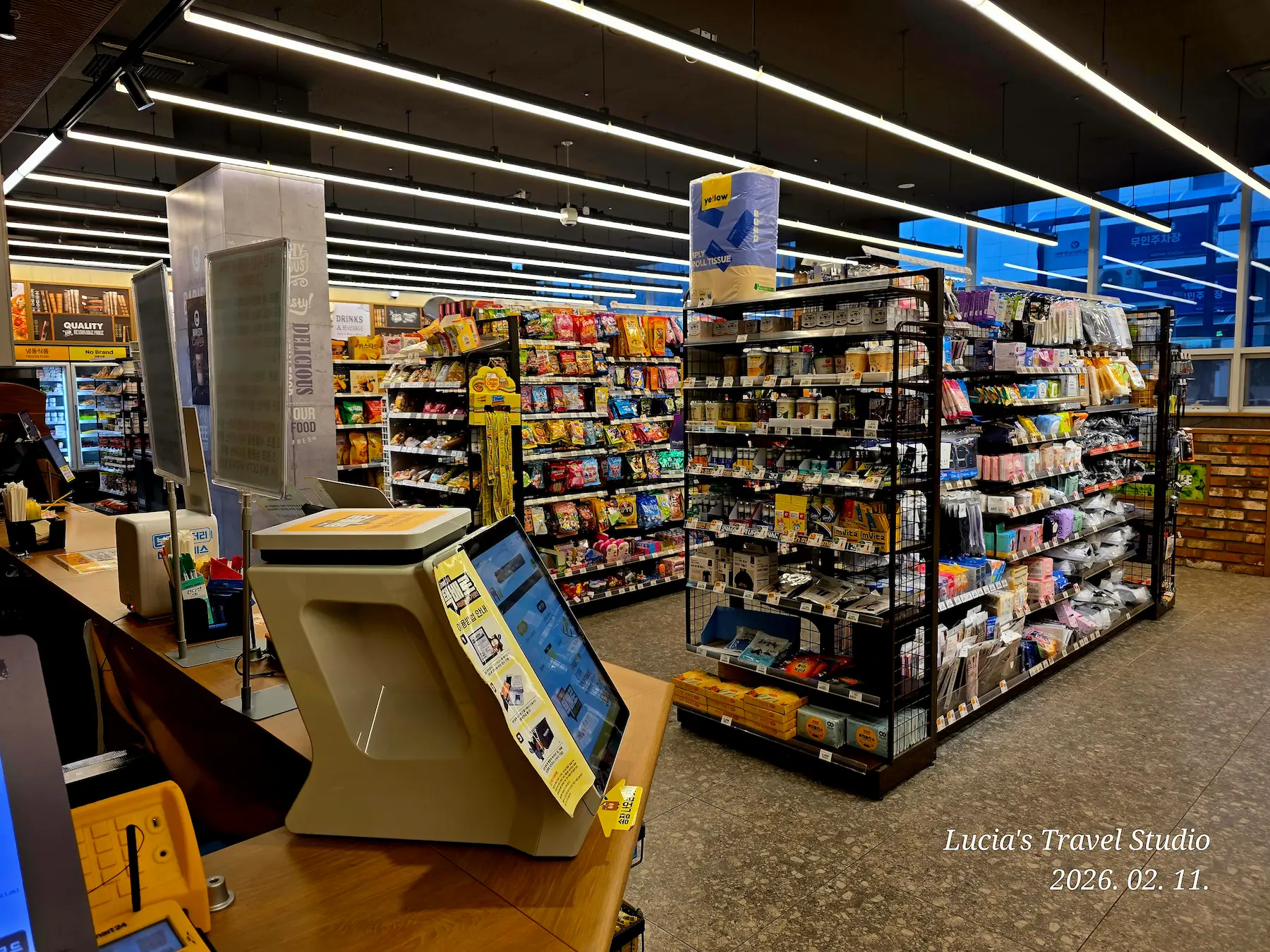


🔓 How to Use an Unmanned Store
- Tap your credit or debit card on the door terminal — the door unlocks.
- Shop as normal.
- Scan your items at the self-checkout kiosk and pay by card.
- Cash is usually not accepted during unmanned hours — always carry a card.
⚠️ Foreign Card Note: Most international Visa and Mastercard cards work on the door terminal. However, some stores are domestic-card only. If your card doesn’t work, find a staffed store nearby — they’re never far.
Every unmanned store has CCTV and an emergency contact button installed. It looks unfamiliar at first, but the system is simple — and once you’ve done it once, it’s actually more convenient than waiting for a cashier.
💳 Not sure which card to carry in Korea?
T-money, WOWPASS, Korail Pass Plus — we compared them all so you
don’t get stuck at a door terminal at 3am.
[Best Korea Travel Card 2026: Complete Guide To Korail Pass Plus, T-money and WOWPASS]
06. The 1+1 and 2+1 System — Watch the Label Under the Price
There’s a hidden rule to shopping at Korean convenience stores. Look at the small sticker below the price tag: 1+1 means buy one, get one free. 2+1 means buy two, get one free. It’s one of the first things travelers notice — and one of the best.
- You often don’t have to pick the same item — flavor mixing is allowed in many cases. Grab two different flavors and still get the deal.
- Traveling with a friend? Each grab one item and one is effectively free.
- Deals rotate weekly — what’s 1+1 today may be gone tomorrow.
- Drinks, snacks, and bread all have separate promotions, so scan the shelves carefully.
07. Lost at Night? Find the Nearest Convenience Store
Korean convenience stores are lit up 24 hours a day, and every single one is equipped with CCTV and a direct police emergency button. If you’re lost late at night, suddenly feel unwell, or need any kind of help — this is the first place to go.
Korea’s nightlife genuinely revolves around convenience stores. Late-night snacks, splitting a beer with friends, cooking solo ramen at 2am — all of it happens under bright lights, safely. The outdoor seating area is an informal social institution.
💡 Emergency Tip: The store’s full address is always posted at the counter. Even if the staff doesn’t speak English, showing them your phone screen — a map, a translation, a photo — almost always gets you help.
08. Concept Stores — When the Convenience Store Becomes a Destination
Some Korean convenience stores have become landmarks in their own right — not just somewhere to stop, but somewhere worth going to.
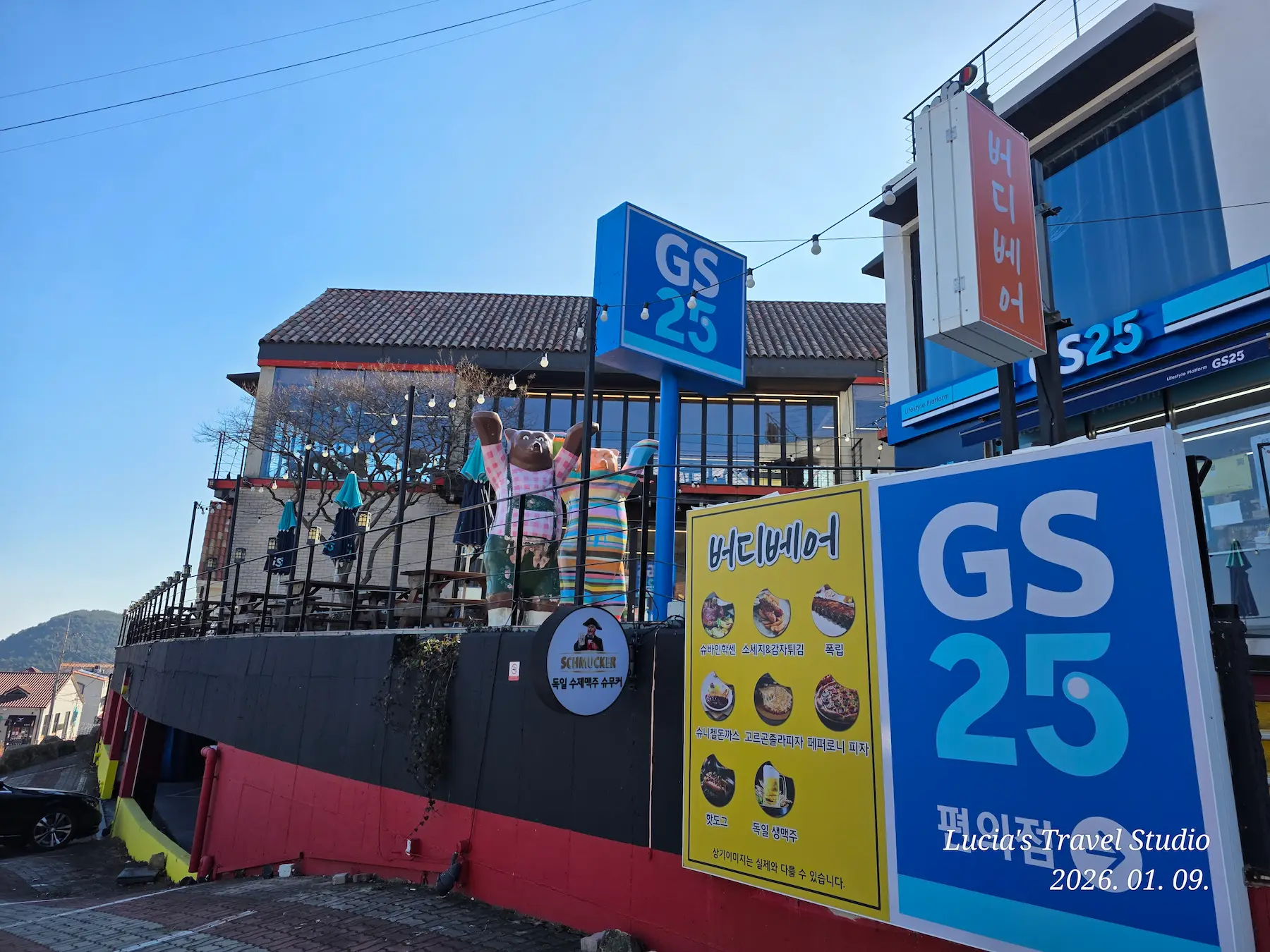
- 🏯 Traditional Hanok-style stores in Andong Hahoe Village and Gyeongju — a convenience store beneath a traditional Korean tiled roof.
- 🌊 Ocean-view stores in Busan’s Haeundae and coastal Namhae — floor-to-ceiling windows overlooking the sea. Eat your ramen with that view.
- 🎬 Limited edition & collab products — K-drama tie-ins, Kakao Friends, seasonal specials. Many sell out within days — Korean social media often knows about them first.
Concept stores are more common outside Seoul. If you’re traveling to Gangneung, Sokcho, Yeosu, or Gyeongju, put a convenience store on your itinerary — seriously.
🗣️ Bonus: What the Cashier Will Actually Say to You
The most common moment of confusion for first-time visitors isn’t the food — it’s the checkout. Here are the phrases you’ll hear at the register, and exactly what to say back:
| They say (Korean) | What it means | Your reply |
|---|---|---|
| 봉투 필요하세요? Bongtu piryohaseyo? | Do you need a bag? | Yes → “네 (Ne)” No → “괜찮아요 (Gwaenchanayo)” |
| 포인트 카드 있으세요? Point card isseuseyo? | Do you have a points card? | No → “없어요 (Eopseoyo)” |
| 카드요, 현금이요? Cardyo, hyeongeumieyo? | Card or cash? | Card → “카드요 (Cardyo)” Cash → “현금이요 (Hyeongeumieyo)” |
| 영수증 드릴까요? Yeongsujeung deurilkkayo? | Would you like a receipt? | No thanks → “괜찮아요 (Gwaenchanayo)” |
| 전자레인지 사용하시겠어요? Jeonja-reinje sayong hashigesseoyo? | Would you like to use the microwave? | Yes → “네 (Ne)” |
One phrase covers almost every situation: “괜찮아요 (Gwaenchanayo)” — it means “I’m fine / No thank you” and works as a polite decline for almost anything. Learn this one and you’re set.
✨ Final Word: Small but Everything
Korean convenience stores are exactly what the phrase “small but everything” means. Skip the hotel breakfast — start your morning with triangle gimbap and cup ramen. Pour a pouch drink over an ice cup and sit outside. Tap your card at 4am and walk into a lit, quiet store all to yourself.
The most genuinely Korean experience available to a traveler isn’t in a museum or a fine-dining restaurant. It might just be in one of these 30-square-meter shops on the corner.
📍 Popular Korean Convenience Store Chains
CU – The largest chain in Korea
GS25 – Known for creative snacks and desserts
7-Eleven – Strong presence in tourist areas
Emart24 – Owned by Shinsegae Group