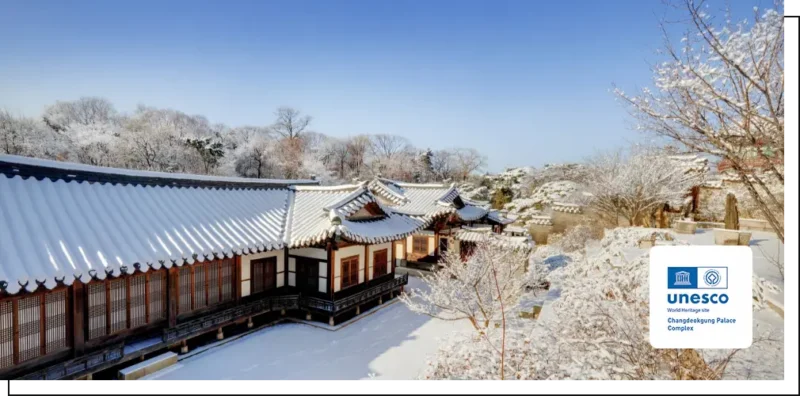

If you’ve already visited Gyeongbokgung, your next stop should be Changdeokgung Palace (昌德宮). While Gyeongbokgung was the grand official palace built on rigid Confucian principles, Changdeokgung was the palace where kings actually wanted to live — nestled into the natural contours of the hills, with centuries-old trees lining every path. Awarded UNESCO World Heritage status in 1997, it remains one of the most beautiful royal complexes in all of Asia.
What Is Changdeokgung Palace?
Built in 1405 as a secondary palace to Gyeongbokgung, Changdeokgung eventually became the de facto royal residence for over 270 years — from the reign of King Gwanghaegun until Gyeongbokgung was rebuilt in 1867. After the Japanese invasions of 1592 destroyed the entire palace complex, Changdeokgung was the first to be reconstructed in 1610.
Unlike other Korean palaces that follow strict symmetrical layouts, Changdeokgung was designed to follow the natural terrain rather than reshape it. This philosophy of harmony between architecture and nature is precisely why UNESCO inscribed it as a World Heritage Site. Changdeokgung and the neighboring Changgyeonggung Palace were historically known together as Donggwol (東闕) — the “Eastern Palace.”
A Quick History
| Year | Event |
|---|---|
| 1405 | Changdeokgung built as secondary palace to Gyeongbokgung |
| 1406 | Huwon (Secret Garden) first laid out to the north |
| 1592 | Entirely destroyed during the Japanese invasions (Imjin War) |
| 1610 | First palace to be rebuilt — becomes the de facto royal residence |
| 1776 | Juhamnu Pavilion and royal library Gyujanggak constructed |
| 1847 | Nakseonjae complex built by King Heonjong |
| 1910 | Japan-Korea Annexation Treaty decided at Heungbokgwon hall |
| 1917 | Major fire destroys the inner palace sleeping quarters |
| 1989 | Last members of the Korean imperial family pass away at Nakseonjae |
| 1997 | Inscribed as a UNESCO World Heritage Site |
What to See: Key Spaces
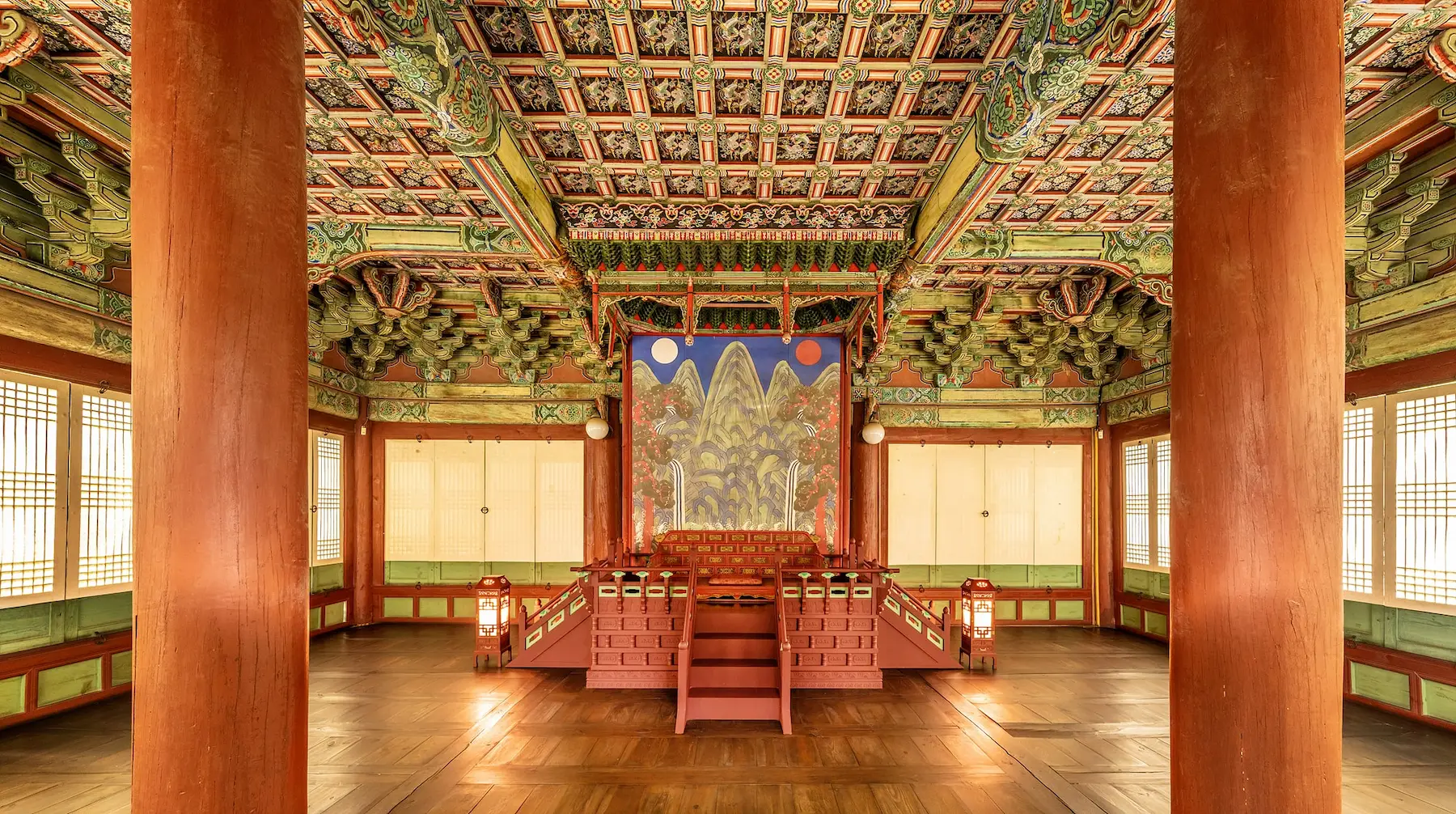
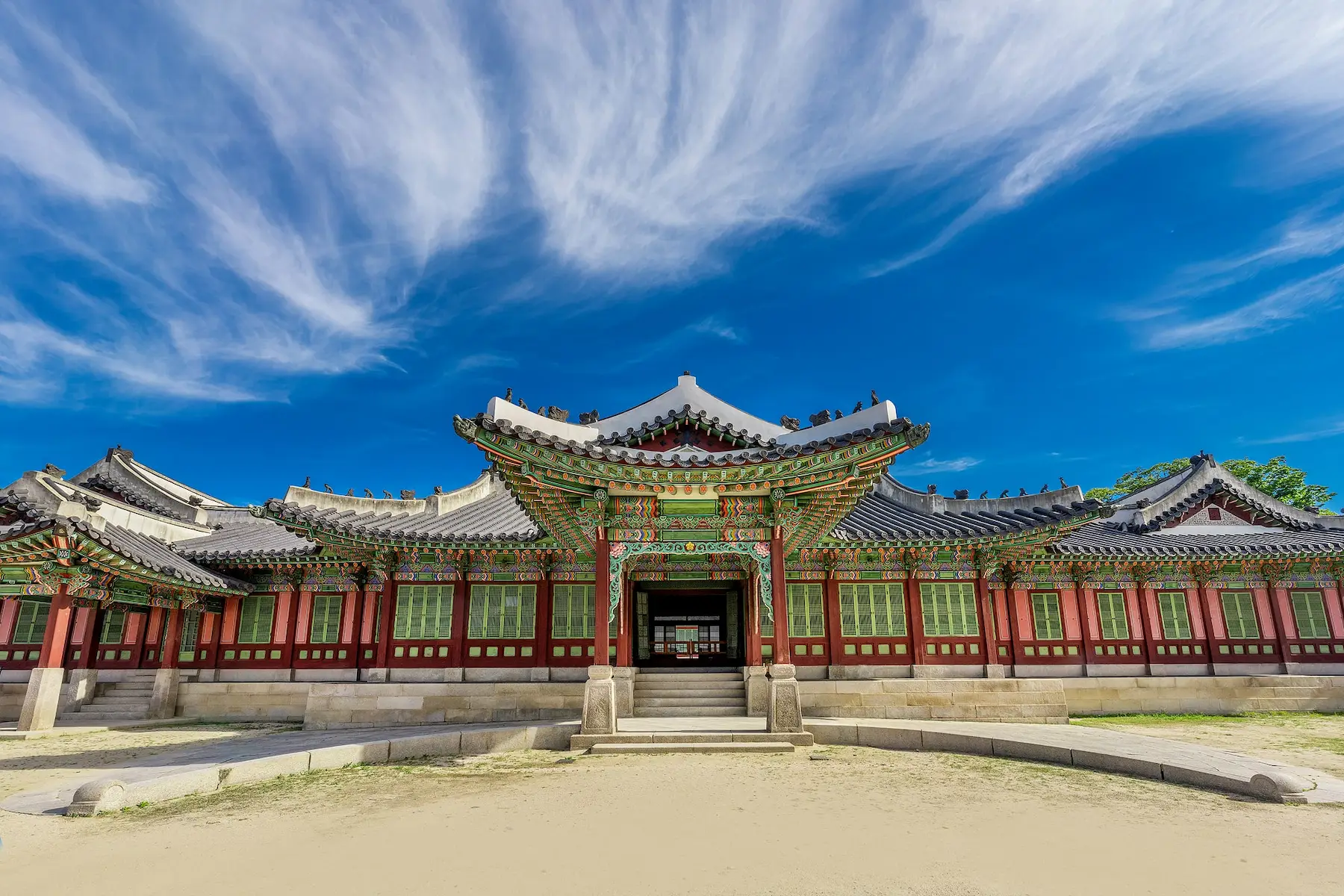
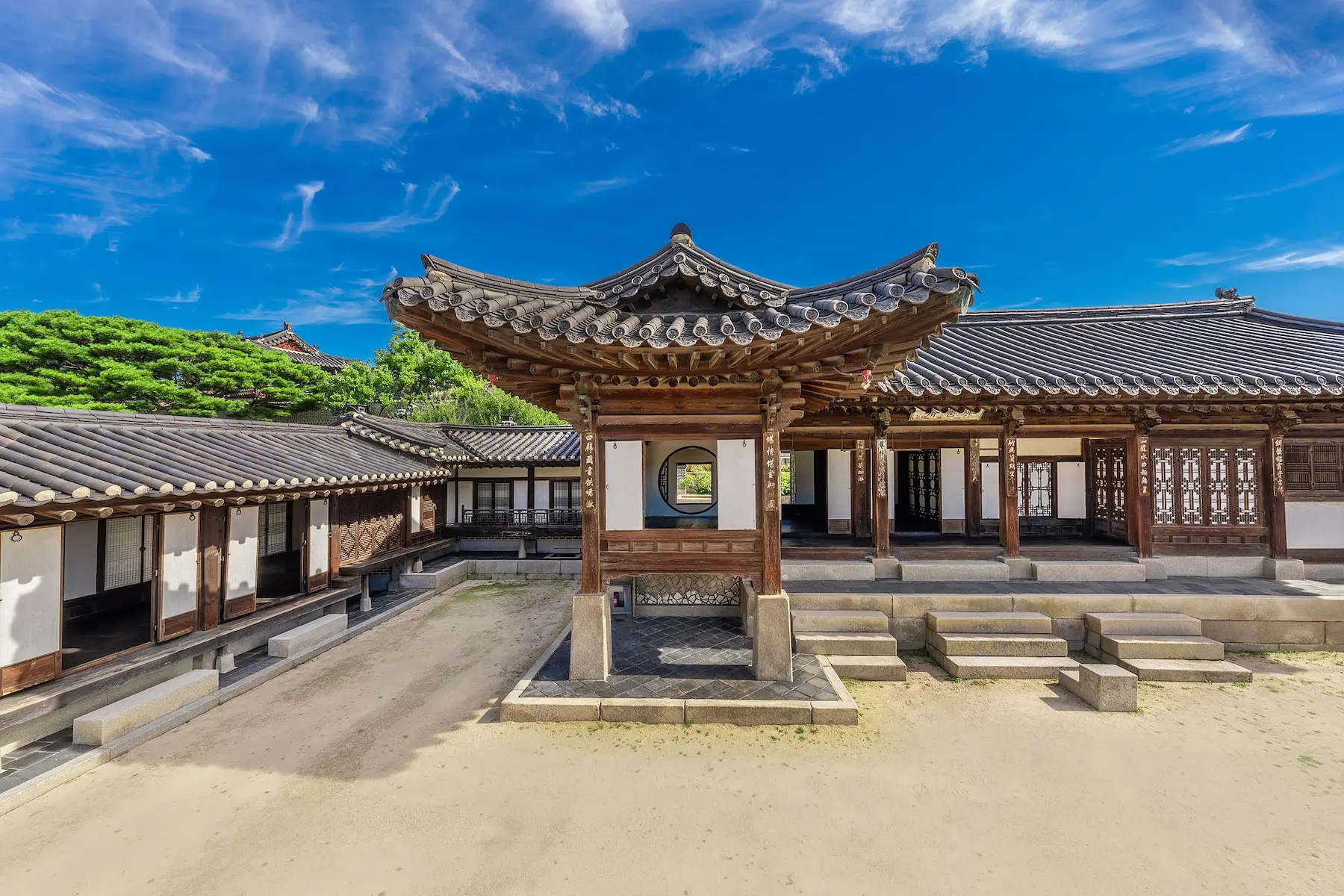
The Crown Jewel: Huwon Secret Garden
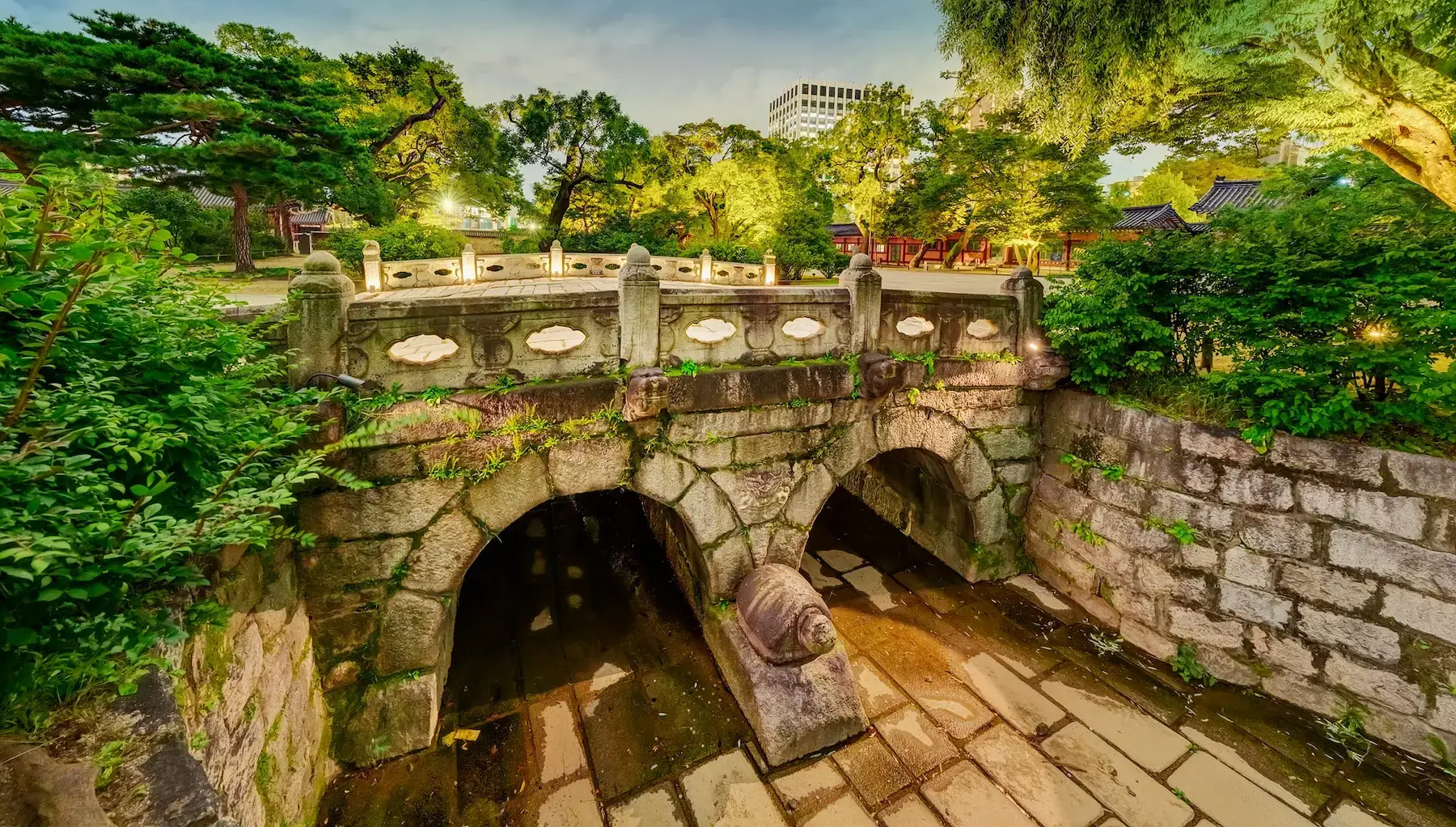
Changdeokgung’s Huwon is not just a garden — it’s a 330,000㎡ forested sanctuary divided into four distinct areas, each centered around a pond, with ancient trees, elegant pavilions, and centuries of royal history woven into every path. The further you walk in, the more intimate and natural it becomes, gradually transitioning from open structured spaces into deep, forested valleys.
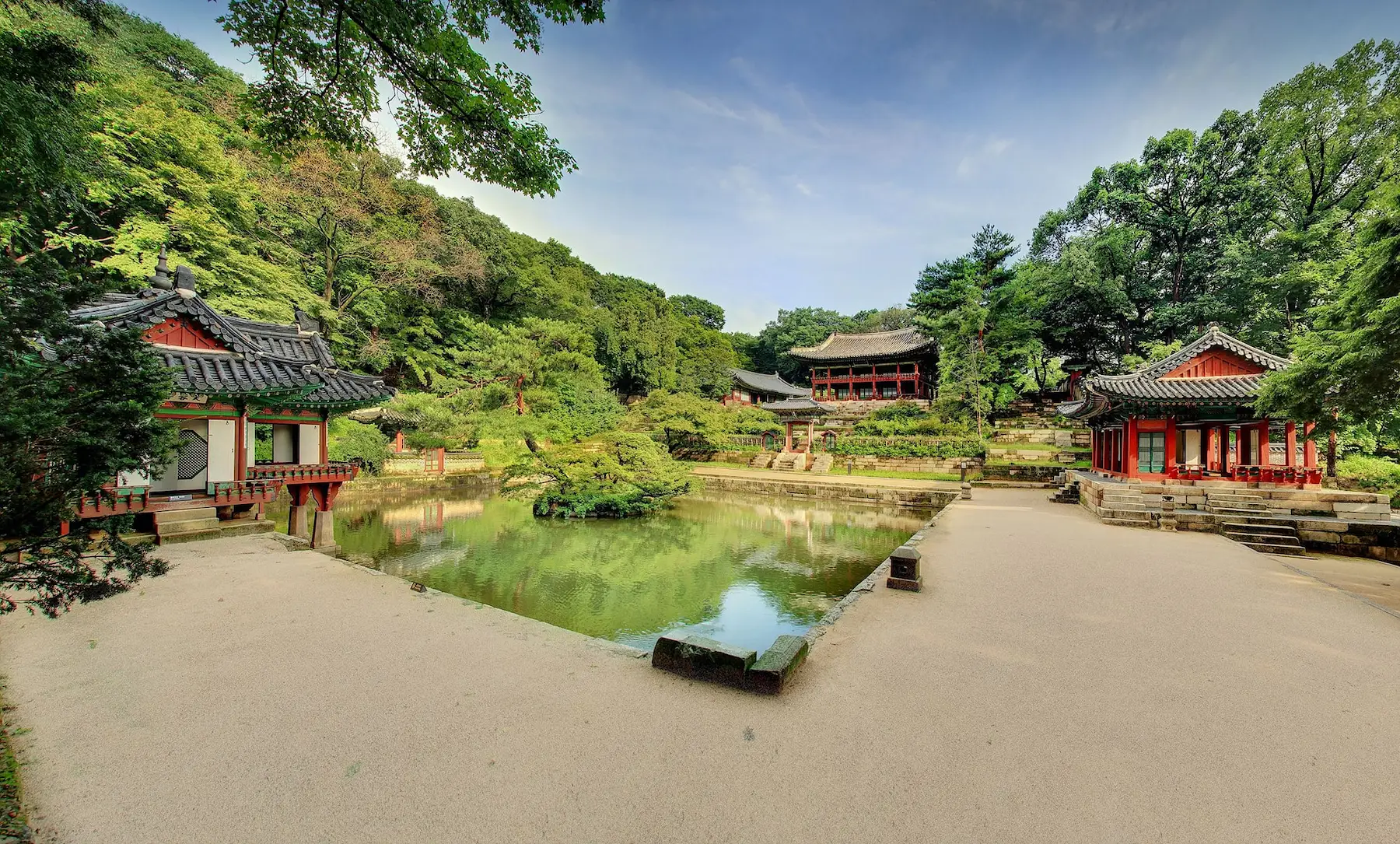
The most iconic area, centered on the square Buyongji Pond. The cross-shaped Buyongjeong Pavilion and the two-story Juhamnu — with the royal library Gyujanggak on its ground floor — frame the water on opposite sides. The reflection of Juhamnu in the still pond is one of the most photographed scenes in Korea.

Named for King Sukjong’s love of lotus flowers. Nearby Yeongyeongdang is a rare example of an aristocratic-style hanok building inside a royal palace — built deliberately to look like a scholar’s private home, not a royal space.
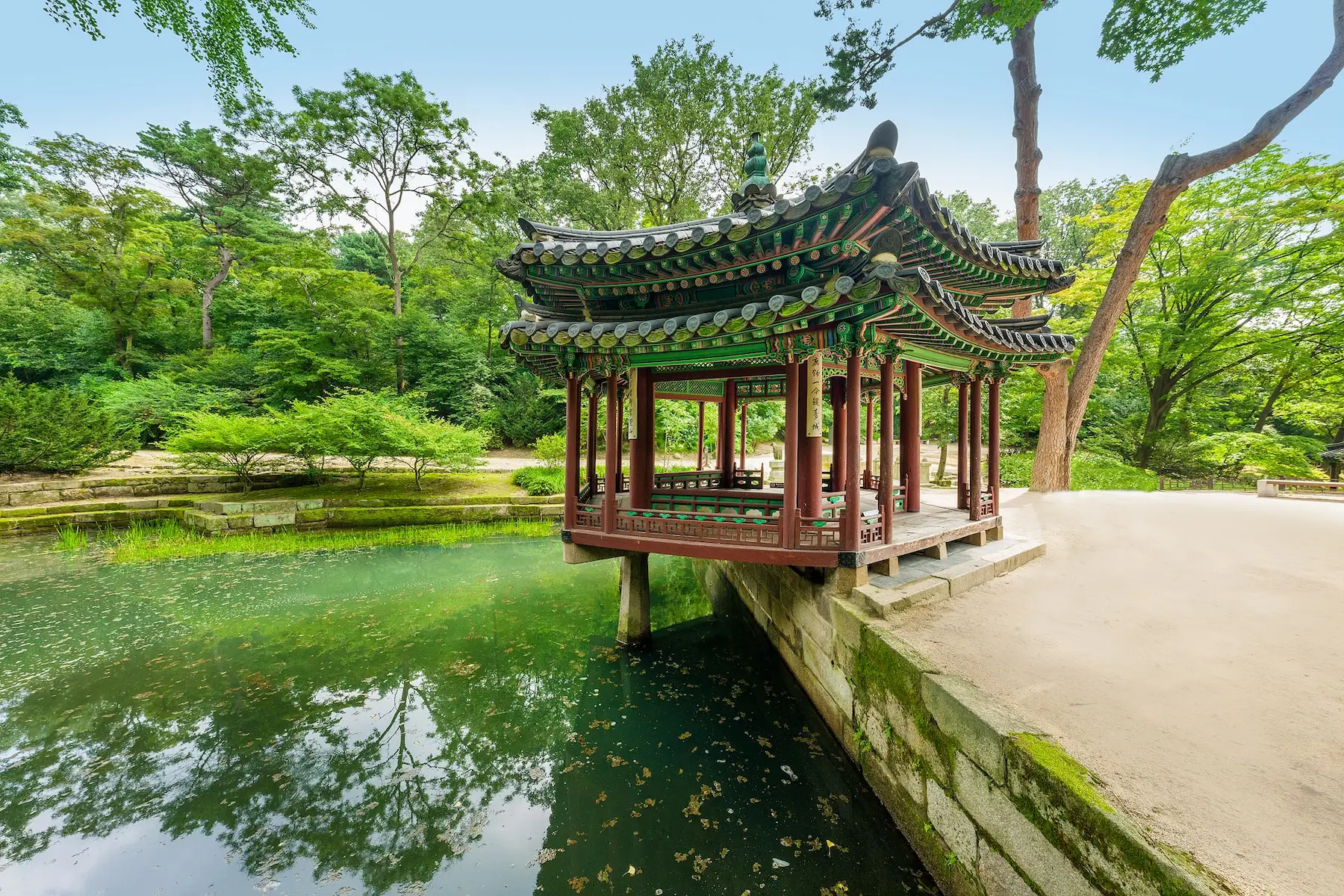
Home to a variety of pavilion styles — the hexagonal Jondeokjeong, the fan-shaped Gwalllamjeong, and the slender Pyeomusa. Along the path, look for a 400-year-old Natural Monument mulberry tree standing 12 meters tall.
The deepest and most secluded part of the garden. King Injo carved a channel into the massive Soyoam Rock to create a small waterfall — “玉流川” in his own handwriting is still visible. Cheongeuijeong is the only remaining thatched-roof pavilion in any Korean palace.
Booking tip: The Secret Garden requires a separate reservation and ticket. Weekend slots sell out 1–2 weeks in advance — book early on the official Changdeokgung website before your trip.
Visitor Information
| Address | 99 Yulgok-ro, Jongno-gu, Seoul |
| Hours | Tue–Sun, 09:00–18:00 (Closed Mondays) |
| Admission | Adults ₩3,000 / Youth ₩1,500 / Under 6 free |
| Secret Garden | Separate reservation + ₩5,000 additional fee |
| Hanbok | Free entry when wearing traditional hanbok |
| Time Needed | Palace only: 1–1.5 hrs / With Secret Garden: 2.5–3 hrs |
| Getting There | Subway Line 3, Anguk Station Exit 3 (5 min walk) |
Top 5 Photo Spots
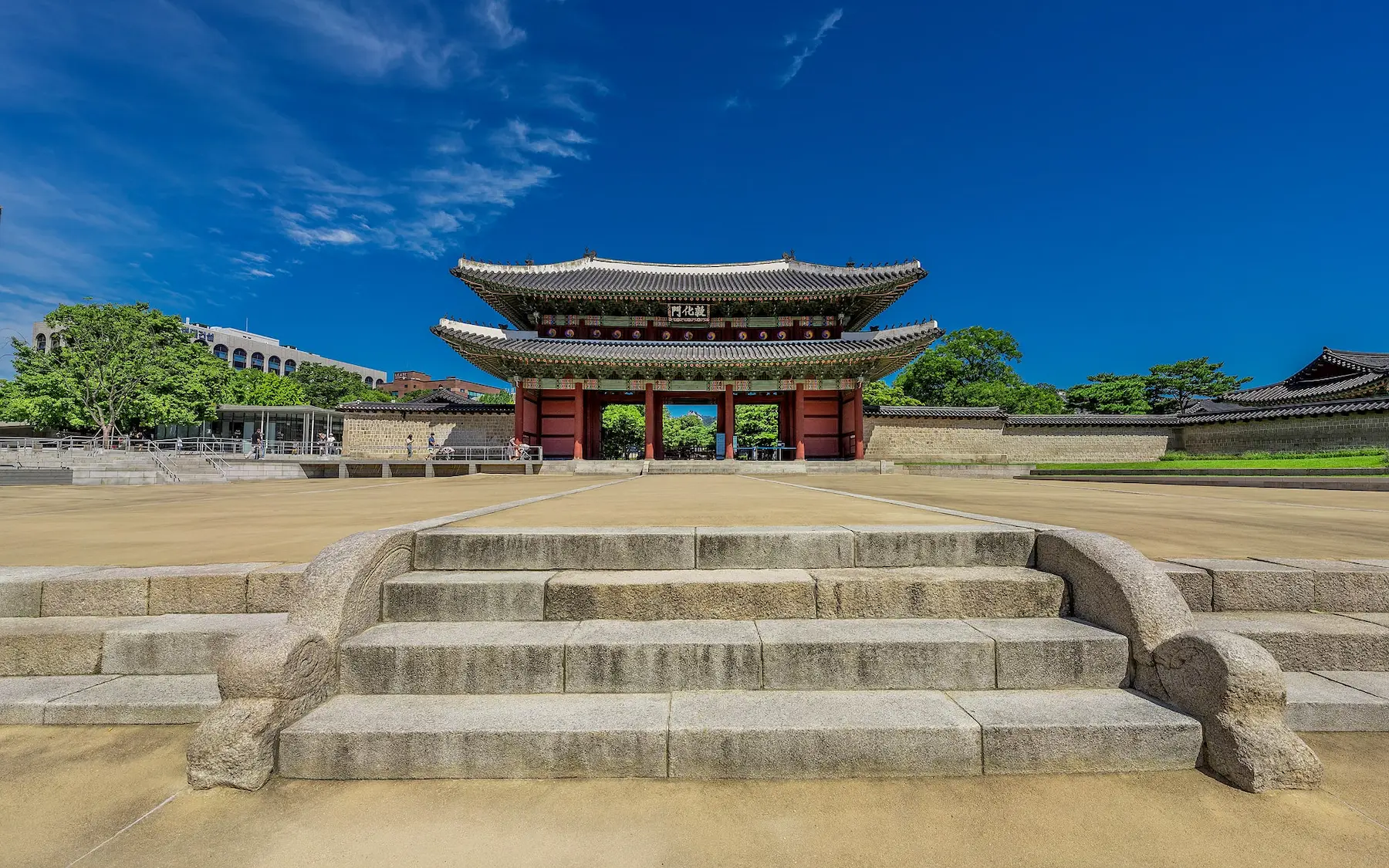
- 1Donhwamun Gate at Opening Time
Arrive right at 9am for soft morning light and no crowds. Frame the gate with the ancient zelkova trees on either side for a perfectly balanced shot. - 2Injeongjeon from Injeongmun Gate
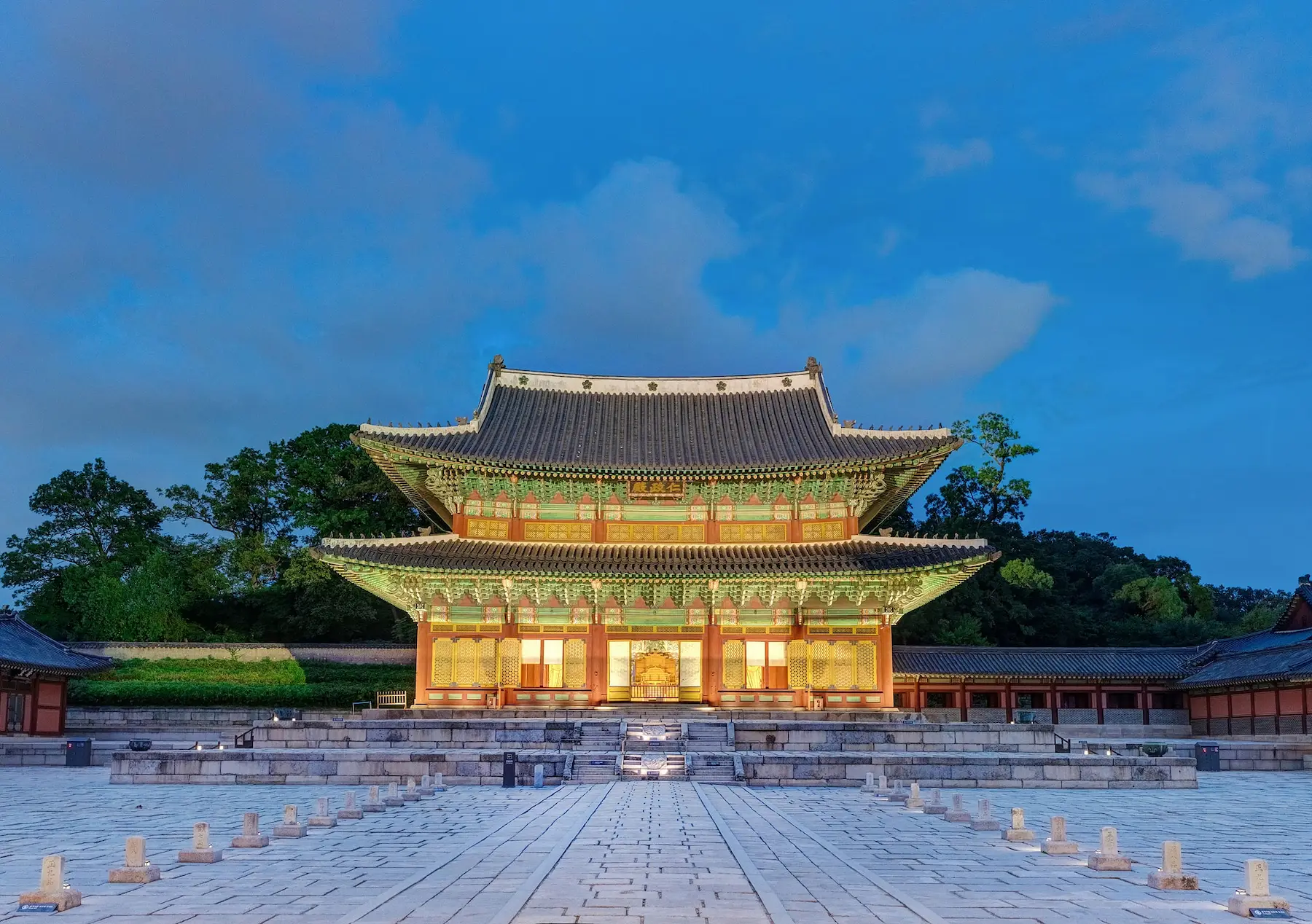
The layered composition of gate → courtyard → throne hall makes for a clean, classic architectural shot. Works beautifully on overcast days too. - 3Buyongji Reflection Shot
The mirror reflection of Juhamnu Pavilion in the still water of Buyongji Pond is unmissable. In April, spring blossoms appear in the frame too. - 4Seonjeongjeon Blue Roof
The only blue-tiled palace building in Korea. Shoot upward against a blue sky for a striking color contrast — portrait orientation works best. - 5Nakseonjae Garden Wall & Chimneys
The unpainted wood, layered stone terraces, and decorative chimneys create an intimate, timeless composition. Quiet, unhurried — a world apart from the crowds.
Start the series from the beginning with the grandest of Seoul’s five palaces
Just a short walk from Changdeokgung — a perfect half-day pairing
Book Your Visit via Klook
Affiliate Disclosure: This post contains affiliate links to Klook. If you book through these links, I may earn a small commission — at no extra cost to you. It helps keep Lucia’s Travel Studio running. Thank you so much for your support!
Hanbok Rental Voucher — Hanboknam at Changdeokgung
Rent hanbok right at the palace entrance & enjoy free entry
World Heritage Changdeokgung Palace Tour
Guided tour of the UNESCO-listed palace & Secret Garden
Seoul Half-Day / Full-Day Sightseeing Tour
Palaces, markets & top Seoul highlights in one trip
Seoul’s Palaces, Temples & Markets Tour
Full-day guided city tour covering Seoul’s iconic sites
Seoul Half-Day / Full-Day Tour (Alt. Link)
Same great tour — check for best available price
Changdeokgung is not a place to rush through. Walk slowly, look up at the trees, and let the silence of the courtyards settle around you. Where Gyeongbokgung shows you the power of Joseon, Changdeokgung shows you its soul.