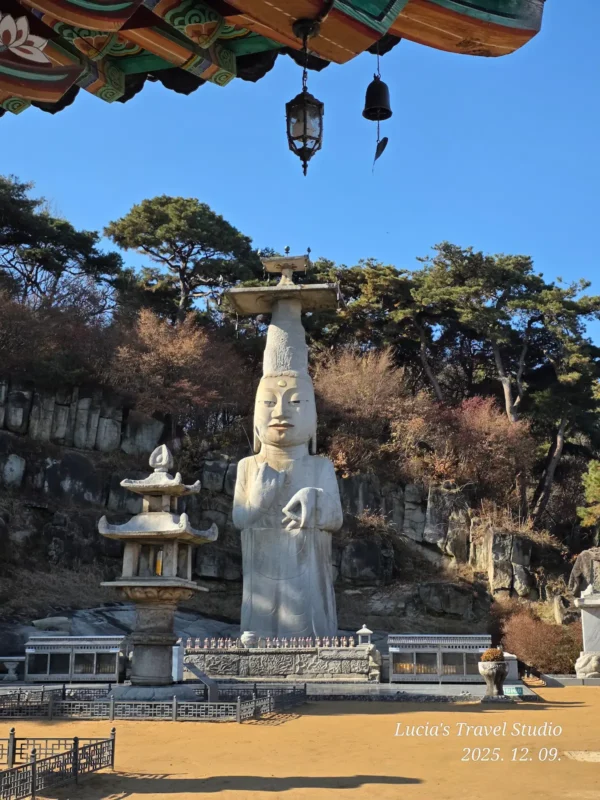
🌿 Gwanchoksa Temple & the Stone Maitreya (Eunjin Mireuk)
A Thousand Years of Faith at the Foot of Banya Mountain
When traveling through Nonsan, South Chungcheong Province,
there is one place you should not miss — Gwanchoksa Temple.
Nestled on the eastern slopes of Banya Mountain, this temple has held its place for over a thousand years.
Founded in 968 during the reign of King Gwangjong of the Goryeo Dynasty, Gwanchoksa is regarded as one of Nonsan’s most important landmarks and one of Korea’s nationally renowned Buddhist temples.

At its heart stands Eunjin Mireuk, the Stone Standing Maitreya Bodhisattva —
a National Treasure and a cornerstone of Korean Buddhist art history. 🪨✨
🌏 Before You Head Out to Gwanchoksa Temple
Before you head out, be sure to download Naver Map — Korea’s most reliable navigation app. 🌍
It provides accurate walking, driving, and public transportation directions in English, making your travels easier and more enjoyable.
🚪 1. Entering the Temple — Four Heavenly Kings Gate & Haetalmun
After passing the Iljumun Gate, visitors are welcomed by the Four Heavenly Kings Gate, which symbolizes the boundary between the everyday world and the sacred space beyond,
with guardian deities protecting the temple from all directions. 🛡️
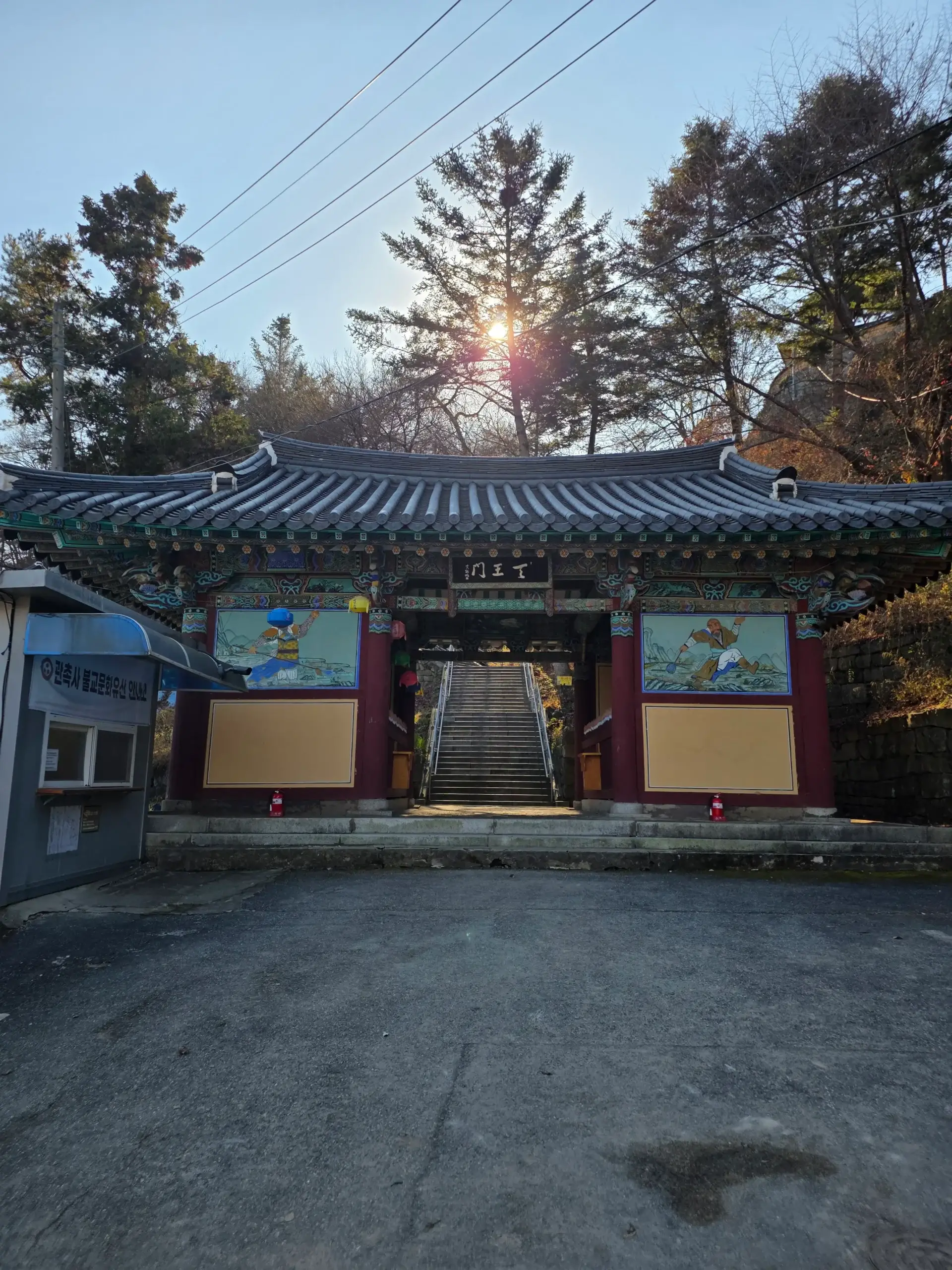
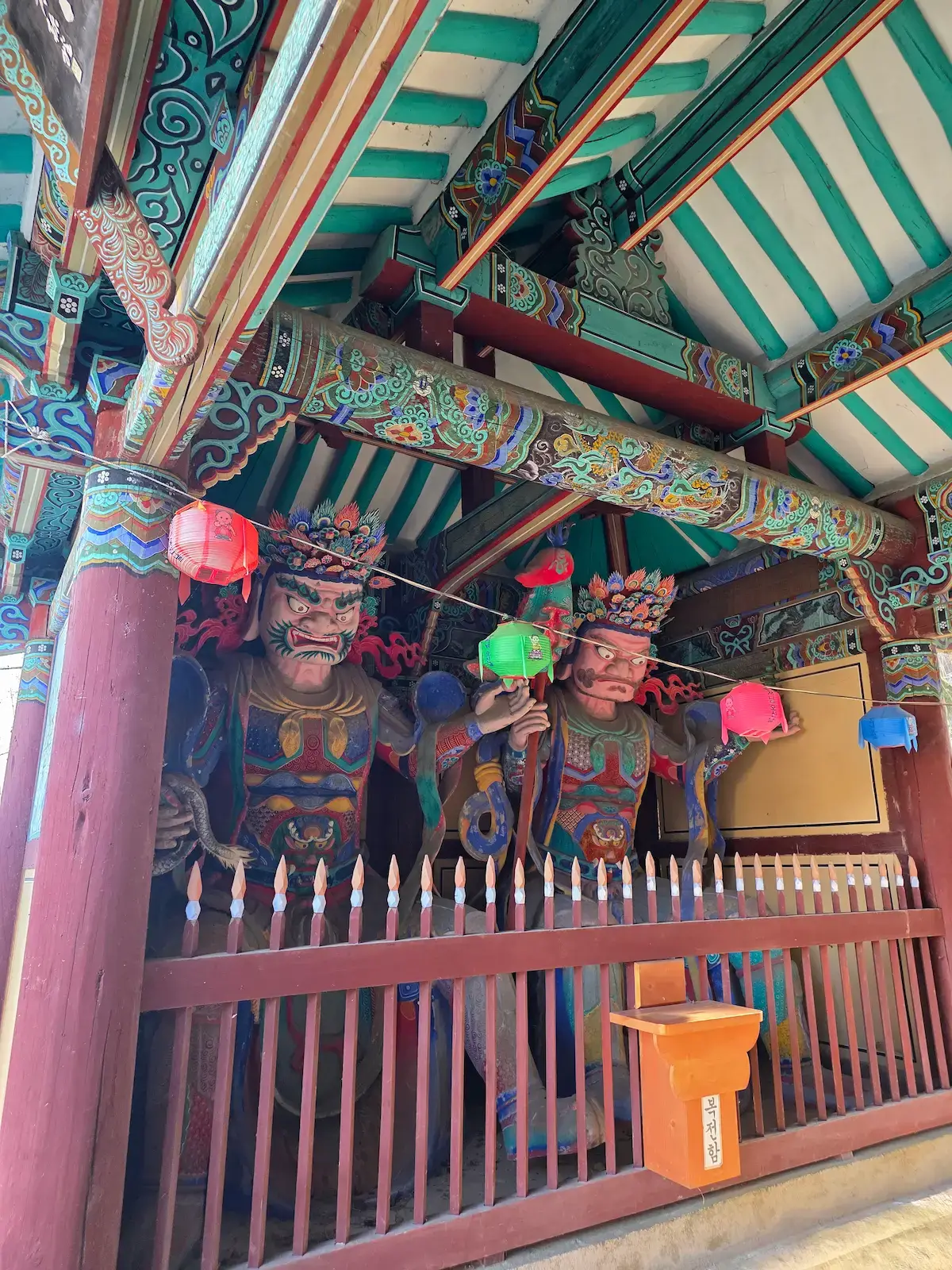
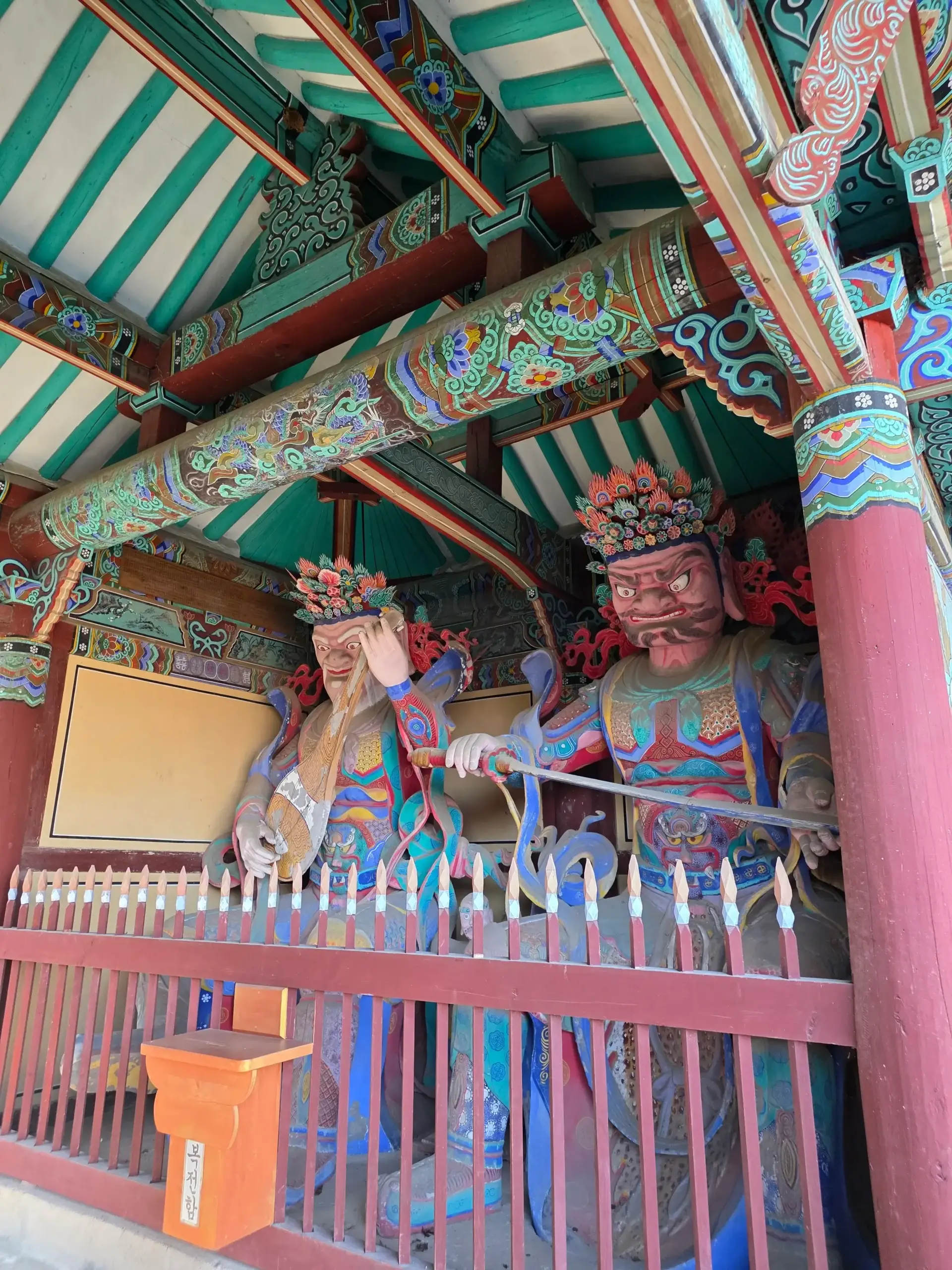
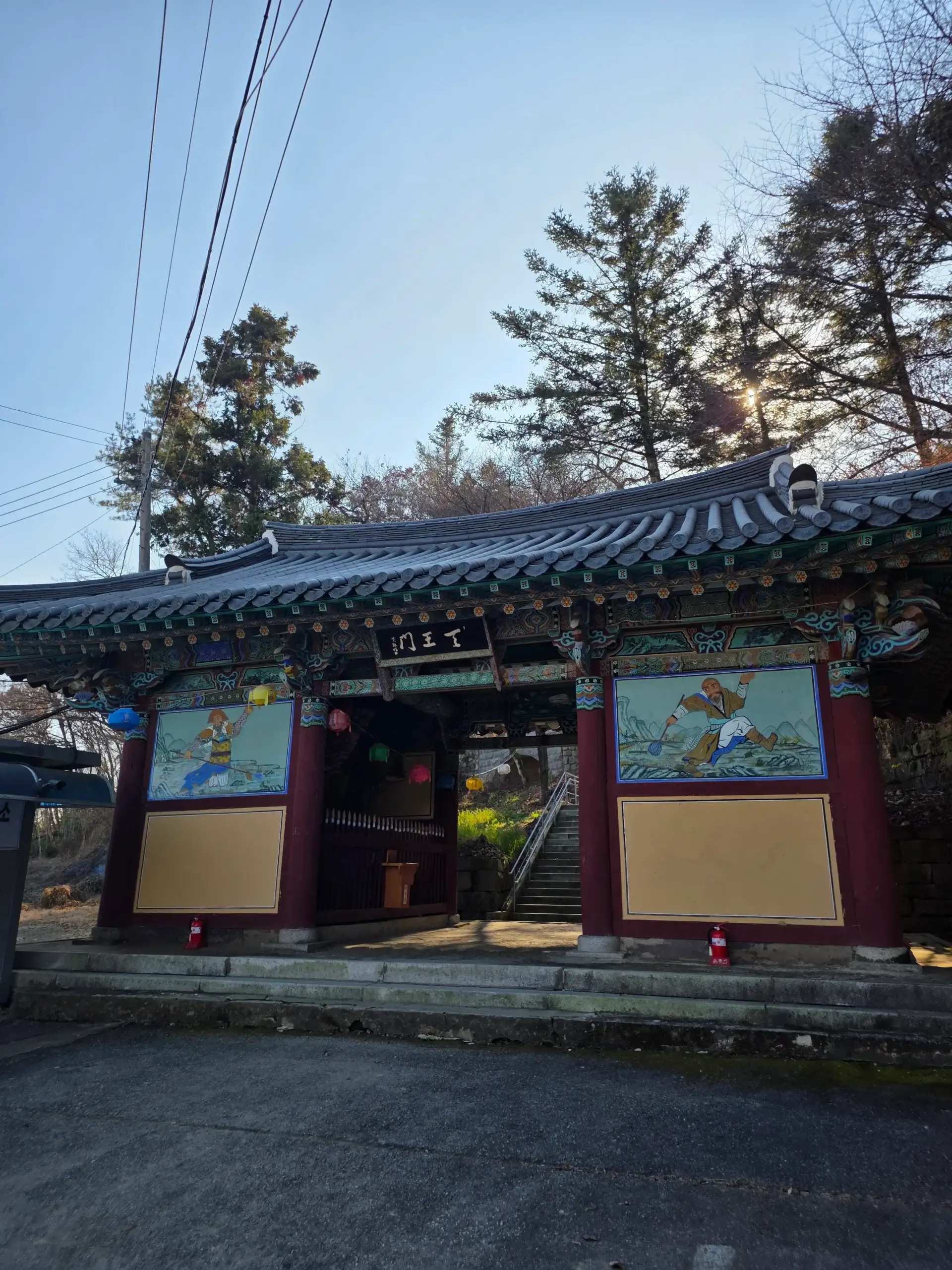



After passing through the Four Heavenly Kings Gate, you climb nearly 180 stone steps, winding your way through a grove of willow trees. 🌿
With the thought of meeting Eunjin Mireuk ahead,
your heart naturally grows quiet and reverent.
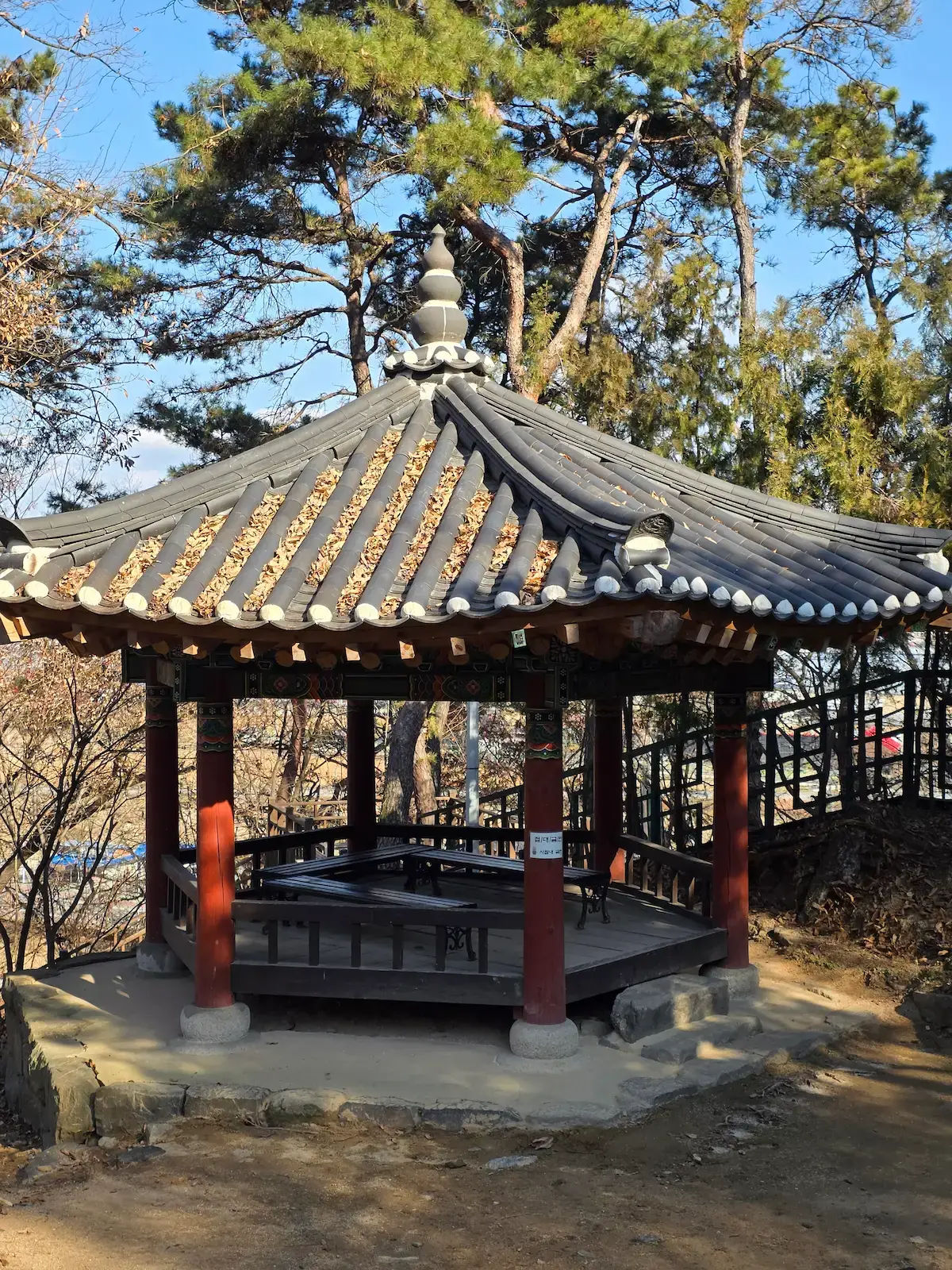
As the steps curve gently to the right, the pavilion **Myeonggokru** comes into view —
a beautifully crafted structure offering a peaceful rest spot with a view of the temple grounds. 🏯
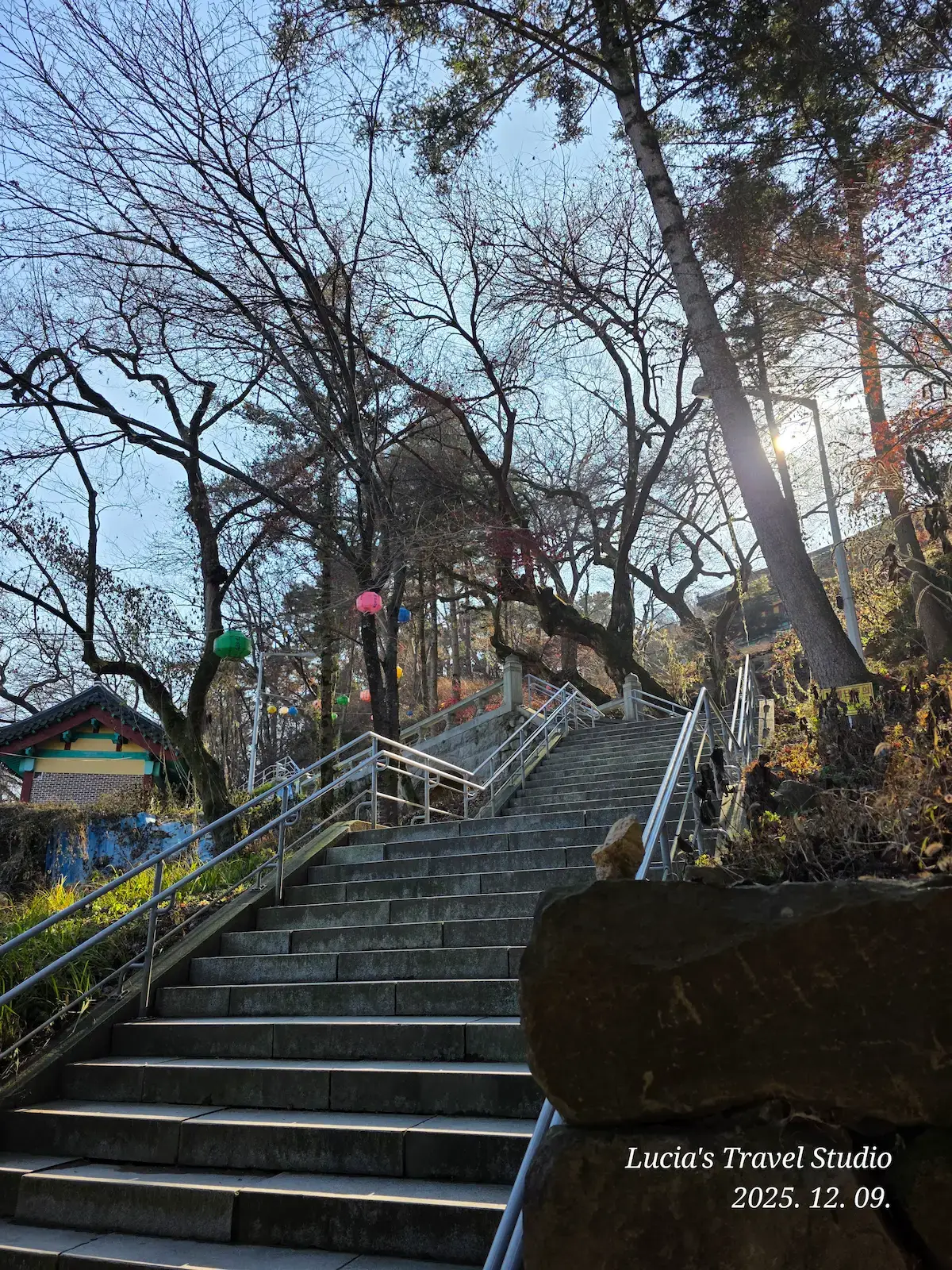
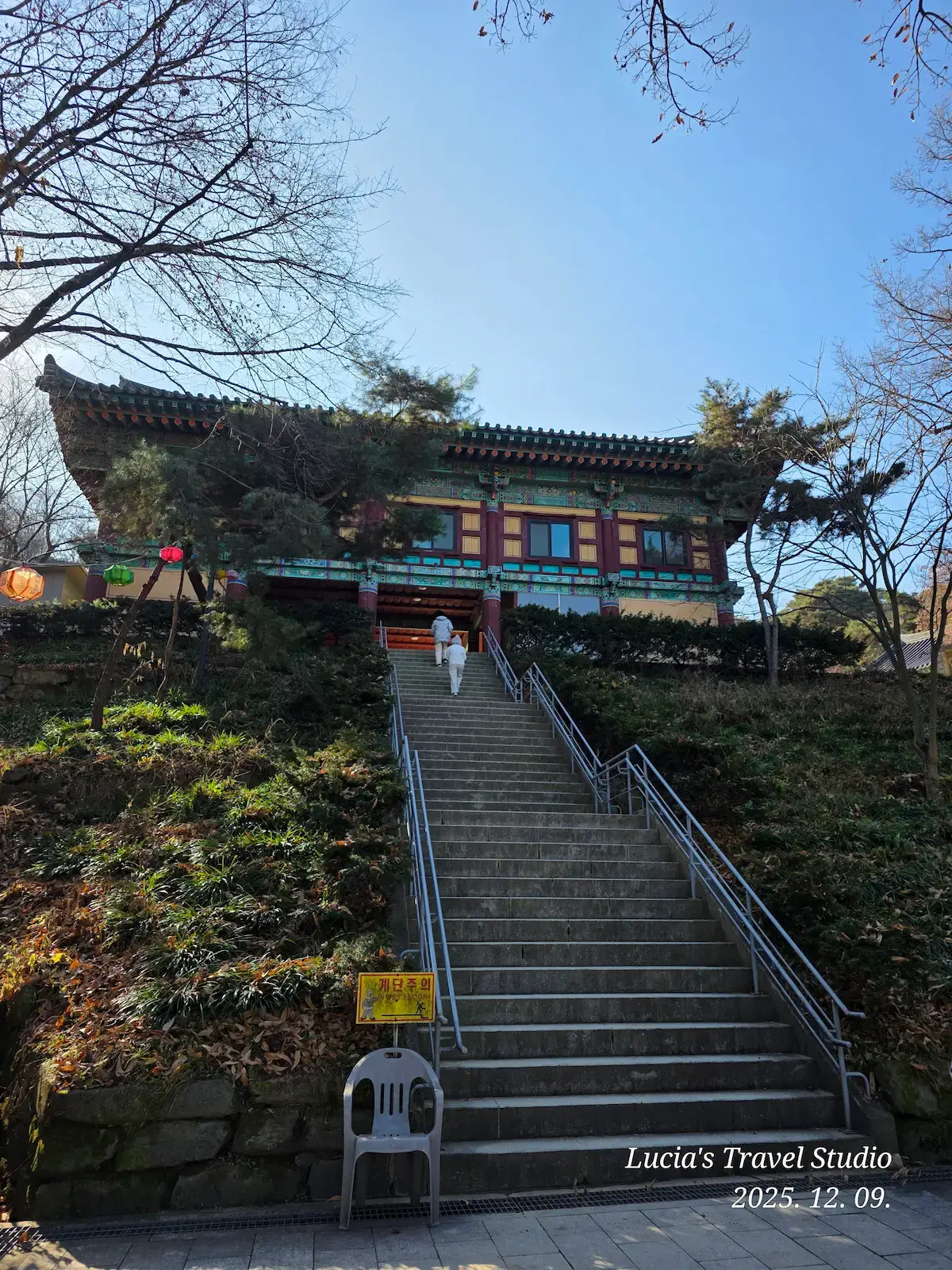
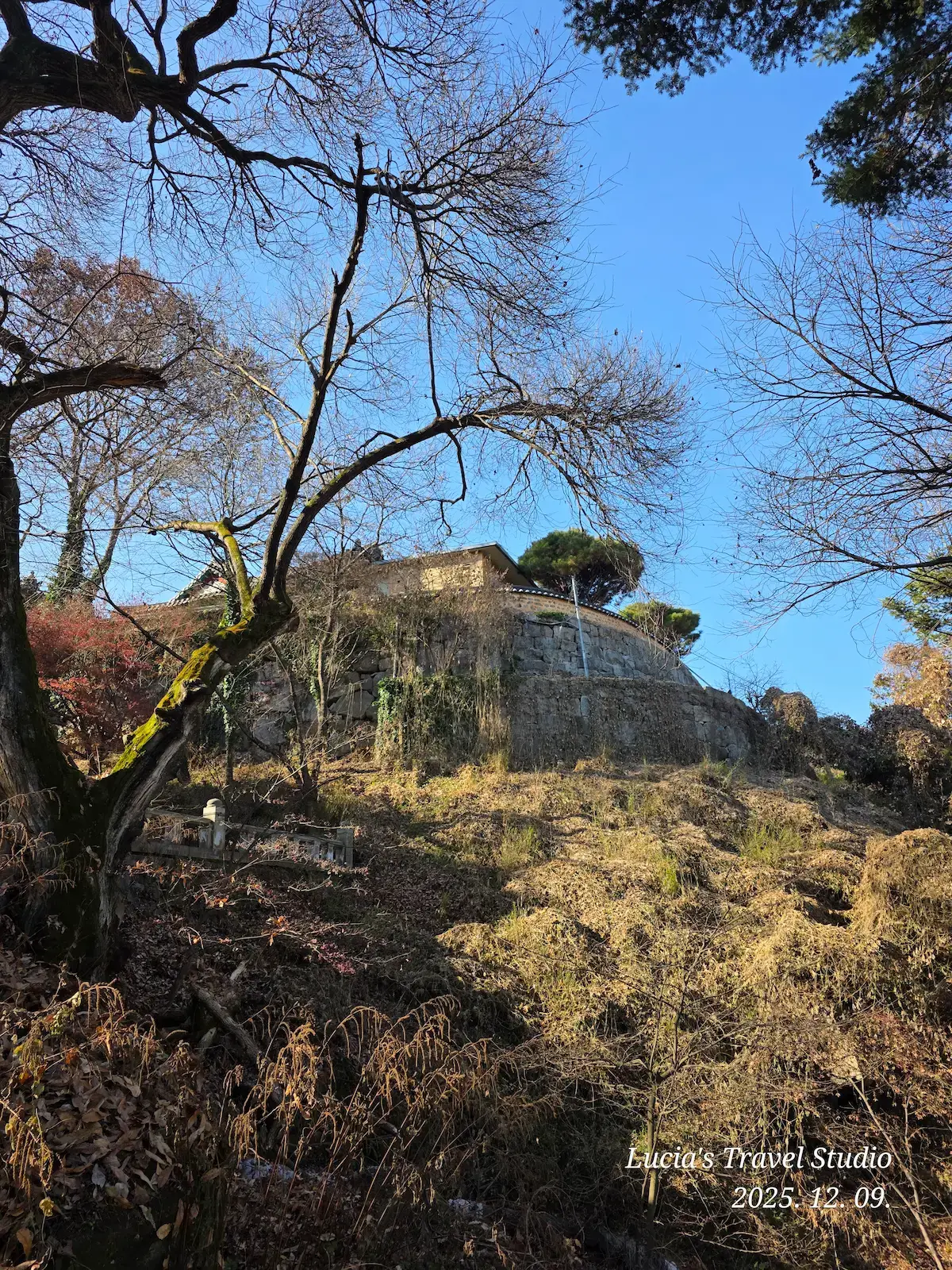
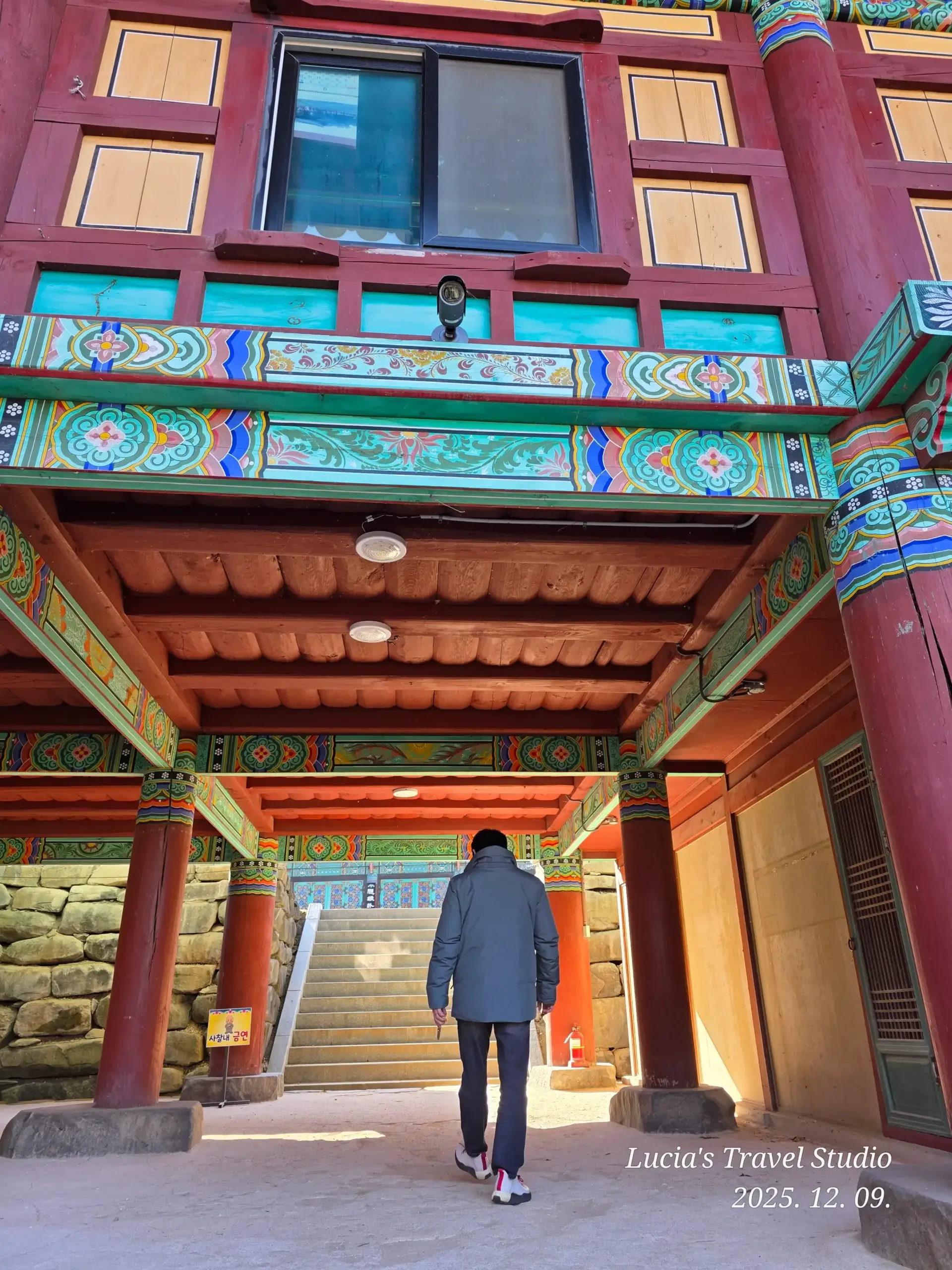
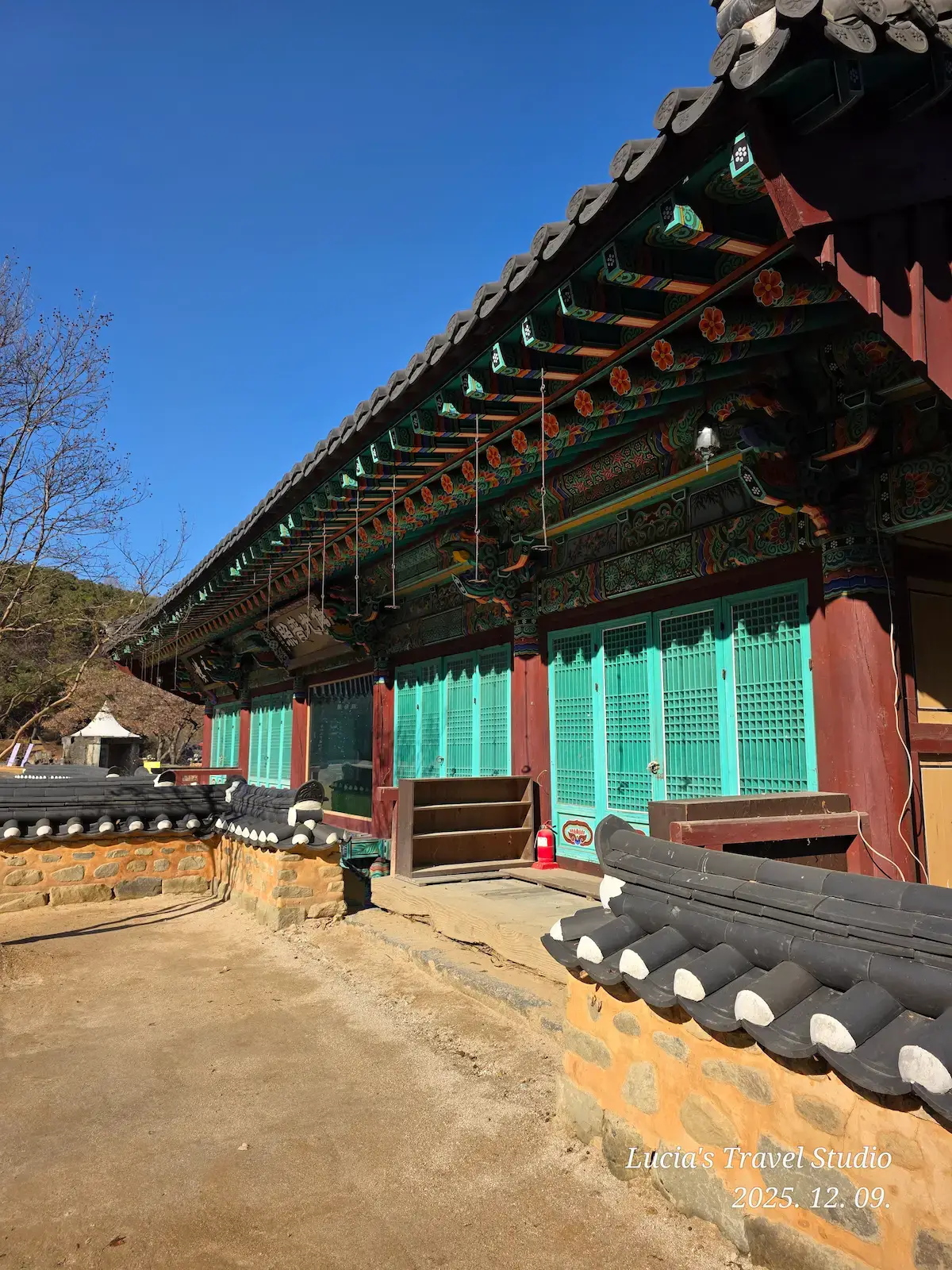
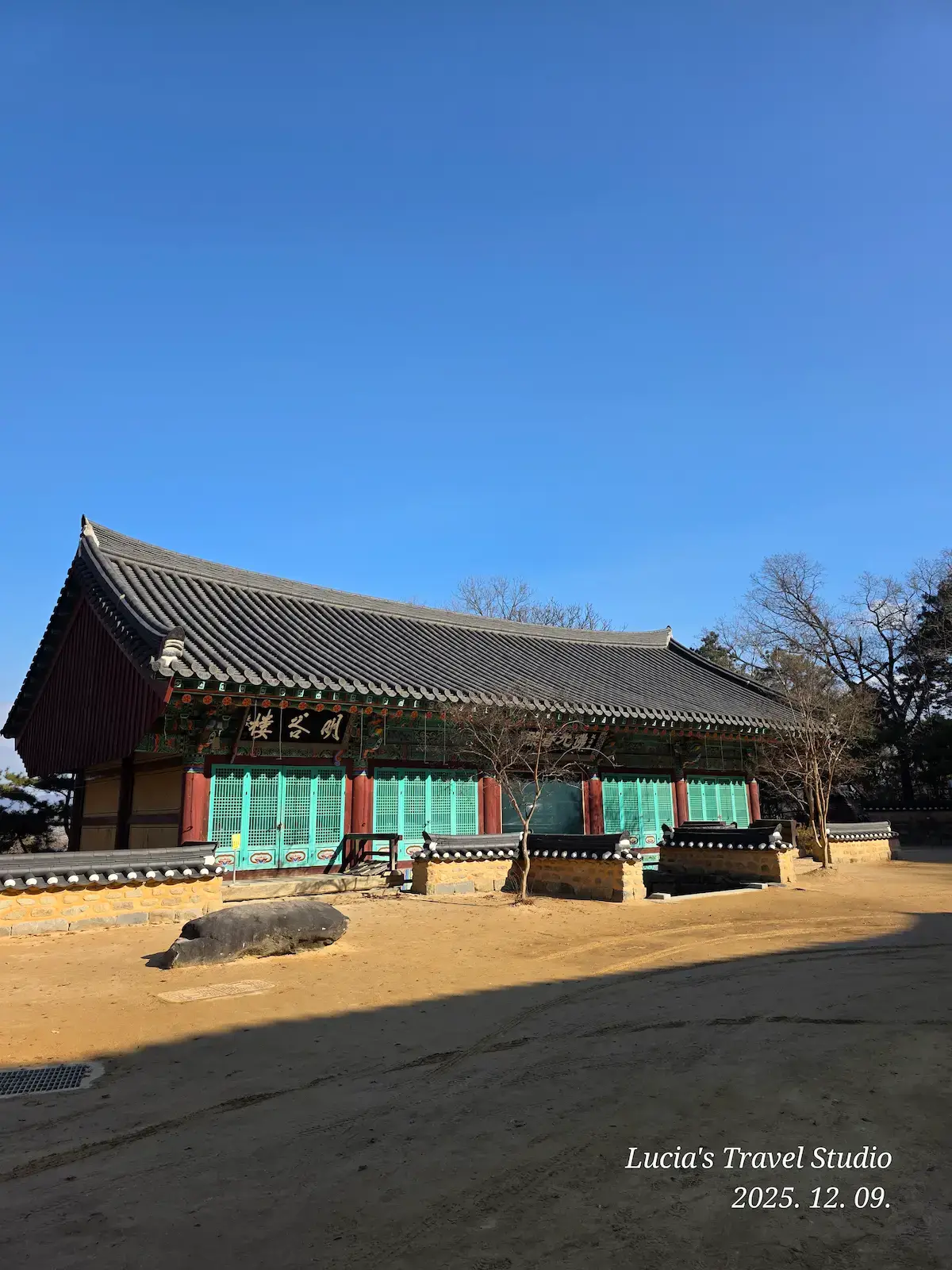
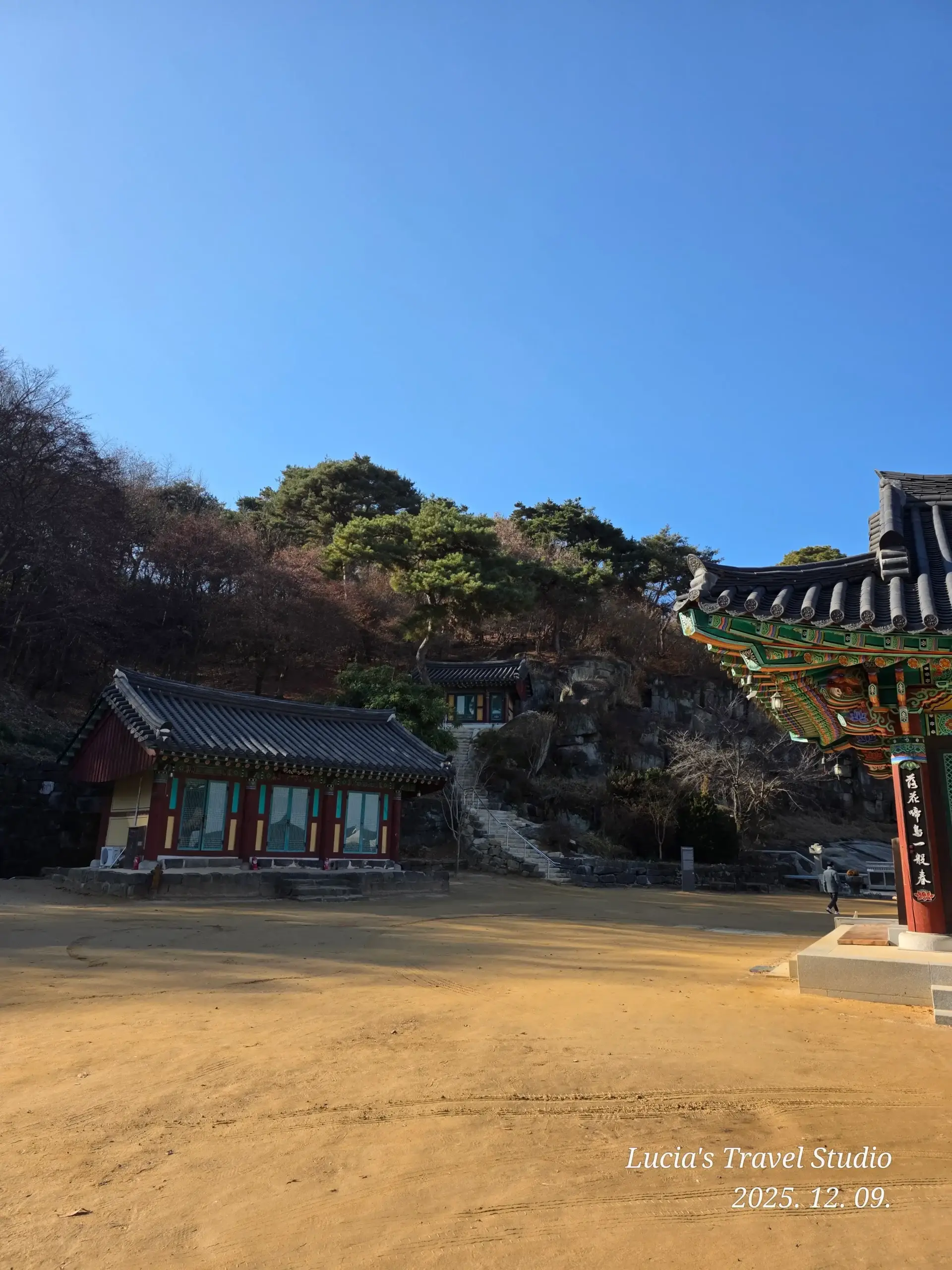


At the top of the steps,
the grounds of Gwanchoksa Temple unfold gently along the foothills of Banya Mountain —
quiet, modest, and timeless. 🌿
🏯 2. Daegwangmyeongjeon Hall
Beyond the stone gate, Daegwangmyeongjeon Hall comes into view as the central hall of the temple.
Unlike most Korean temples centered on Shakyamuni Buddha,
Gwanchoksa places Vairocana Buddha at its spiritual core — a distinctive feature of this historic temple.
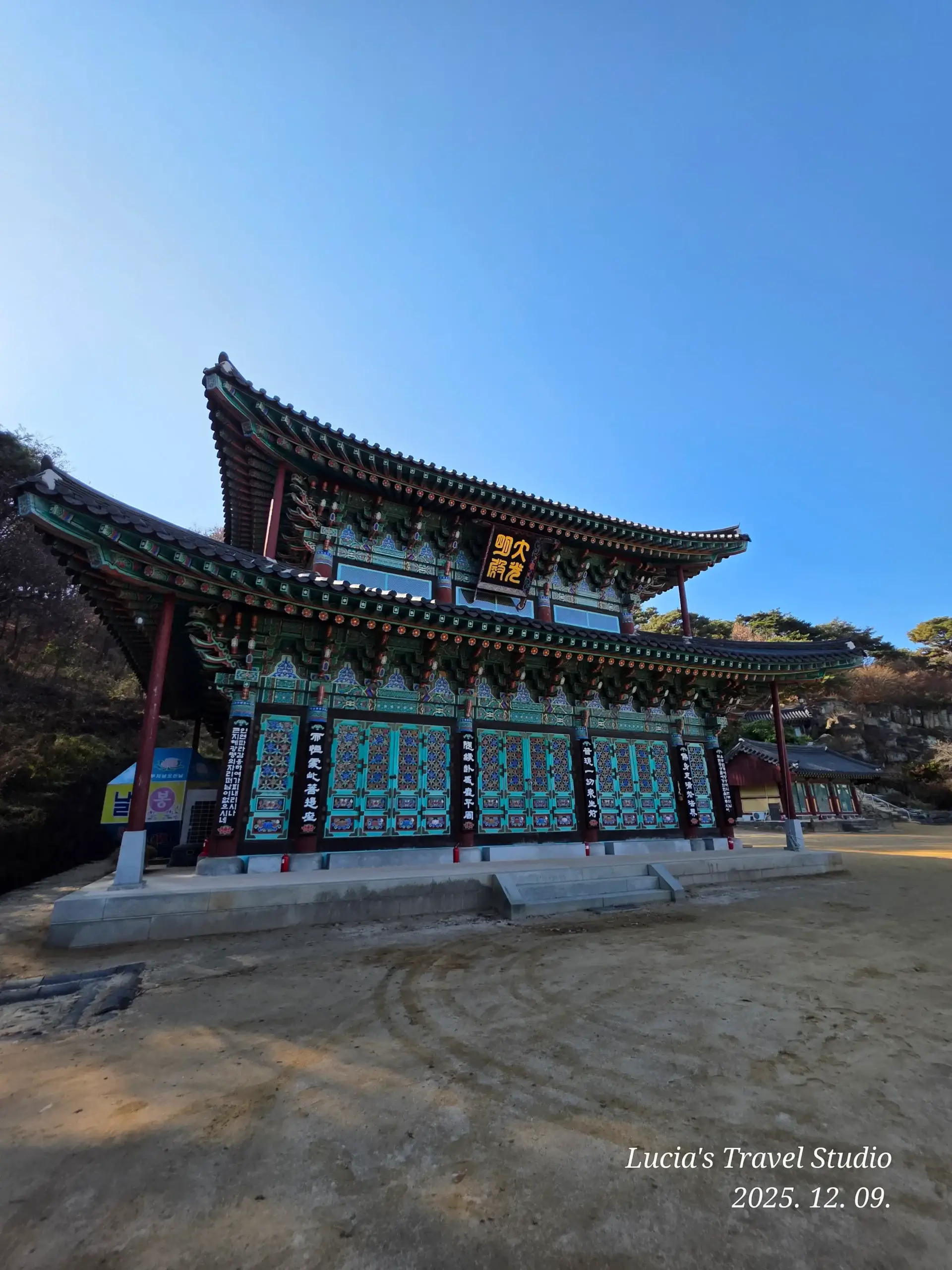
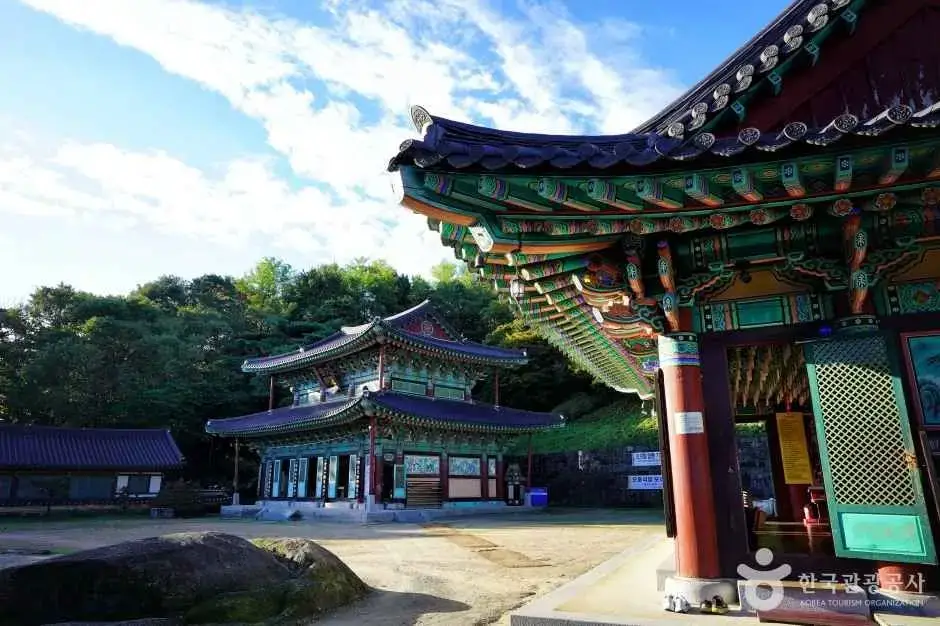
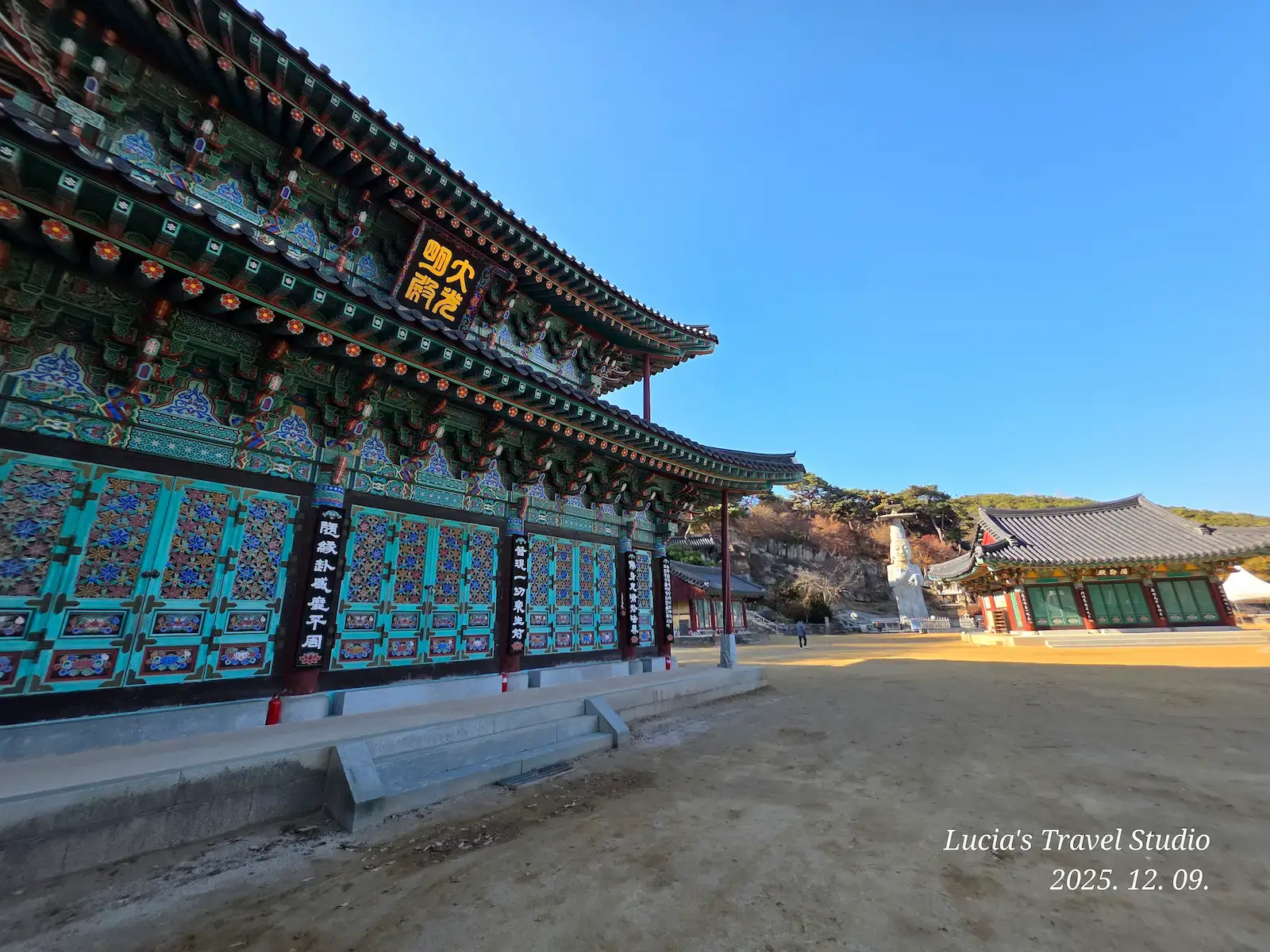
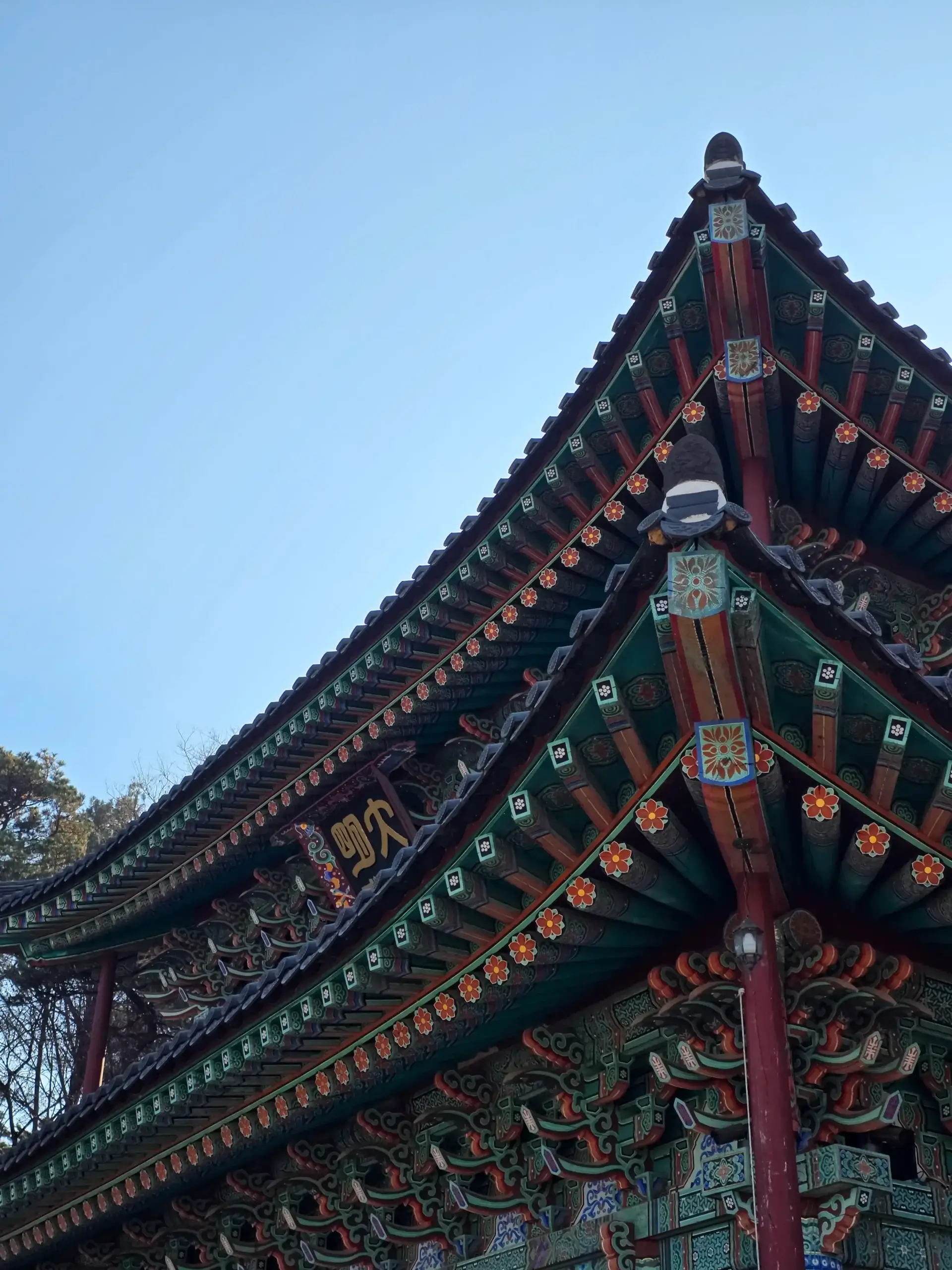
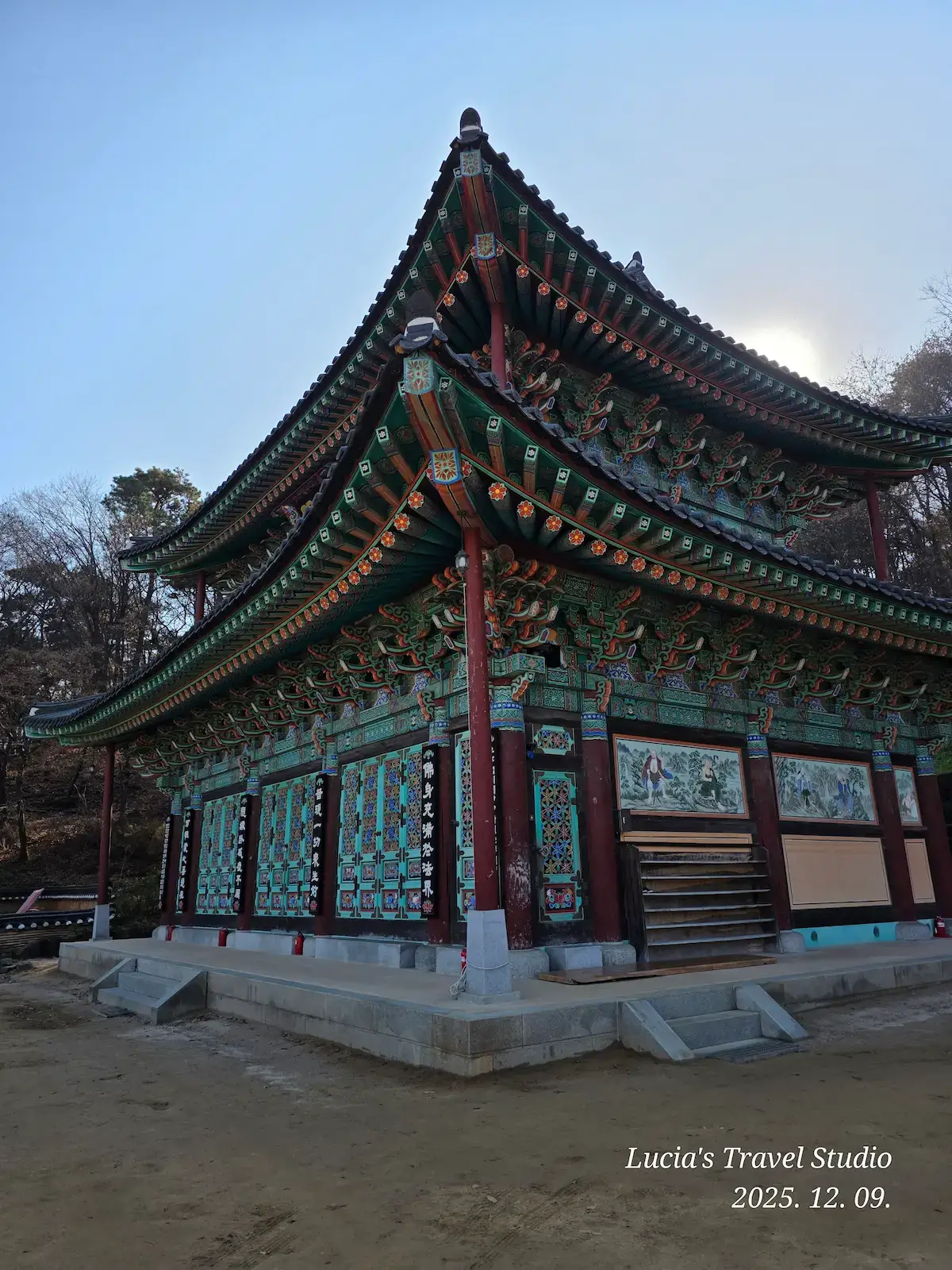
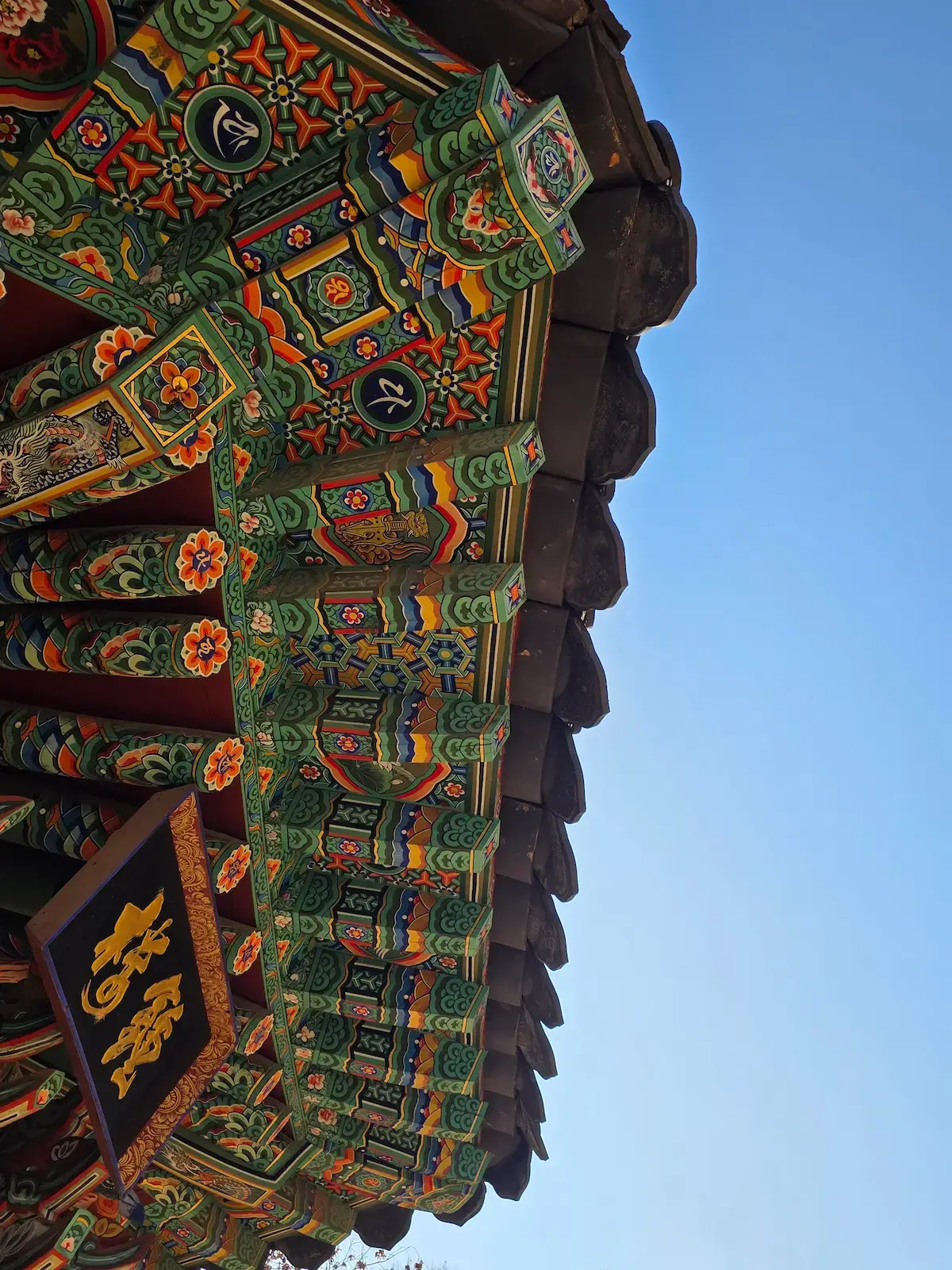


Though the building appears two stories tall from the outside,
the interior is an open, single-story space that feels calm yet dignified.
Major rituals and ceremonies are held here, and the ornate altar naturally draws visitors into quiet reflection. 🙏
The hall may not be large, but it follows traditional temple layout faithfully.
Its low roofline and simple wooden structure complete the serene atmosphere of Gwanchoksa Temple
🪷 3. Mireukjeon Hall
Standing directly in front of the Stone Maitreya is Mireukjeon Hall.
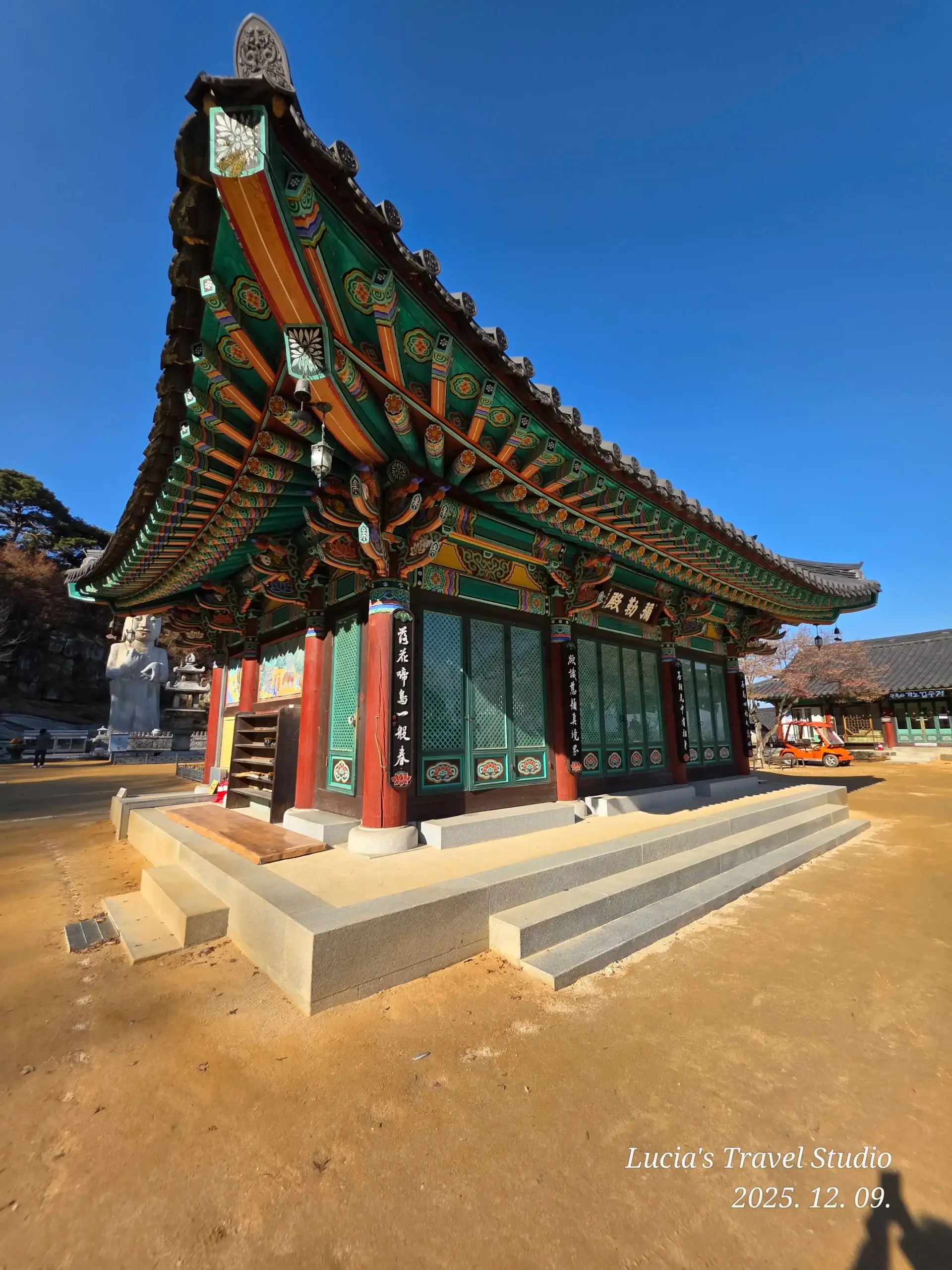
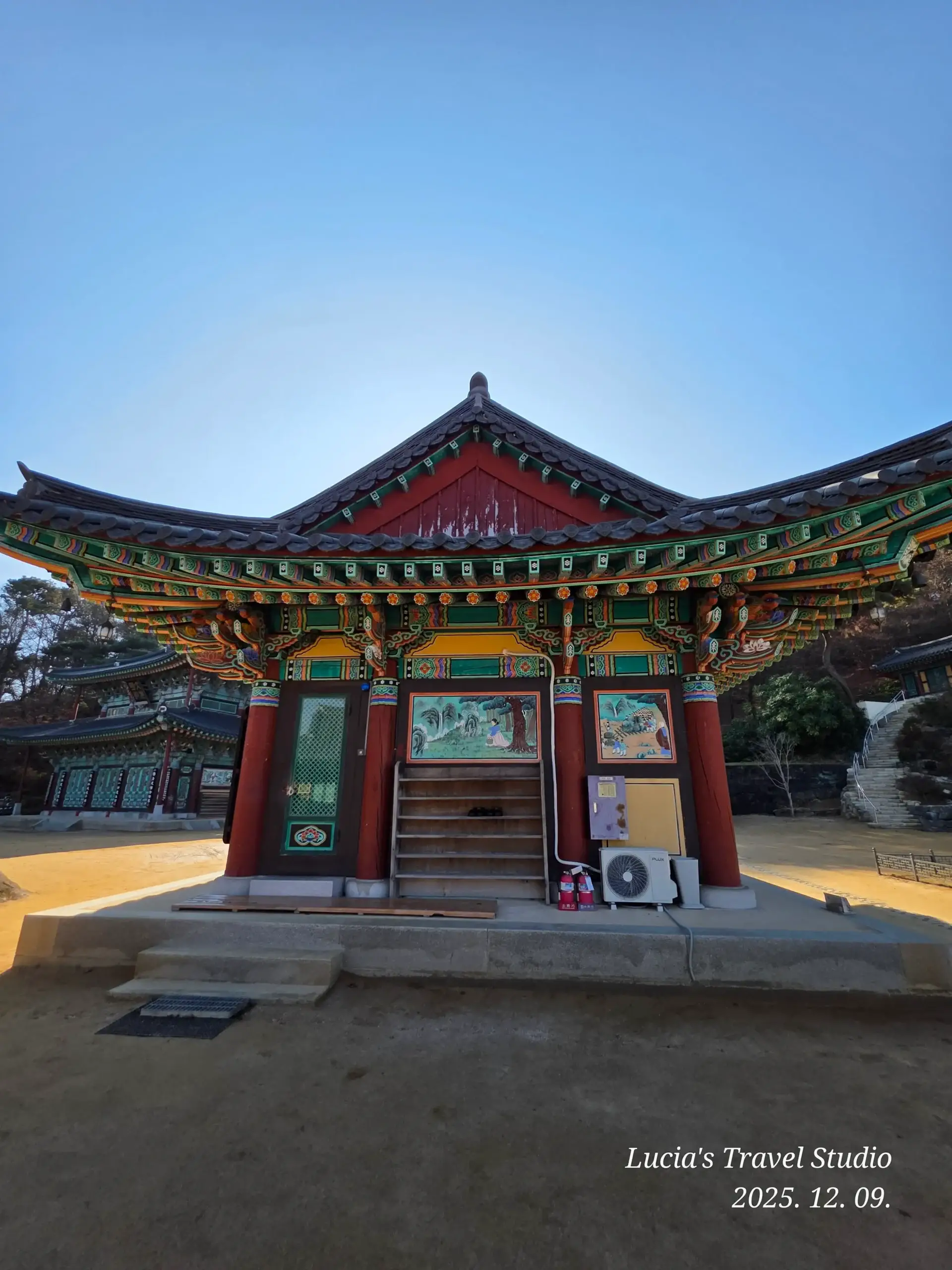
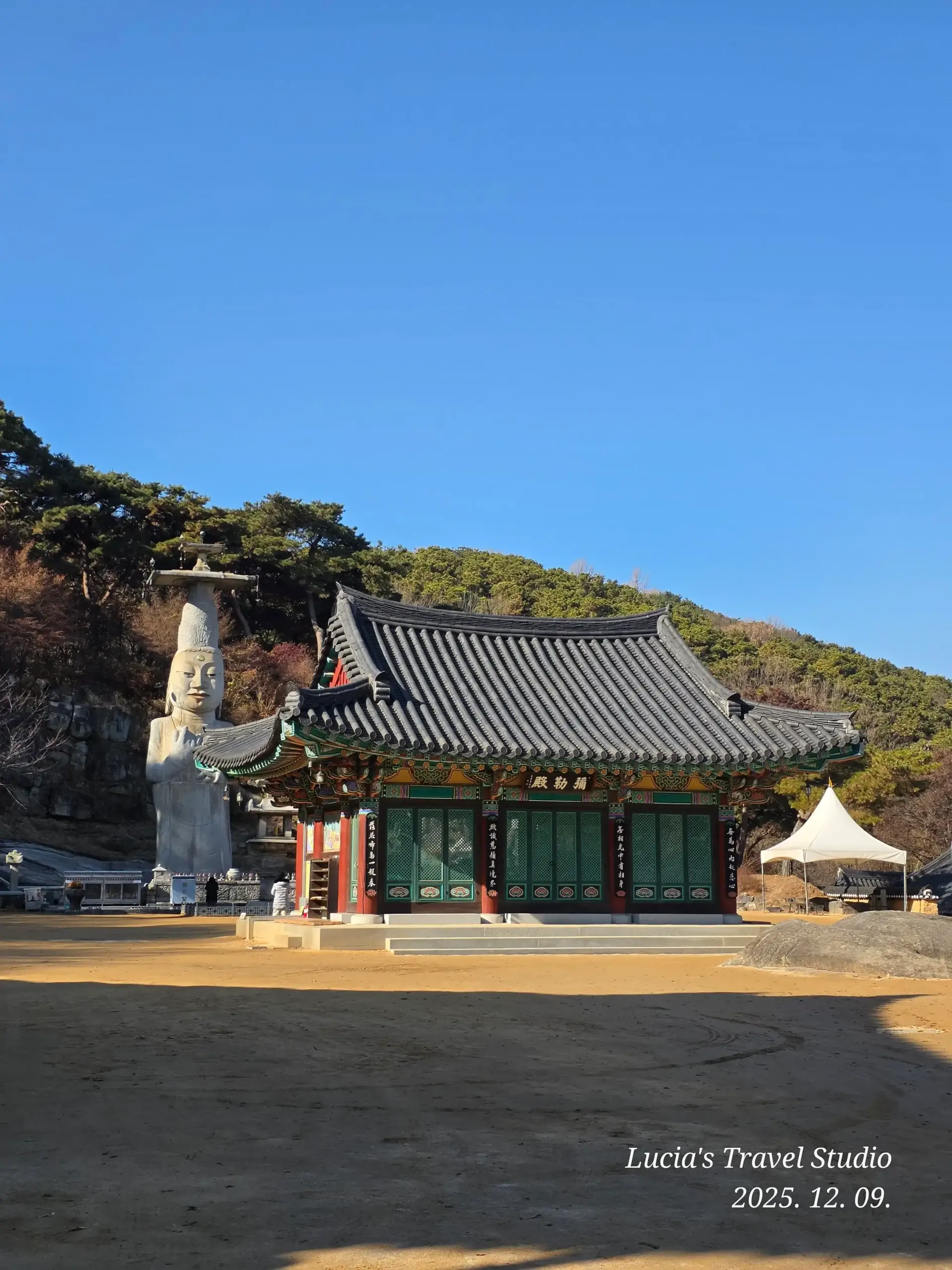
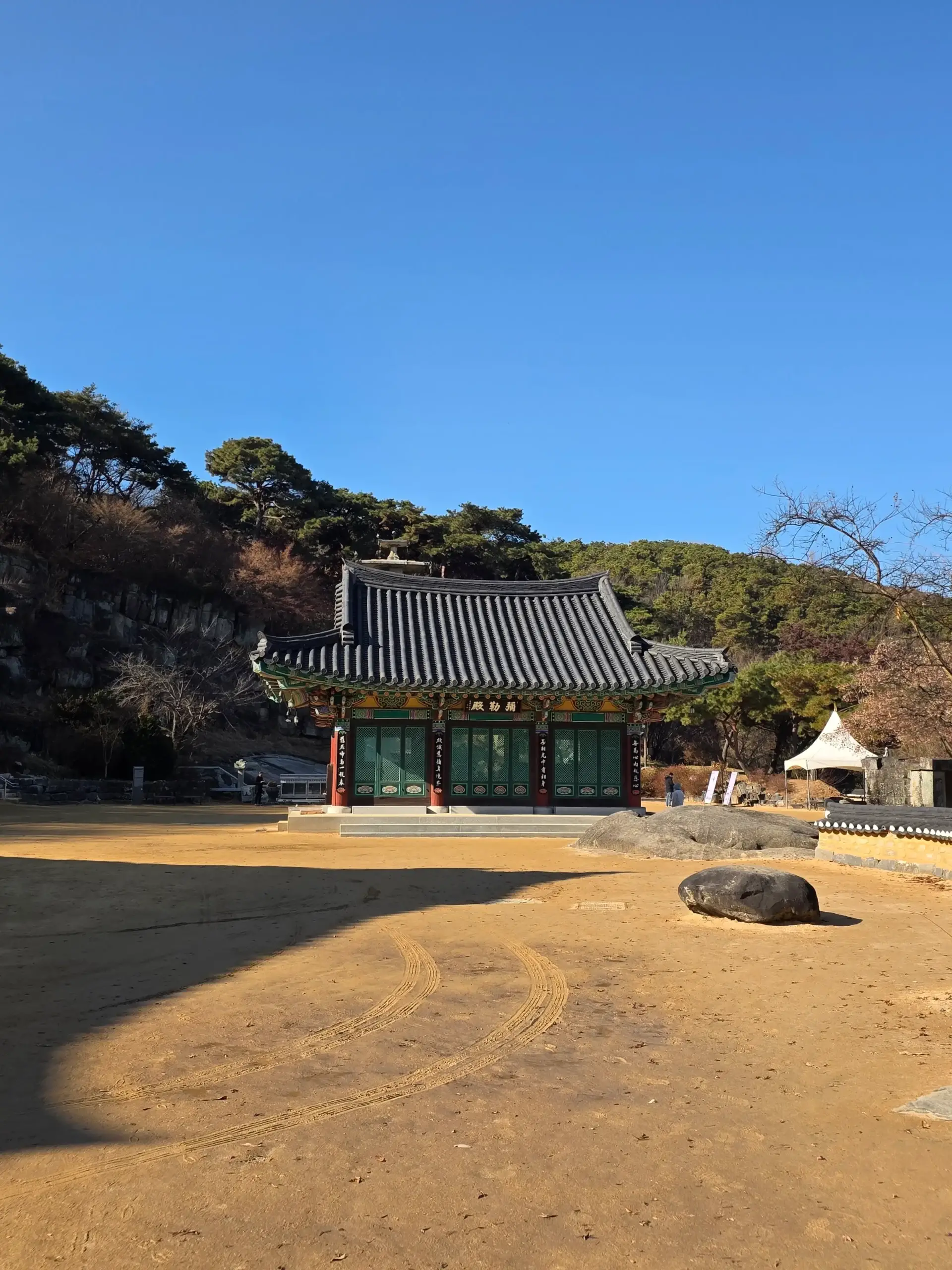
From inside, visitors can face Eunjin Mireuk directly while praying,
a layout designed to strengthen the spiritual connection between the worshipper and the statue. 🌿
⛰️ 4. Samseonggak Shrine
At the highest point of the temple grounds sits Samseonggak Shrine,
where the Mountain Spirit, Chilseong (the Seven Stars), and Dokseong are enshrined together.
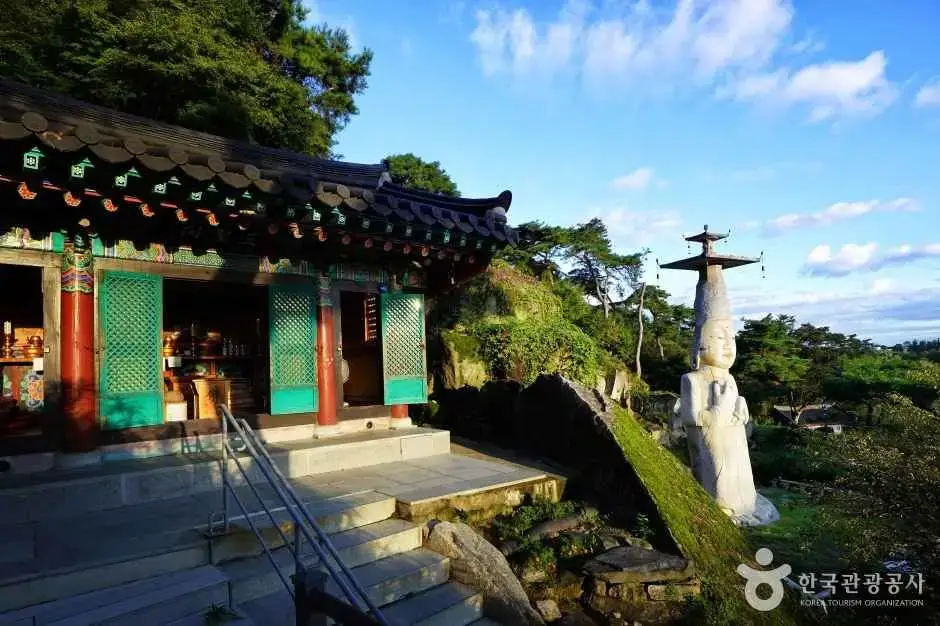
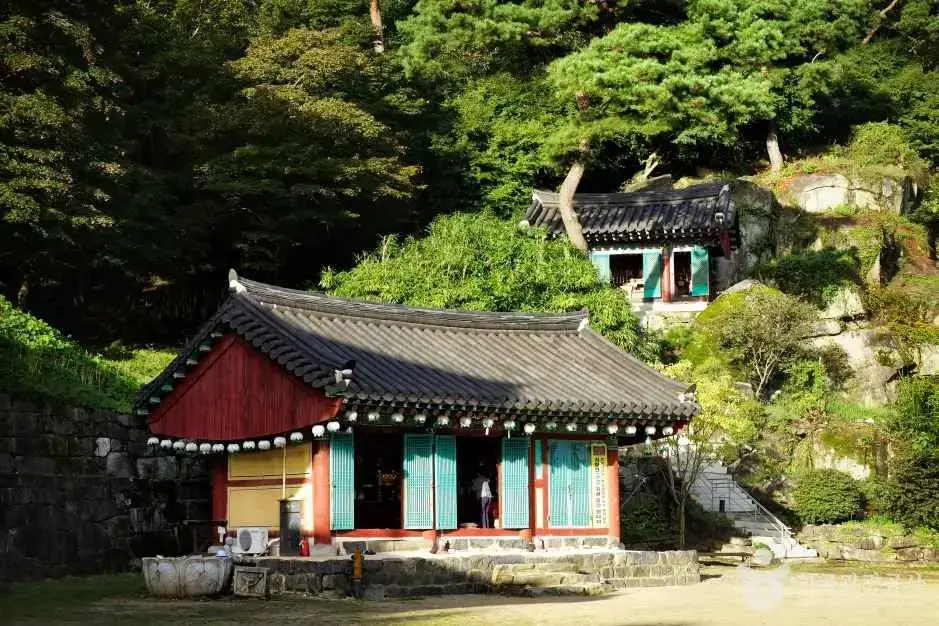
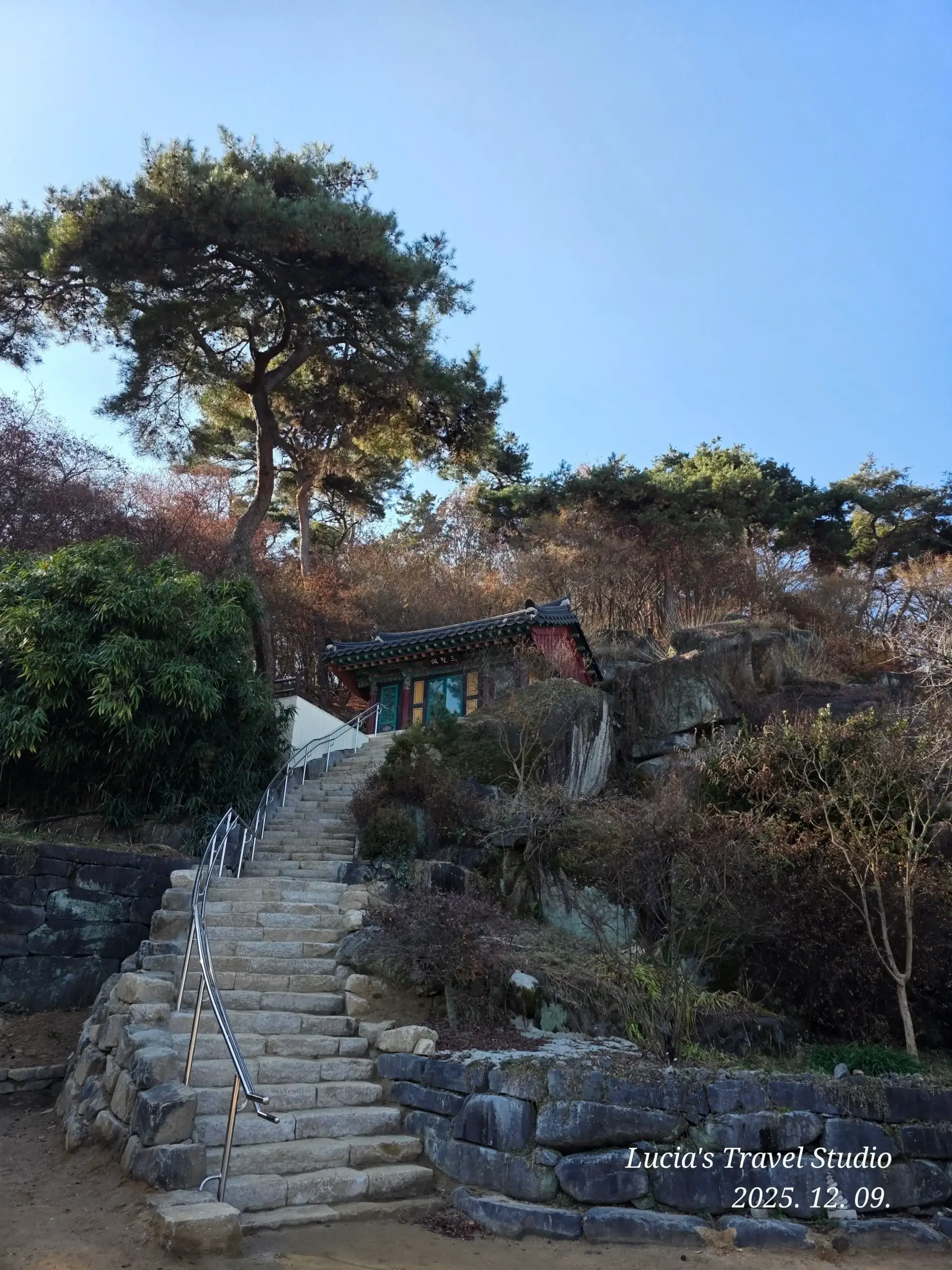
From here, you can look out over the entire Gwanchoksa temple complex —
a quiet moment well worth lingering over. 🌤️
🪨 5. The Stone Standing Maitreya (Eunjin Mireuk)
A Monumental Face That Holds Time
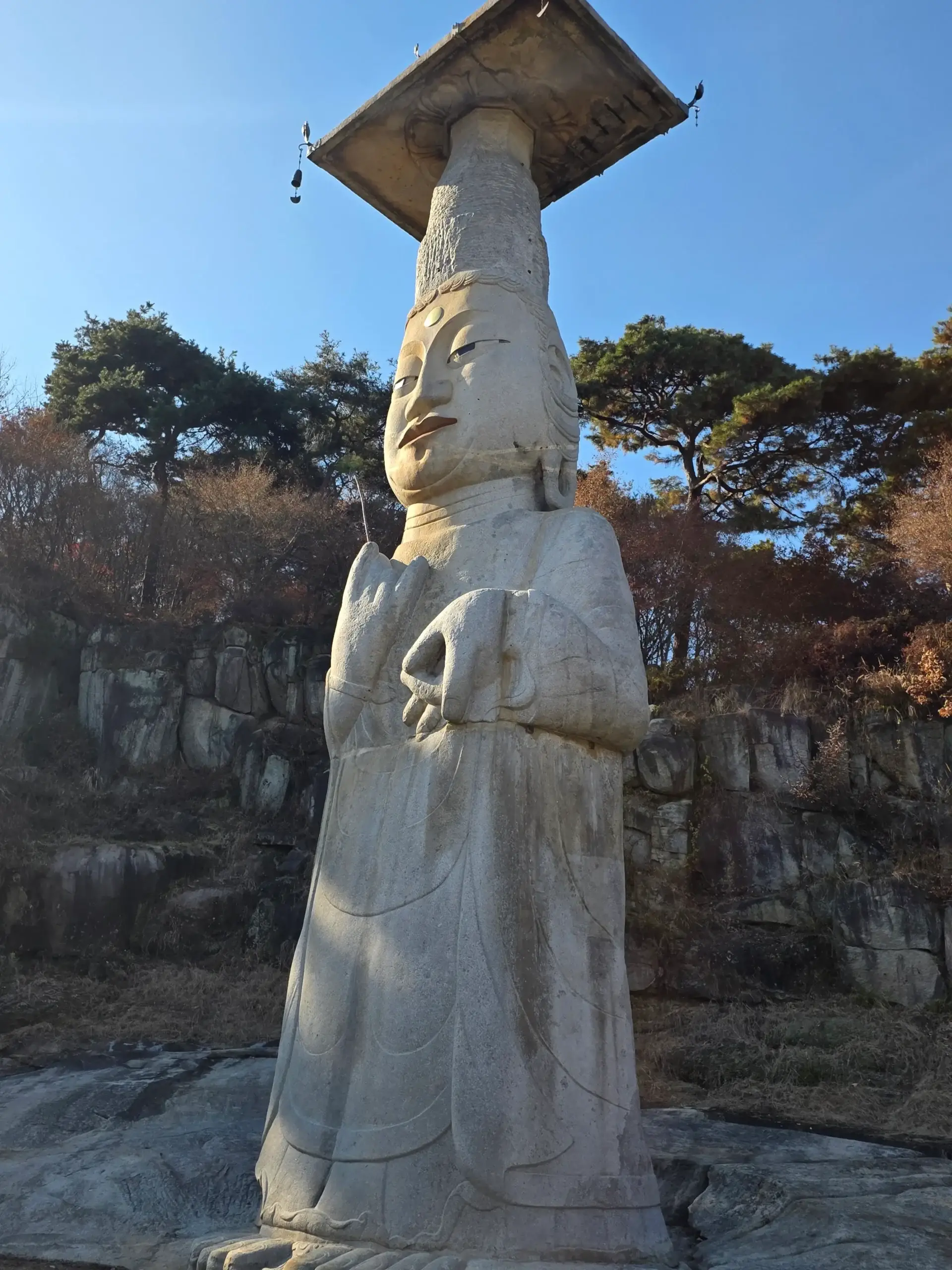
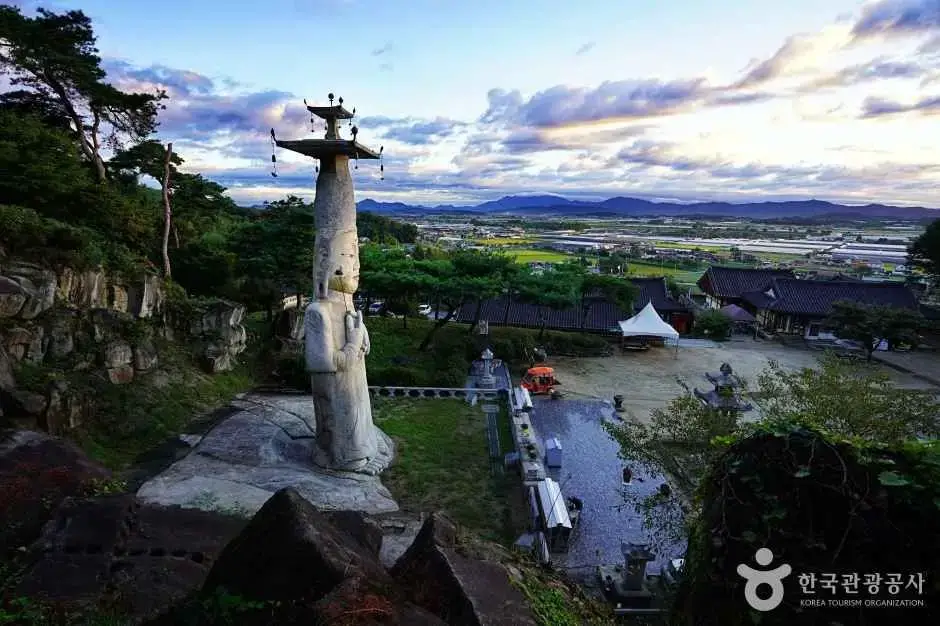
At the heart of Gwanchoksa stands the Stone Standing Maitreya Bodhisattva,
an awe-inspiring figure that symbolizes hope, wisdom, and eternal compassion, rising to approximately 18 meters, the largest stone Buddha statue in Korea.
Historical records state that the statue was created between 970 and 1006,
led by the monk Hyemyeong with the help of more than one hundred artisans.
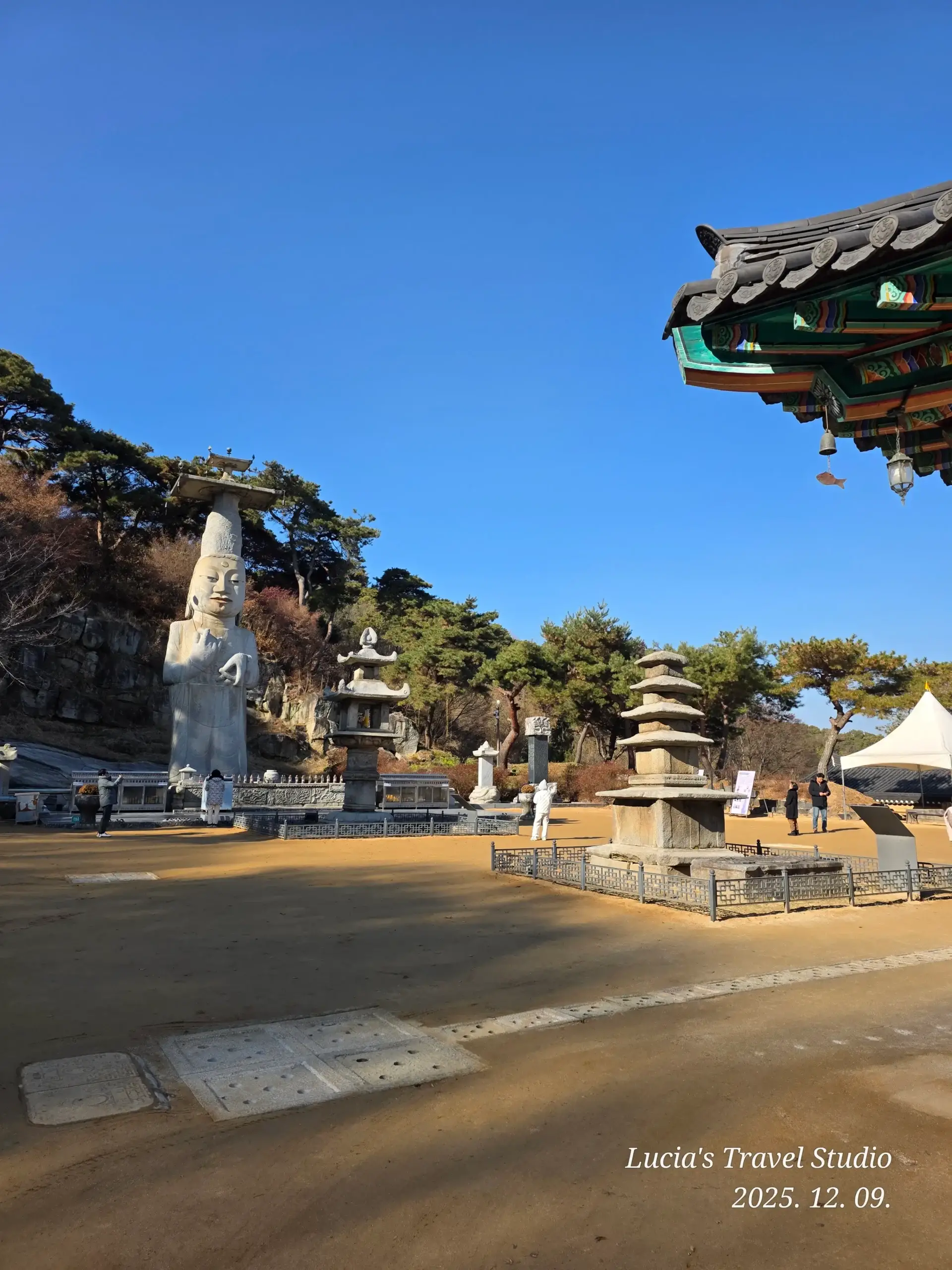
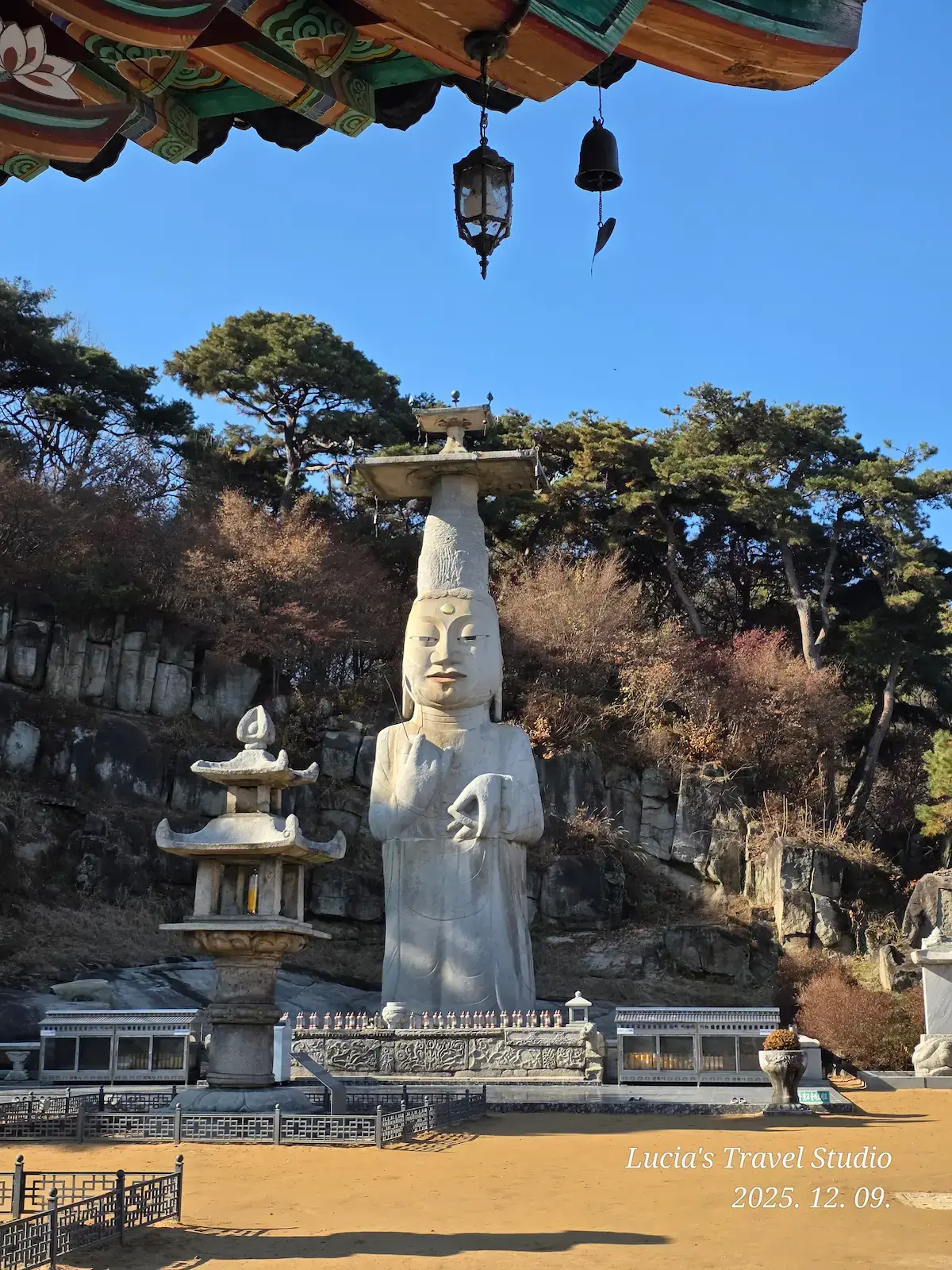
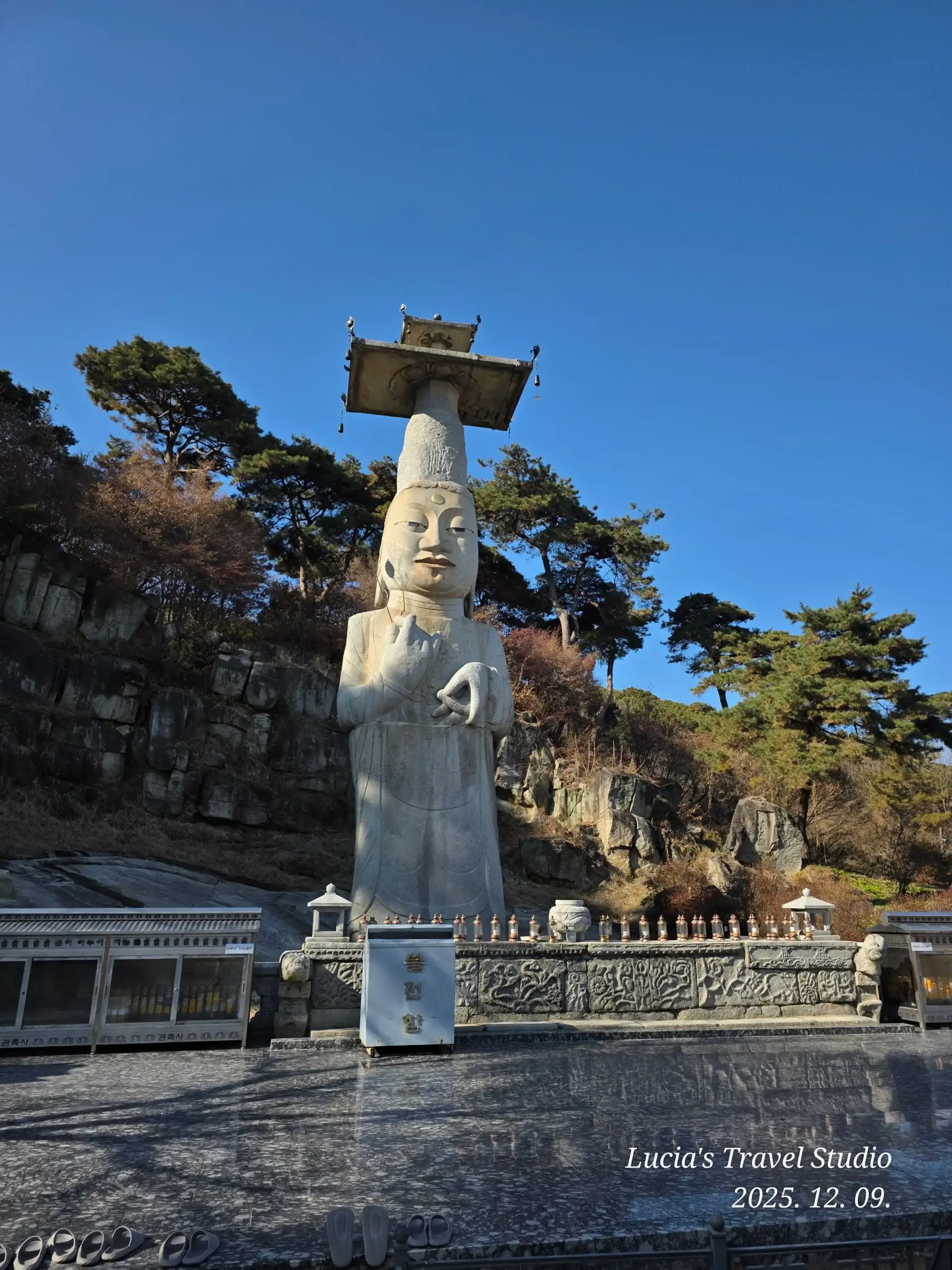
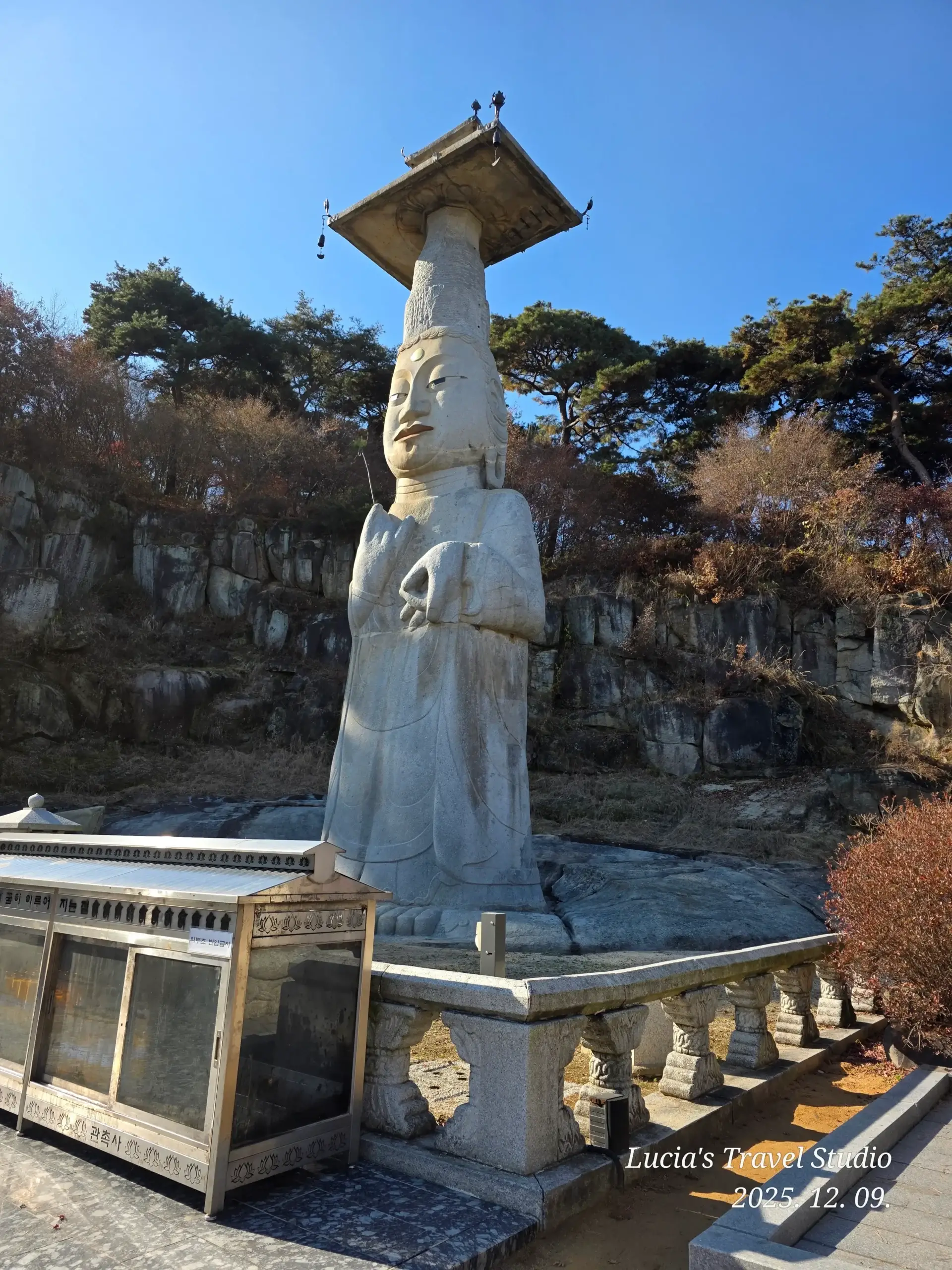
The statue breaks away from traditional Buddhist proportions.
While the face is carefully carved,
the body is formed from large, roughly stacked stone blocks, giving it a powerful, grounded presence.
One of its most distinctive features is the emphasis on the head and hands,
which are noticeably larger than the body — a style reminiscent of early Buddhist sculpture.
This statue later became a model for stone Buddhas in the Chungcheong region during the late 10th century,
highlighting its lasting artistic influence. ✨
📜 History, Legend, and Belief
According to legend, in 968, the sound of a crying child led people to a massive stone in this area.
Believed to be a sign of Maitreya, this moment inspired the creation of the statue.
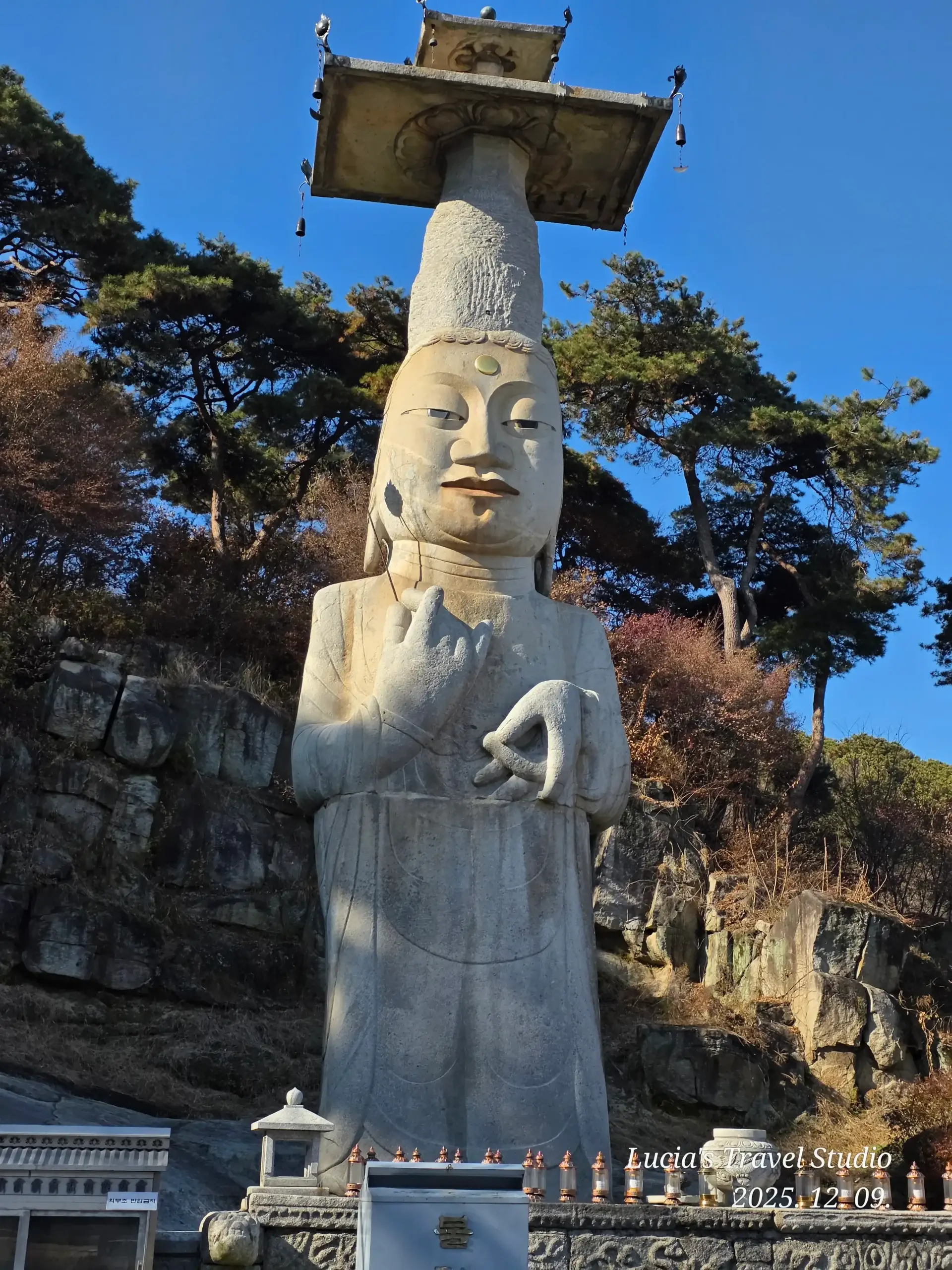
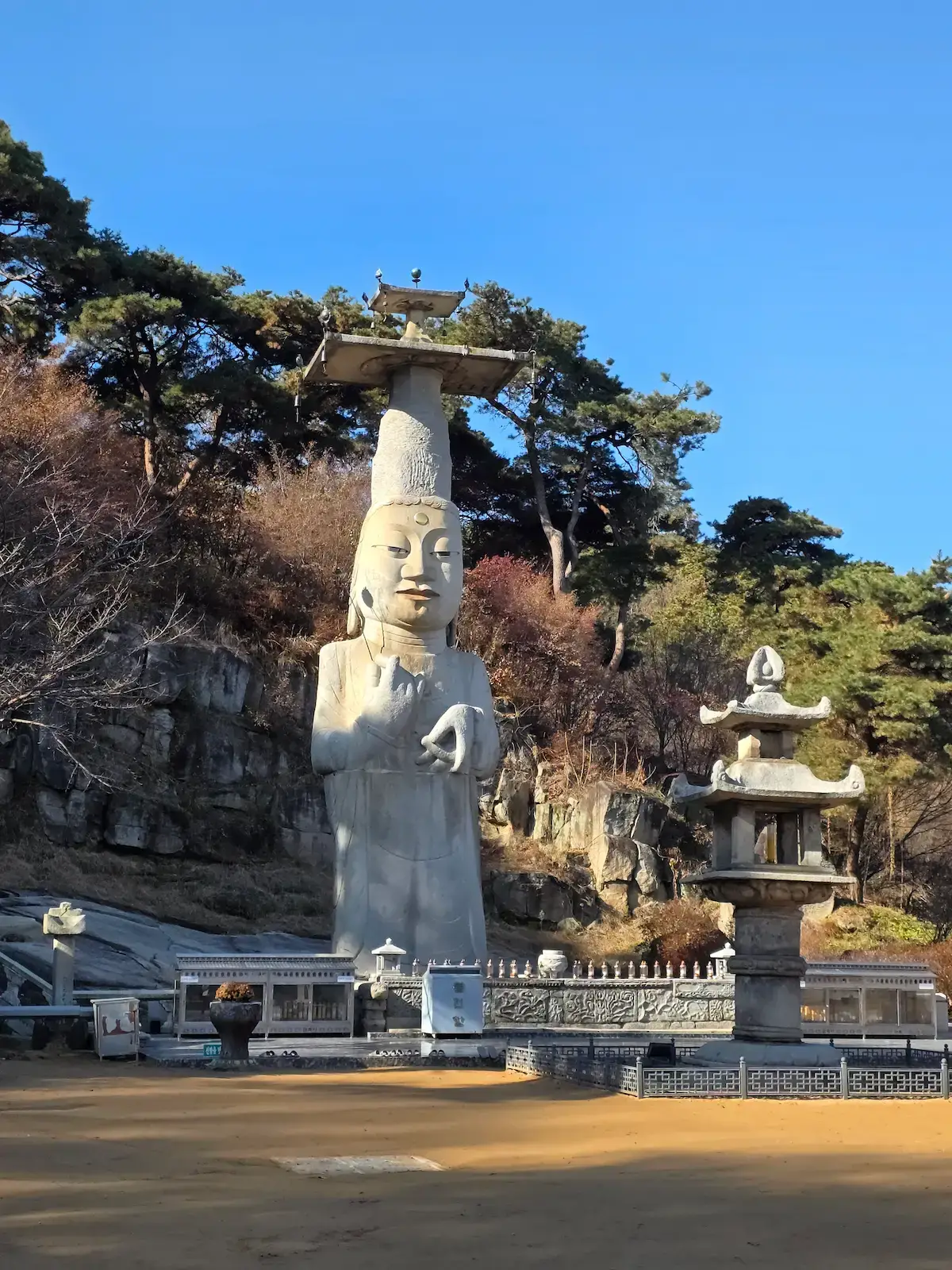
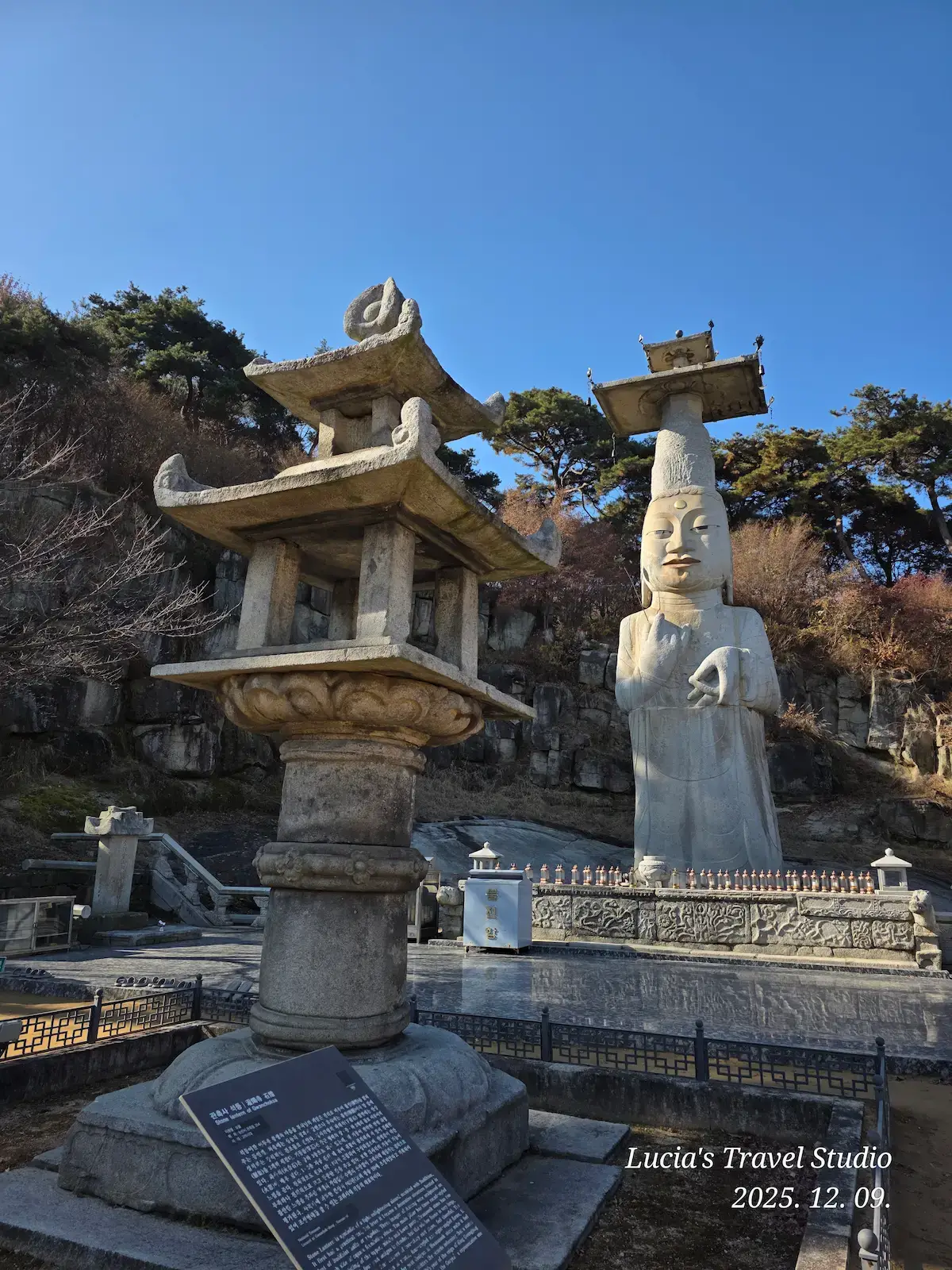
Over nearly 38 years, hundreds of artisans took part in its construction.
As a result, Eunjin Mireuk became more than a religious image —
it emerged as a symbol of royal authority, regional unity, and popular faith. 🌏
This statue reflects how deeply Buddhism was rooted in both royal and everyday life during the Goryeo Dynasty.
🗿 6. Stone Relics — A Temple as a Living Historical Landscape
Gwanchoksa is not defined by a single statue alone.
Across the temple grounds, several important stone relics remain:
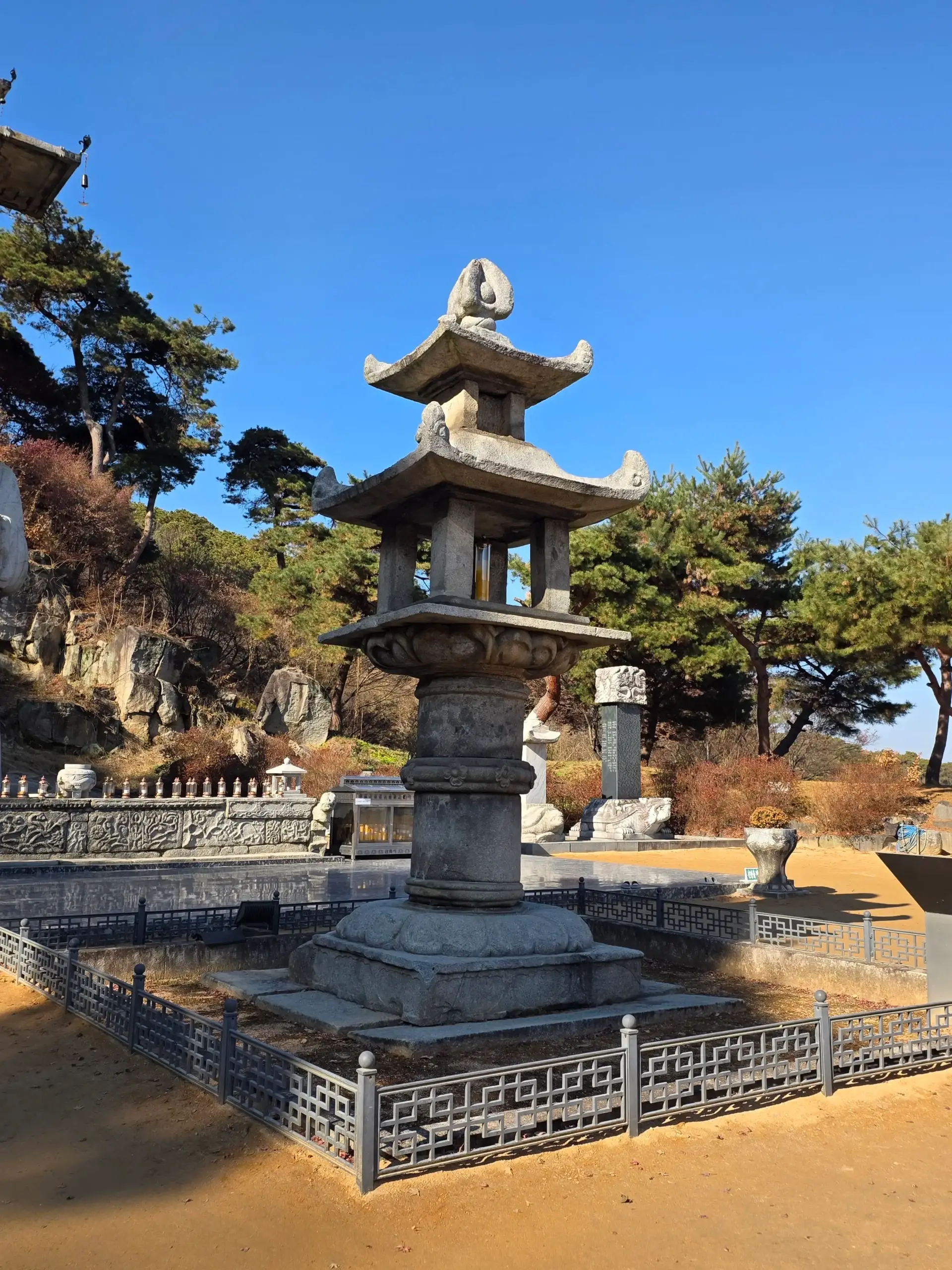
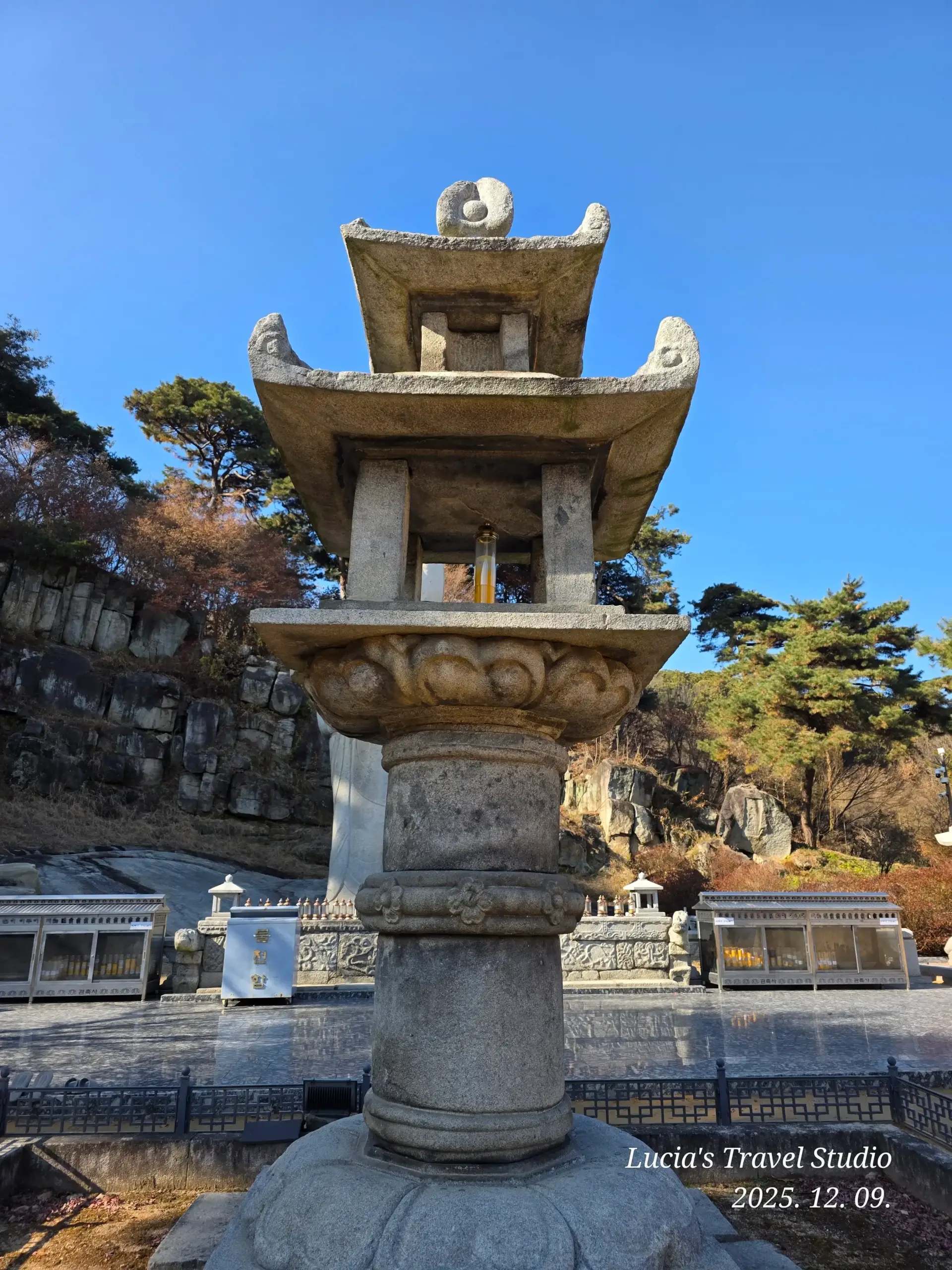
🕯️ Stone Lantern (Treasure No. 232)
About 5.45 meters tall, the second-largest stone lantern in Korea, symbolizing wisdom that dispels darkness.
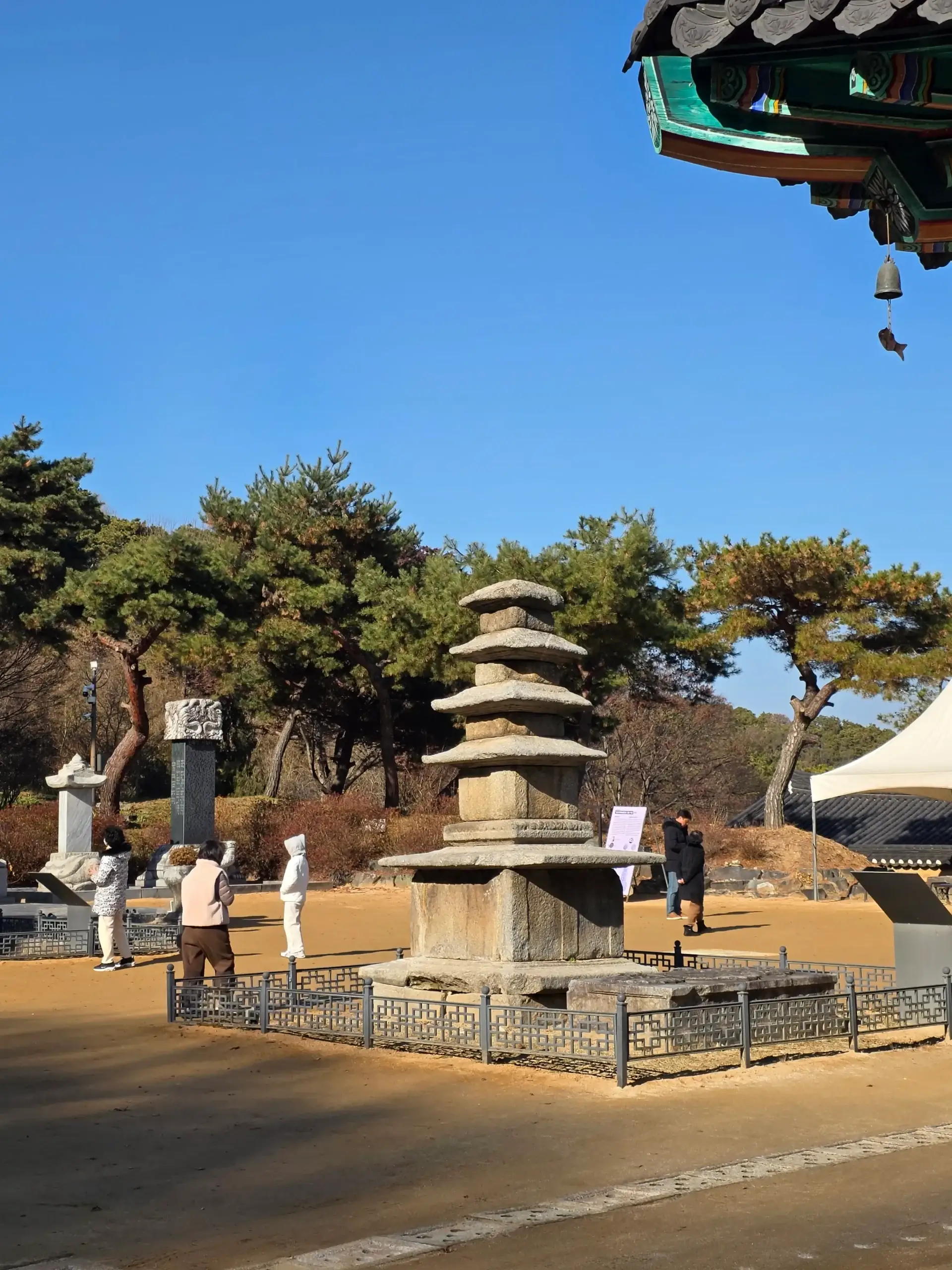
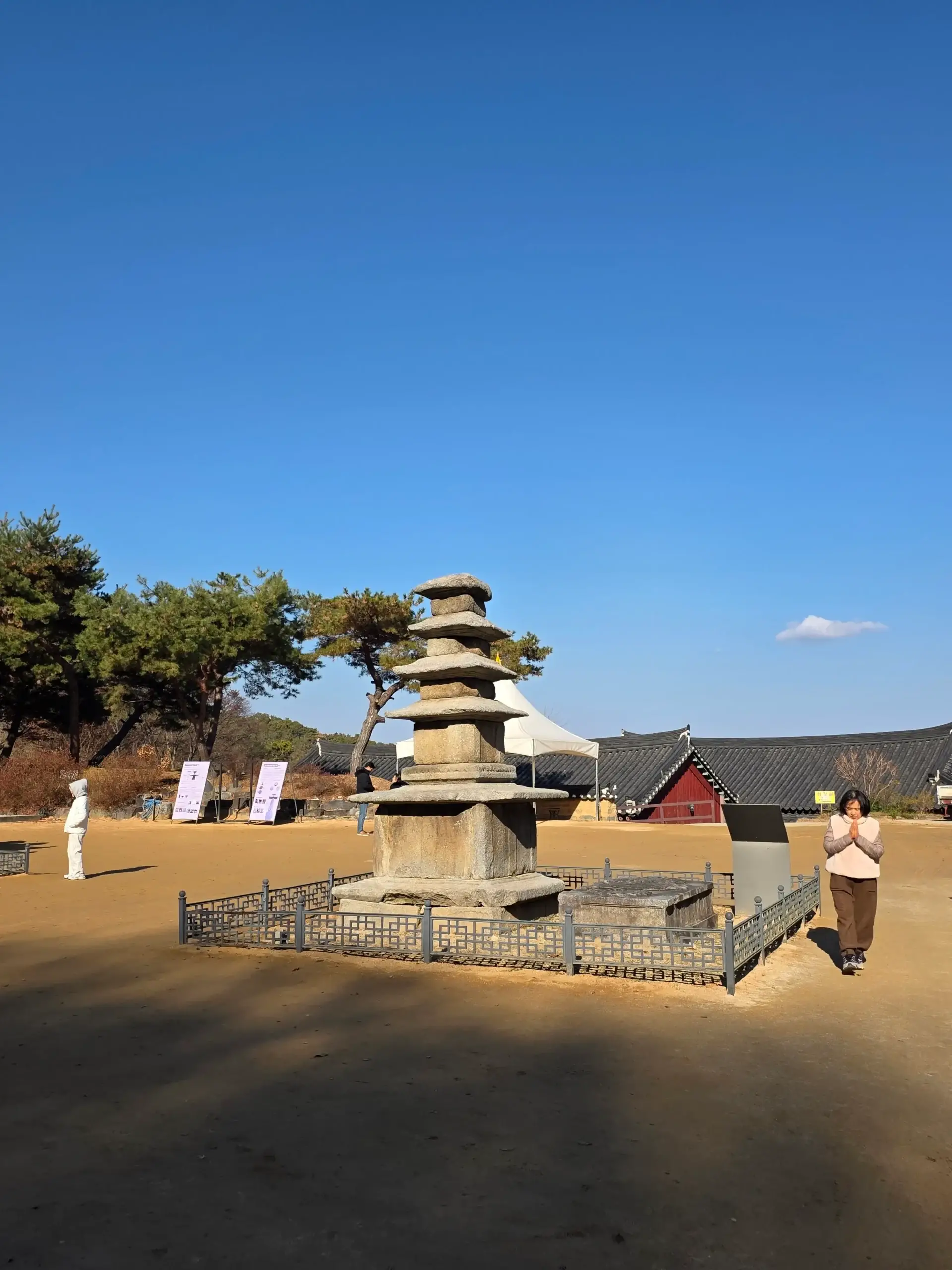
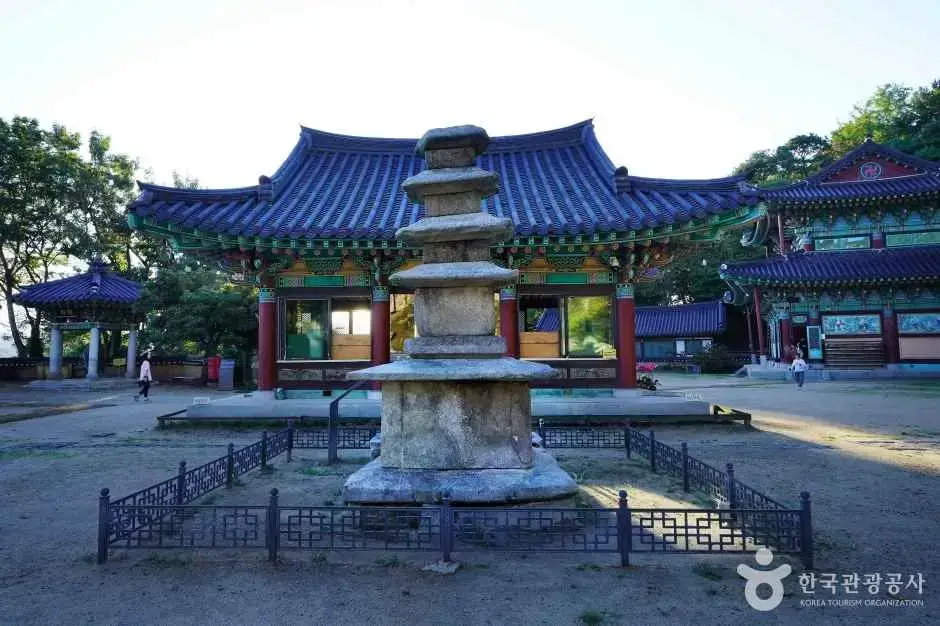
🪜 Five-Story Stone Pagoda
Simple, balanced, and representative of regional Goryeo-era pagodas.
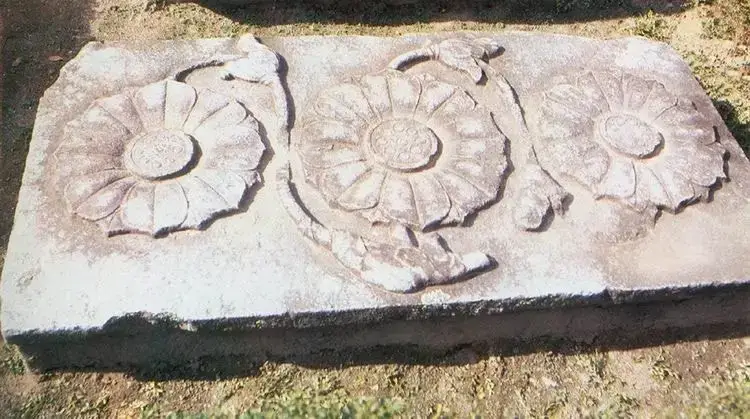
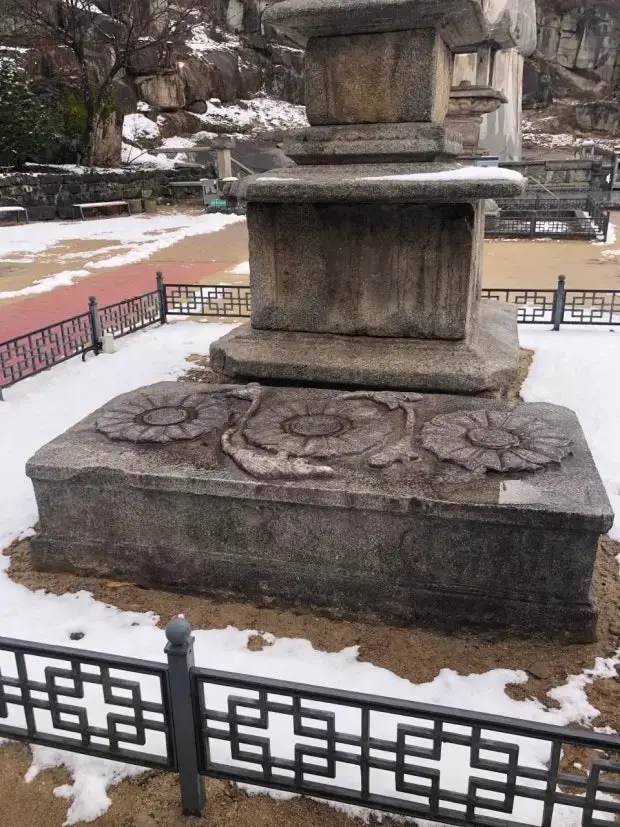
🙇 Worship Stone (Local Tangible Cultural Property No. 53)
Worn smooth by centuries of prayer before the Maitreya.
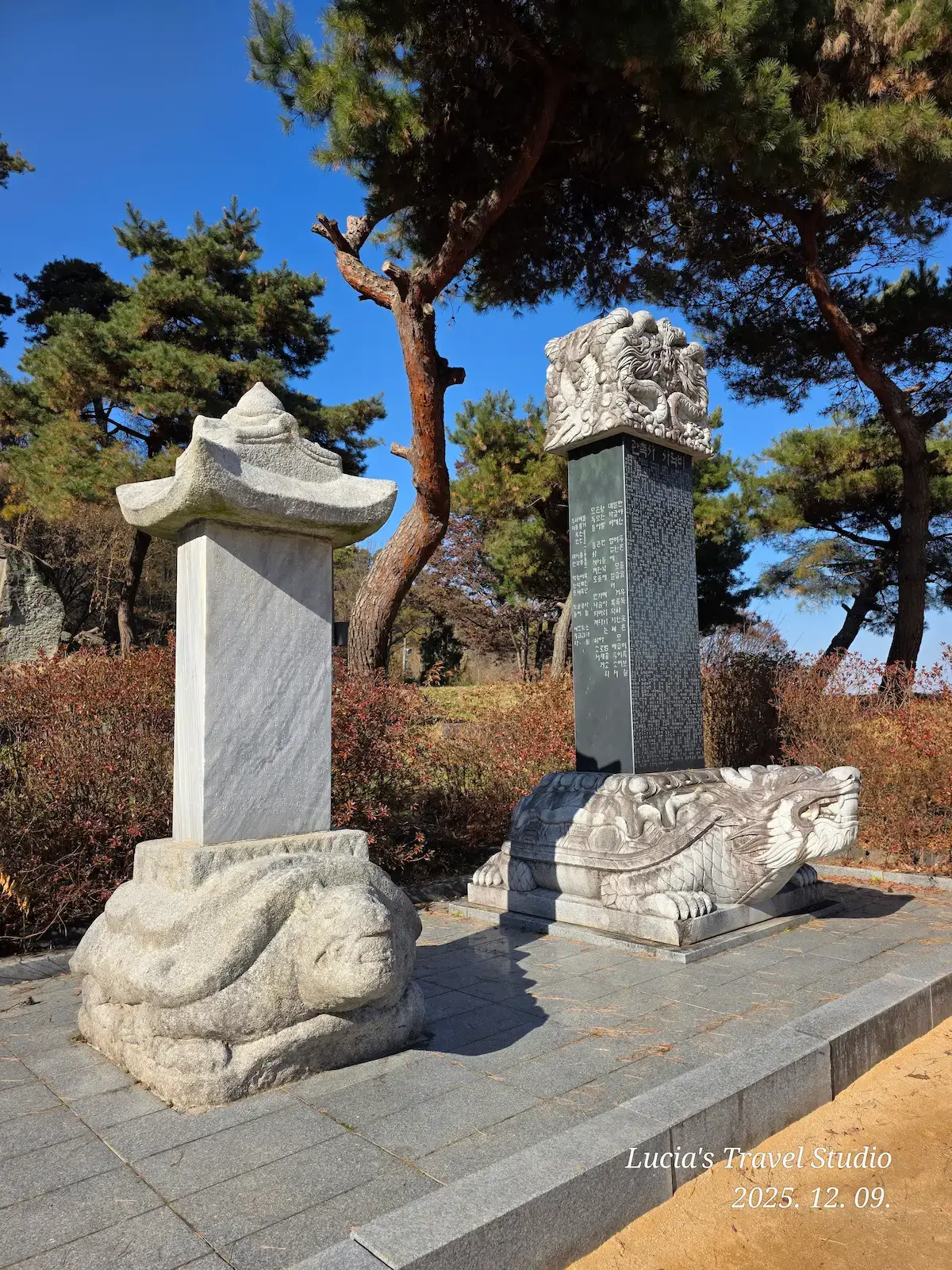
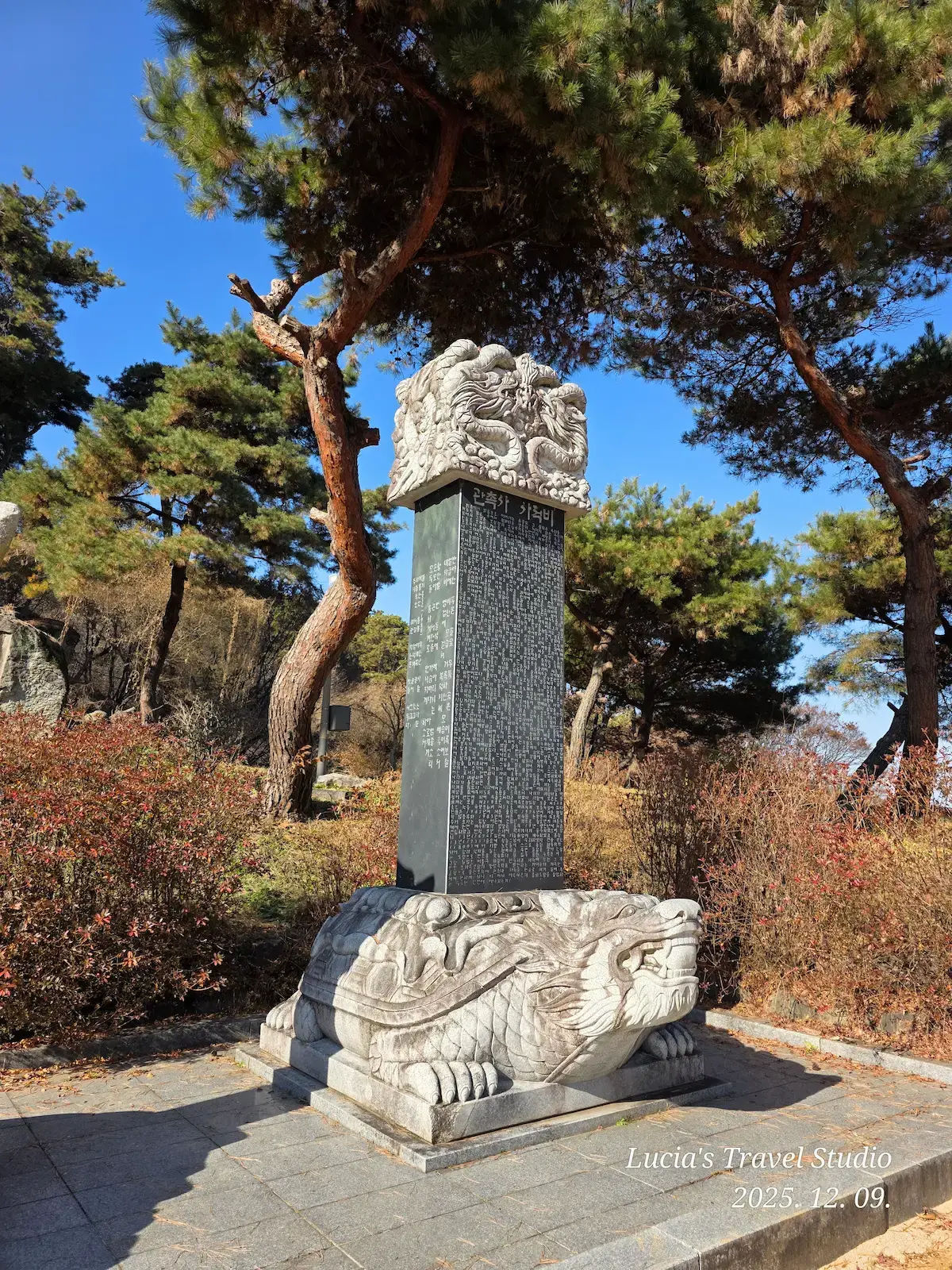
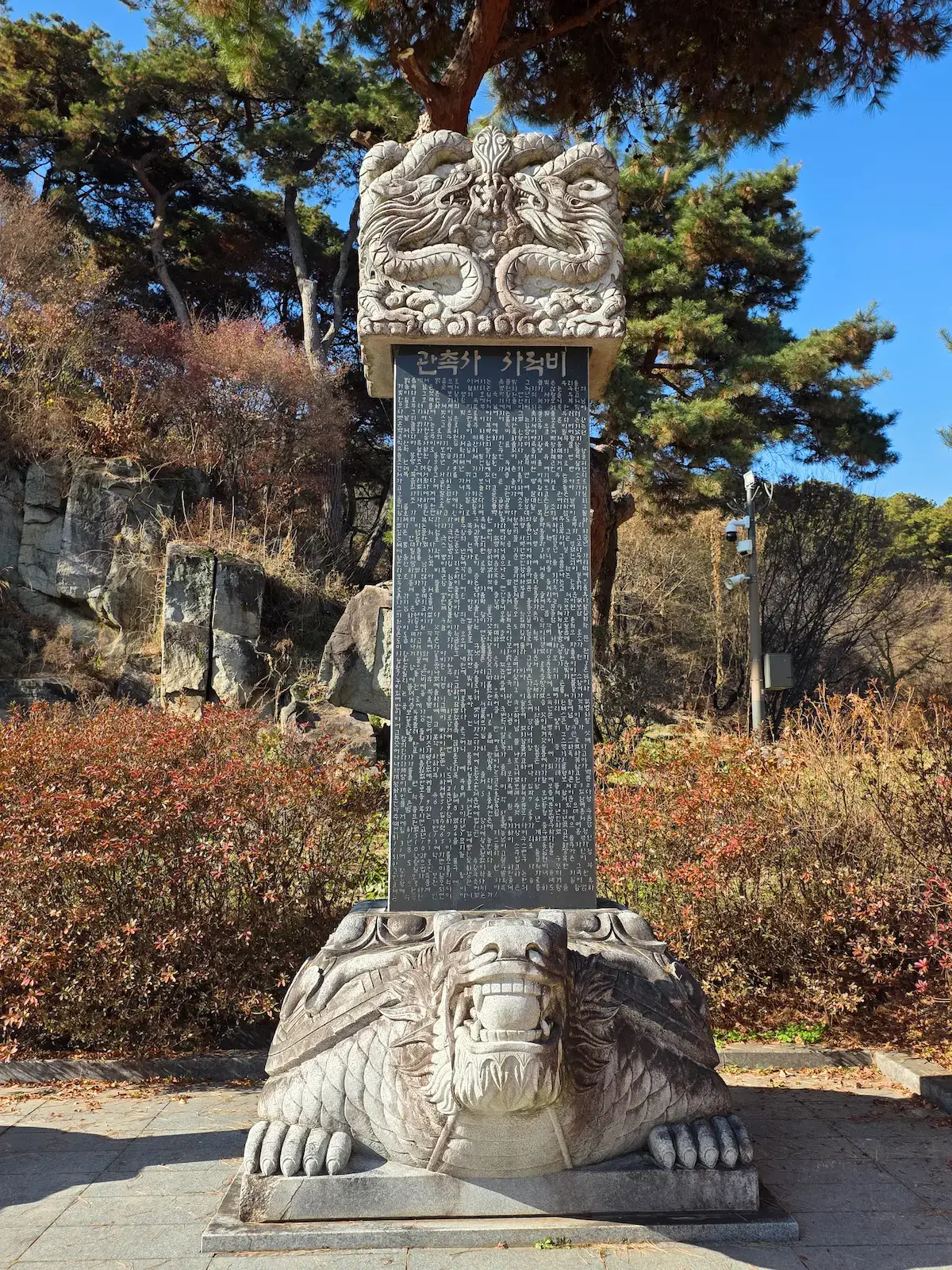
📖 Historical Stele (1743, Joseon Dynasty)
Recording the temple’s founding, the creation of the Maitreya, and later restorations.
- 🚪 Stone Gate & Haetalmun (Gate of Liberation)
On the left side of the stone gate, the words “Haetalmun” — Gate of Liberation — are carved into the rock.
This stone gate is a distinctive feature found only at Gwanchoksa.
At the time of the temple’s founding, walls were built to manage the large number of worshippers,
with gates placed on all four sides of the complex.
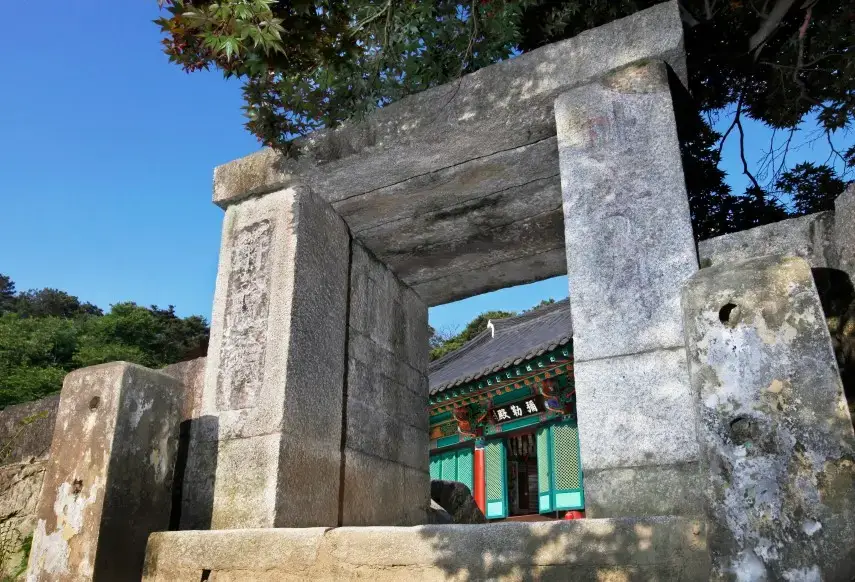
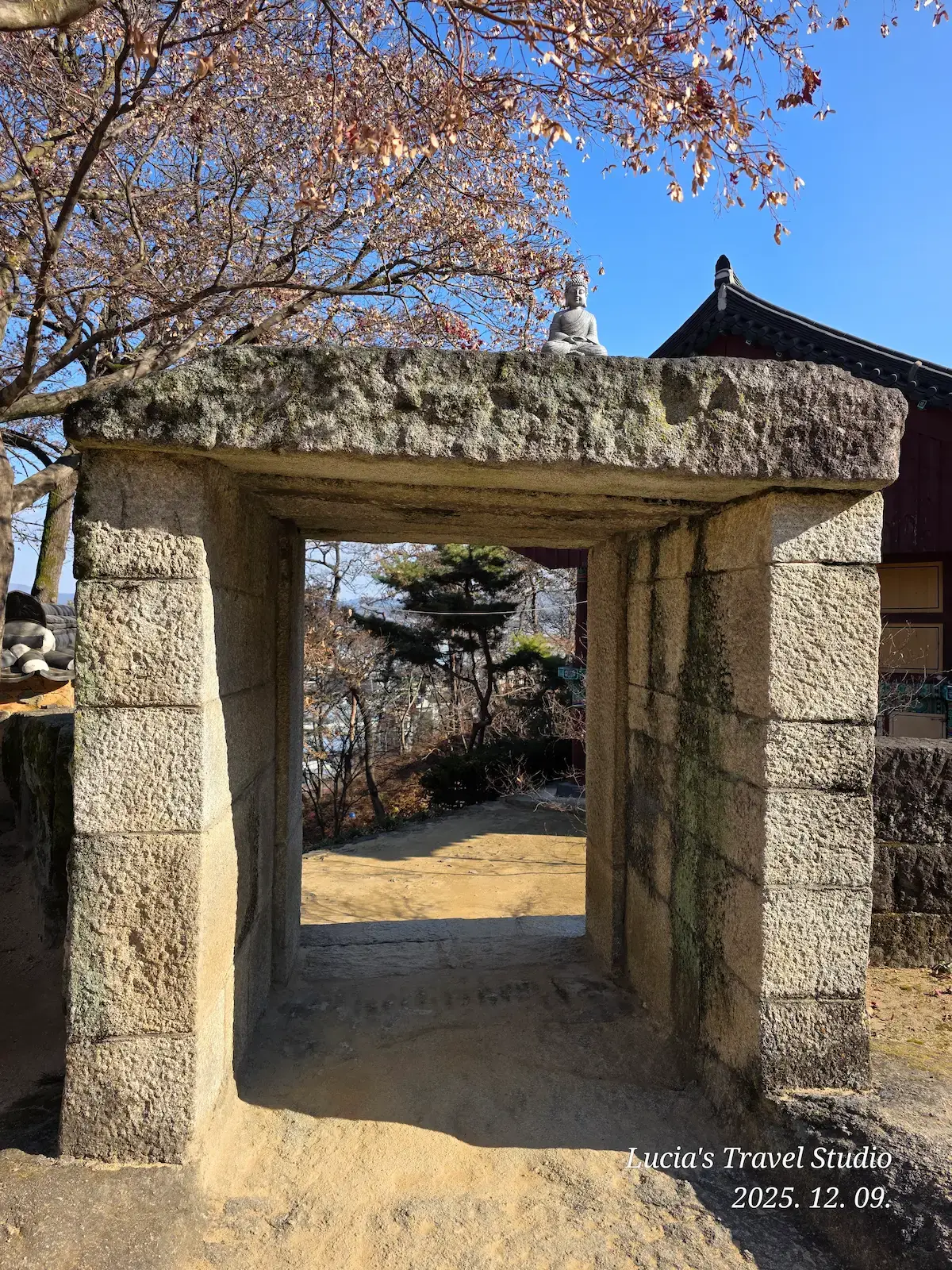
What remains today is the eastern gate,
a quiet reminder of how important this temple once was to pilgrims. 🪨
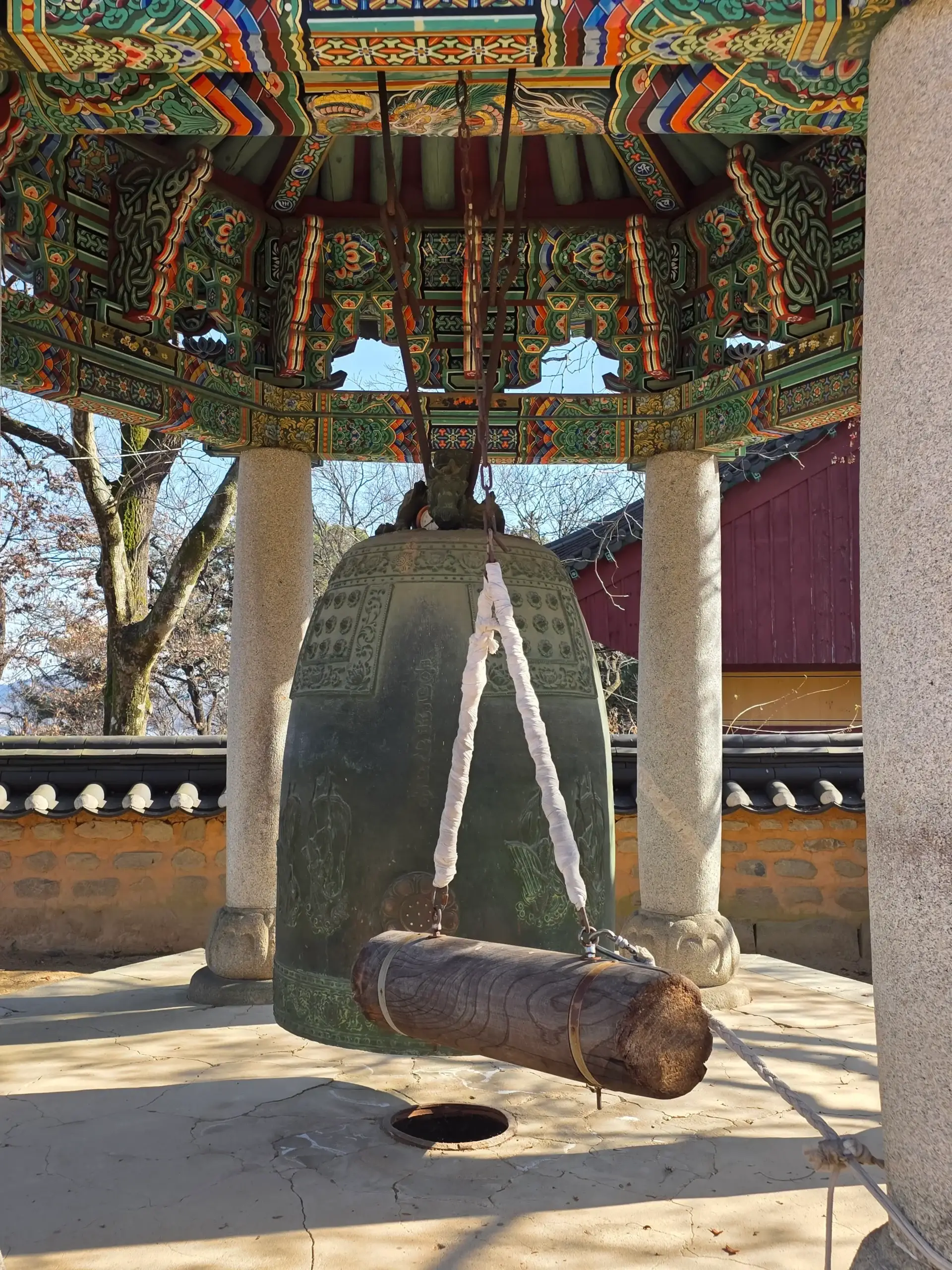
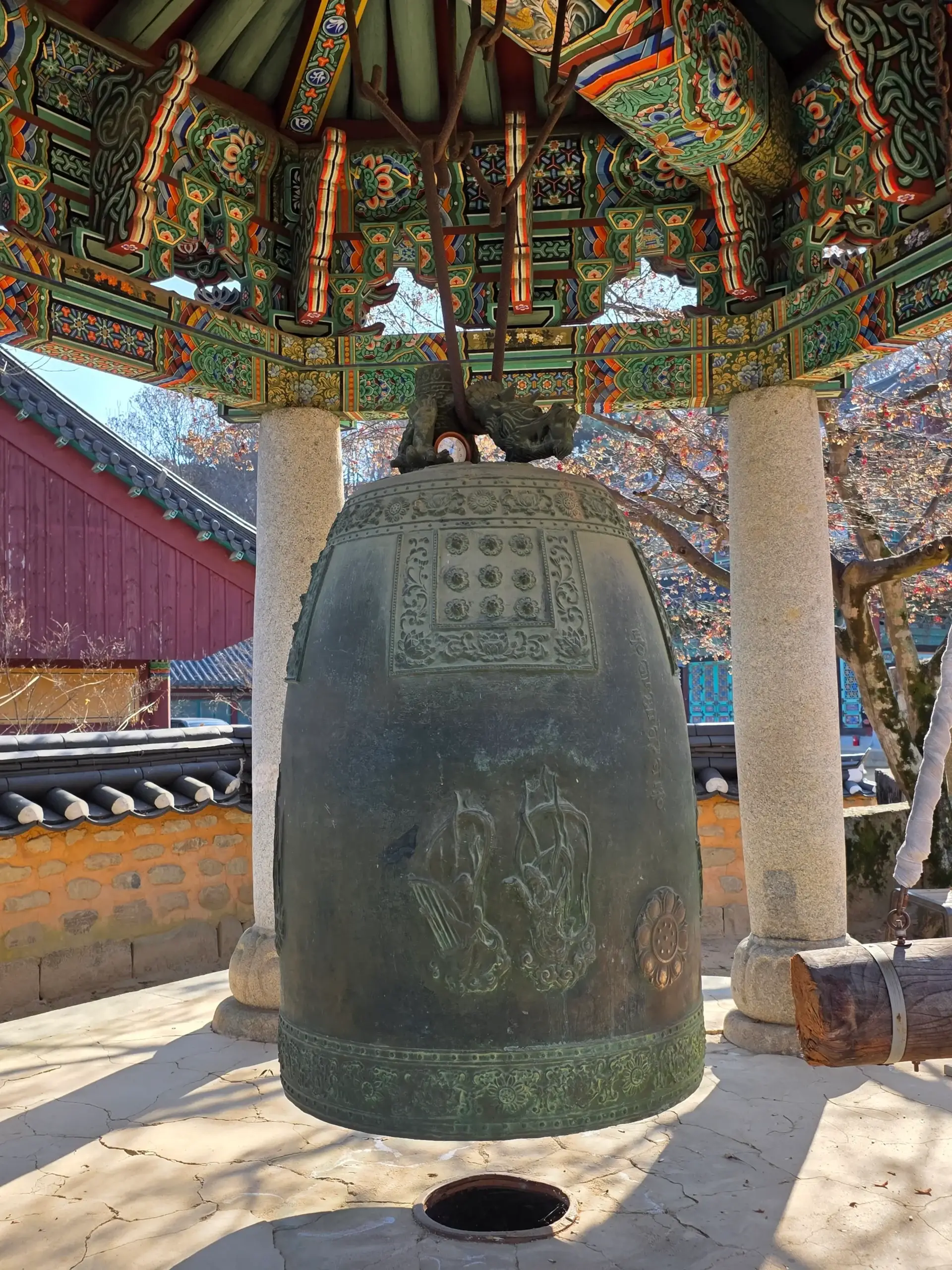
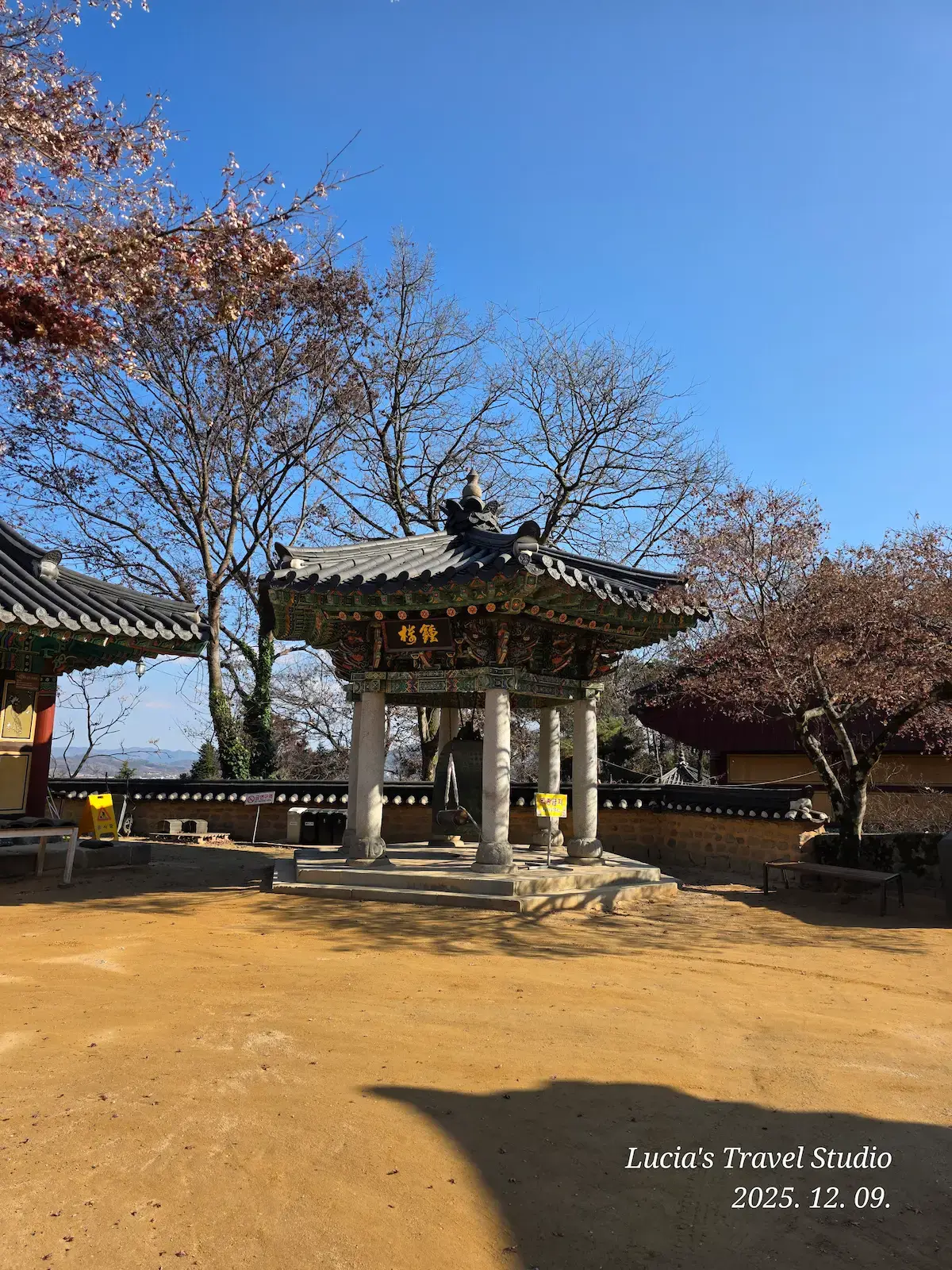
- 🔔 Temple Bell (Beomjong)
Just beside the stone gate stands the temple bell, marking the rhythm of monastic life at Gwanchoksa Temple.
Rung at dawn and again in the evening, it signals the times for daily prayers and meditation.
📍 How to Get There
🚆 By Train
Take a train to Nonsan Station (KTX, ITX, or Mugunghwa).
From the station, it’s about 15 minutes by taxi.
🚕 Final Tip
Taxis are the easiest way — just say “Gwanchoksa Temple.”
🌸 In Closing
Gwanchoksa Temple is not a place you visit simply to see a statue.
It is a living historical space where
late Goryeo Maitreya belief,
stone carving traditions,
folk faith, and
Joseon-era historical awareness
are layered together.
As you slowly look up at the face of Eunjin Mireuk,
you begin to understand why people have returned here for more than a thousand years. ✨
🎬 Next Destination — Mr. Sunshine Filming Locations
From ancient stone faith to modern history.
👉 Follow the path from Gwanchoksa to the streets where Mr. Sunshine was filmed —
a place where Korea’s past feels close, emotional, and alive.
👉 Explore the Mr. Sunshine Filming Location