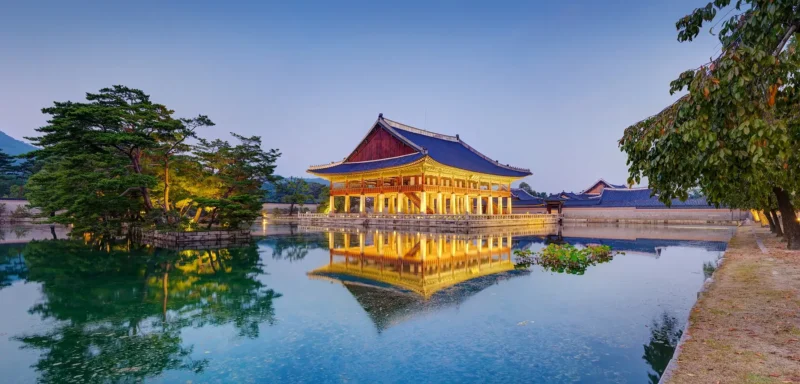
Seoul’s Most Iconic Royal Palace
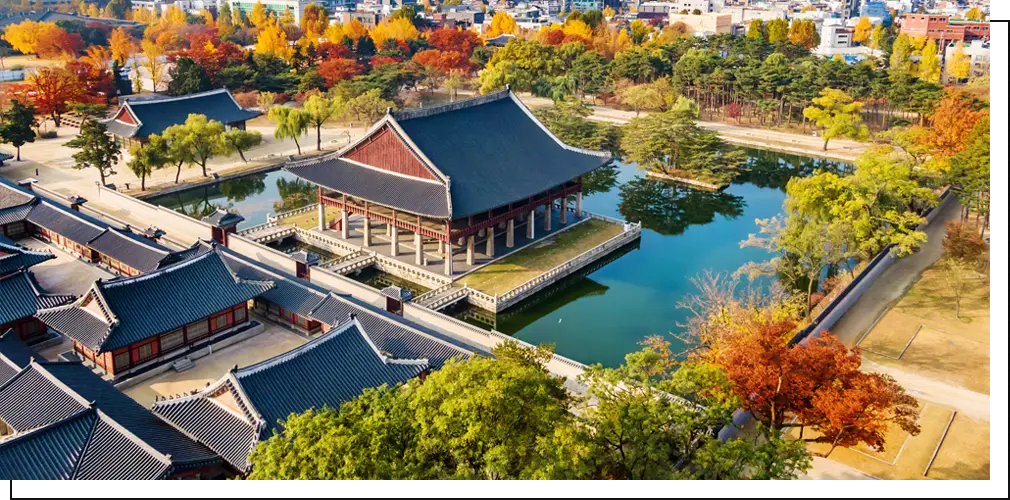
There is a single axis running through the center of Seoul — a straight line stretching from Gwanghwamun Gate in the south to Bugaksan Mountain in the north. Along that line, a dynasty was built.
In 1395, King Taejo completed his new royal palace and named it Gyeongbokgung — “Palace of Shining Happiness.” The name was drawn from an ancient Chinese poem, but the meaning ran deeper. This was a declaration: of legitimacy, of order, of a new world built on Confucian values. Every axis, every stone, every building placement was intentional. The layout was the ideology.
Today, Gyeongbokgung is Seoul’s most visited palace. It is the place where Hangul was invented, where an empress was murdered, and where a nation is still, quietly, putting itself back together.
History of Gyeongbokgung Palace: Rise, Ruin & Recovery
A New Dynasty’s Declaration
Chief councillor Jeong Do-jeon named the palace Gyeongbok — drawn from the Book of Odes. Not just a name; a blueprint for what Joseon intended to become.
The Golden Age: King Sejong
Gyeongbokgung reached its peak under King Sejong. Hangul was created here. The Hall of Worthies (Jiphyeonjeon) drove Korea’s scientific and cultural renaissance.
Destruction: The Imjin War
The palace burned — not by invaders, but by furious commoners before the Japanese army arrived. For 273 years, it sat in ruins.
Rebuilt: A Political Manifesto
Regent Heungseon Daewongun rebuilt the palace at over 7,400 rooms — not a restoration, but a statement of reasserted royal power. But its revival was short-lived.
Colonial Erasure
Queen Myeongseong was assassinated here in 1895. Under Japanese rule, hundreds of buildings were demolished and the Government-General Building was erected to block the palace’s sacred axis.
Restoration: An Unfinished Story
The colonial building was demolished in 1996. Gwanghwamun was restored to its original position in 2010. Reconstruction continues into the 2030s. Gyeongbokgung is a nation reclaiming its history.
Buildings & Highlights
광화문
Main Gate

The southern main gate, whose name means “the king’s virtue illuminates all.” Unlike other palace gates, it was built with a high stone base topped by a double-roofed pavilion — as grand as a city fortress. Three archway passages run through it: the central one reserved for the king alone, the flanking arches for the crown prince and officials. Relocated and damaged during the colonial period, the gate was restored to its original position in 2010. In October 2023, the grand stone platform (woldae) in front of the gate and a new hanging signboard were fully unveiled — Gwanghwamun now stands in its most complete form in over a century.
흥례문 · 영제교
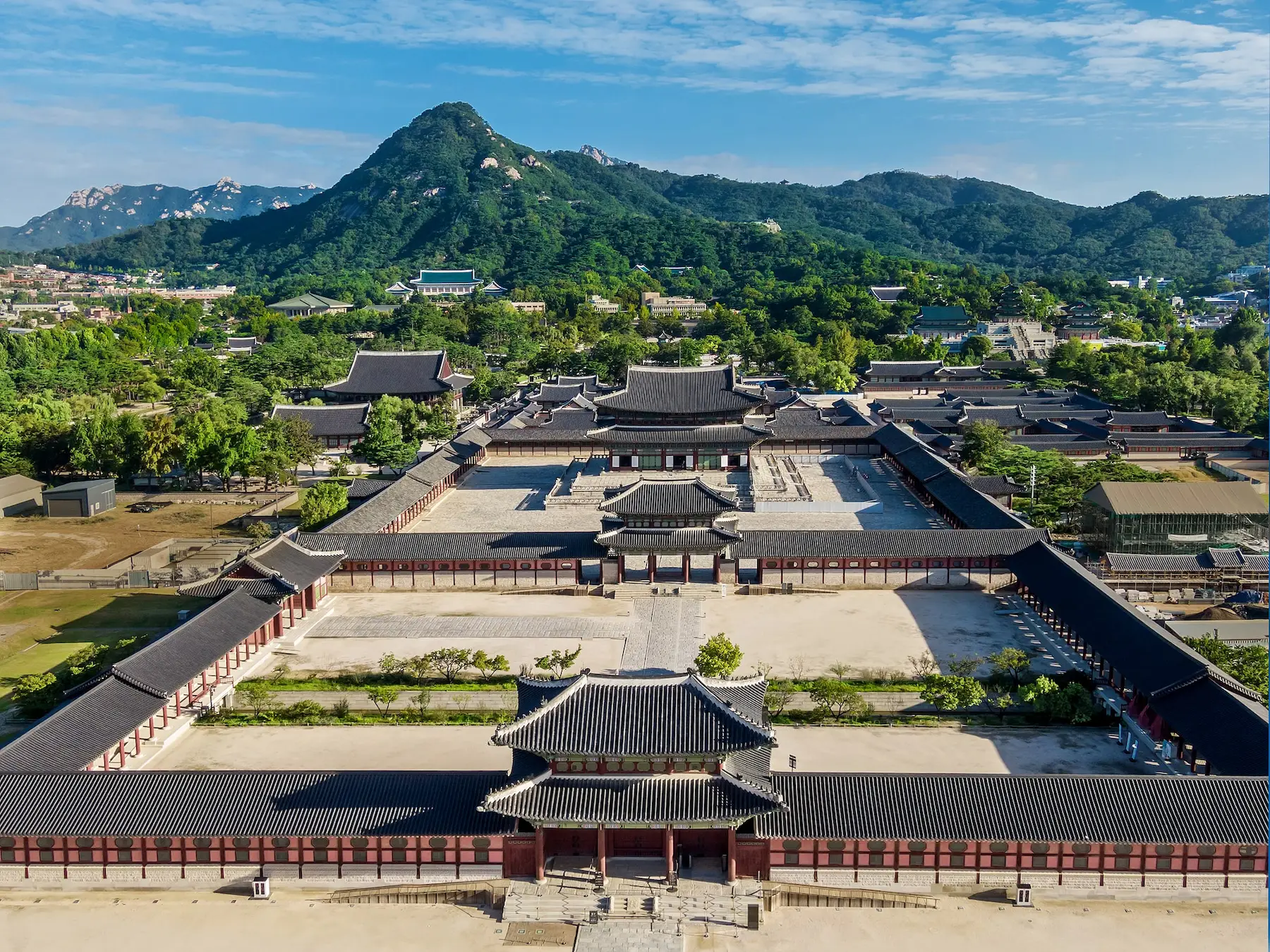
The middle gate between Gwanghwamun and the throne hall — “to promote propriety.” Through it flows the Geumcheon, a stream from Bugaksan, crossed by the stone Yeongjeongyo Bridge. Crossing this bridge was a symbolic threshold: leaving the ordinary world behind. Demolished during the colonial period and restored in 2001.
근정전
National Treasure
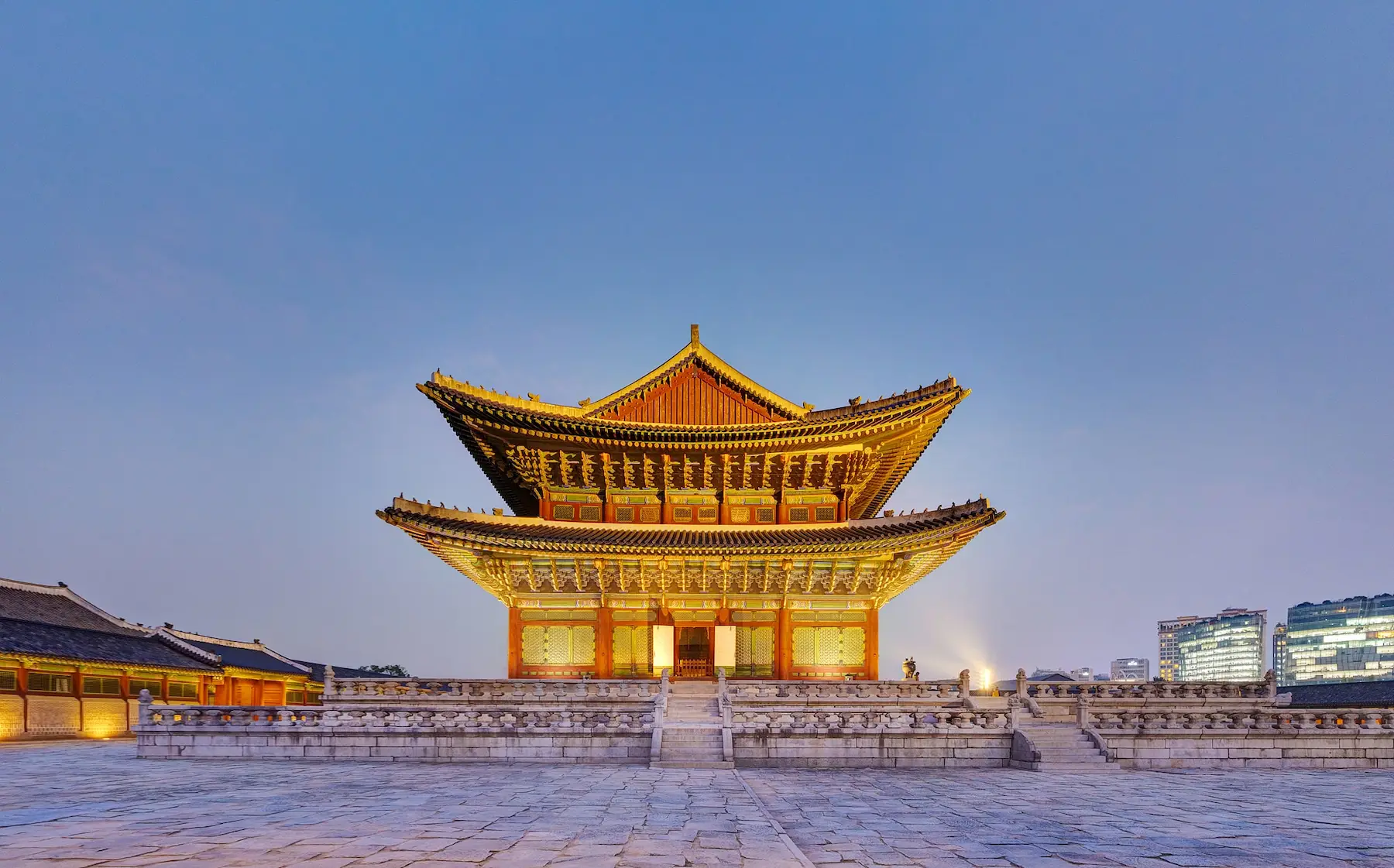
The political and ceremonial heart of the palace — “to govern diligently.” This is where kings were enthroned, envoys received, and state ceremonies held. Elevated on two stone platforms, the double-roofed hall used height to project royal authority. The courtyard is lined with pumgyeseok rank stones marking each official’s exact standing position. The central stone path (eodo) was left empty — for the king alone. Inside, a painting of the sun, moon, and five peaks sits behind the throne, with a seven-clawed dragon carved into the ceiling above.
수정전
Treasure
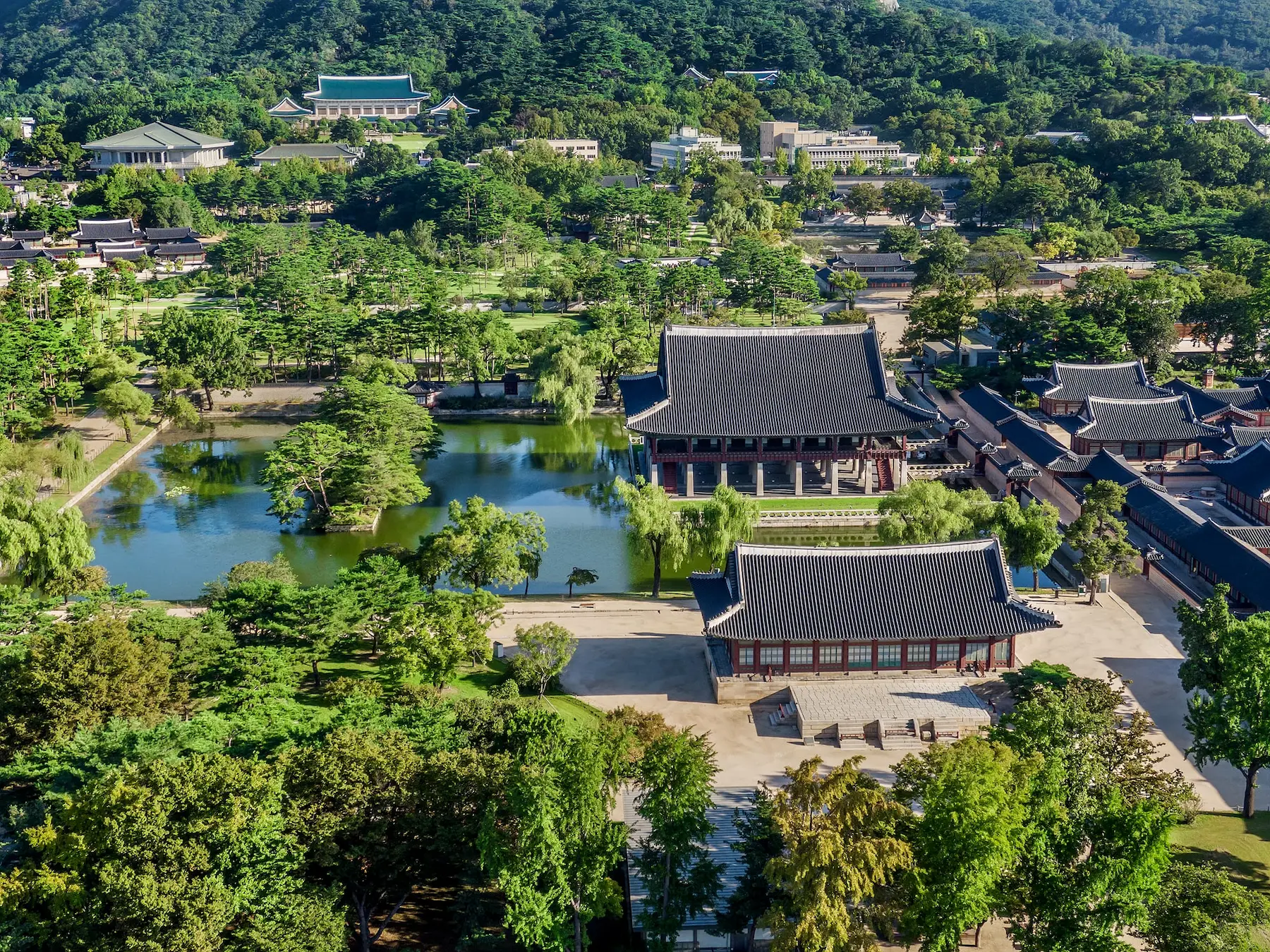
Used as King Gojong’s office, this quiet building holds an extraordinary secret: in the early Joseon period, this site housed Jiphyeonjeon — the Hall of Worthies, where King Sejong and his scholars created Hangul. The Korean alphabet was born here.
경회루
National Treasure
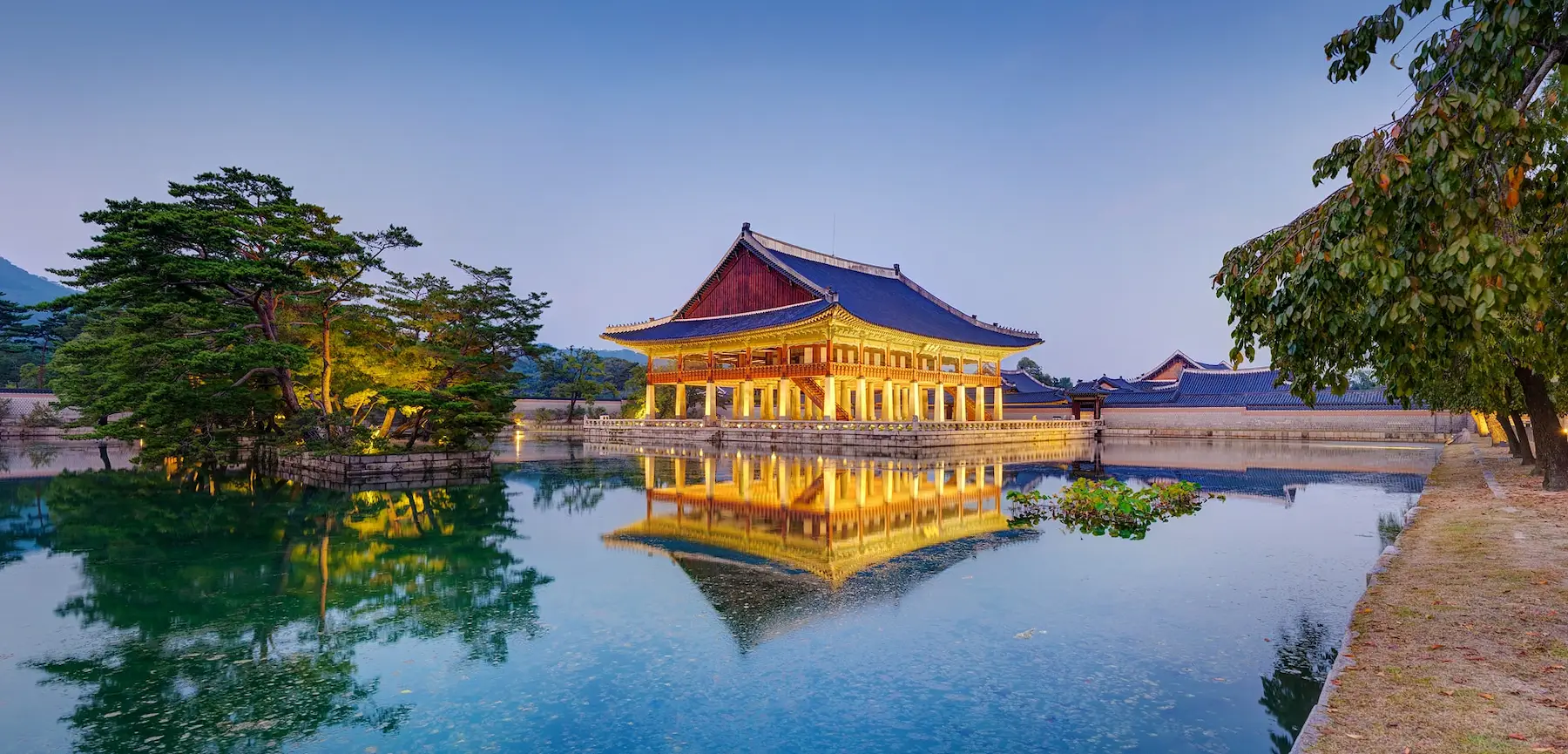
Korea’s largest wooden pavilion, built over an artificial lotus pond. The name means “a place of joyful gatherings.” The lower level is formed by 48 tall stone columns — 24 round and 24 square — while the upper floor served as the grand banquet hall. The roofline carries 11 japsang figurines, more than any other building in Korea. Its reflection in the still water below is one of the most iconic images in Korean architecture, and once graced the 5,000-won banknote. Designated National Treasure 1985.
사정전
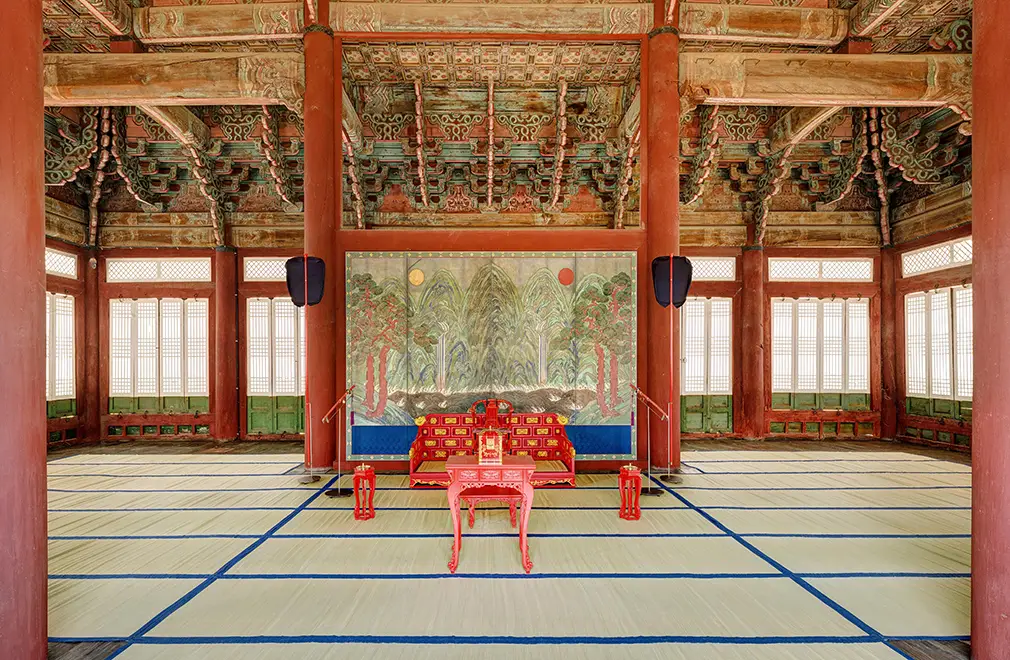
“Think deeply before governing.” While Geunjeongjeon hosted formal ceremonies, this was where the king conducted daily affairs: morning briefings, policy debates, and royal lectures with scholars. The adjoining Manchunjeon and Chunchujeon side halls were heated for year-round use.
강녕전 · 교태전
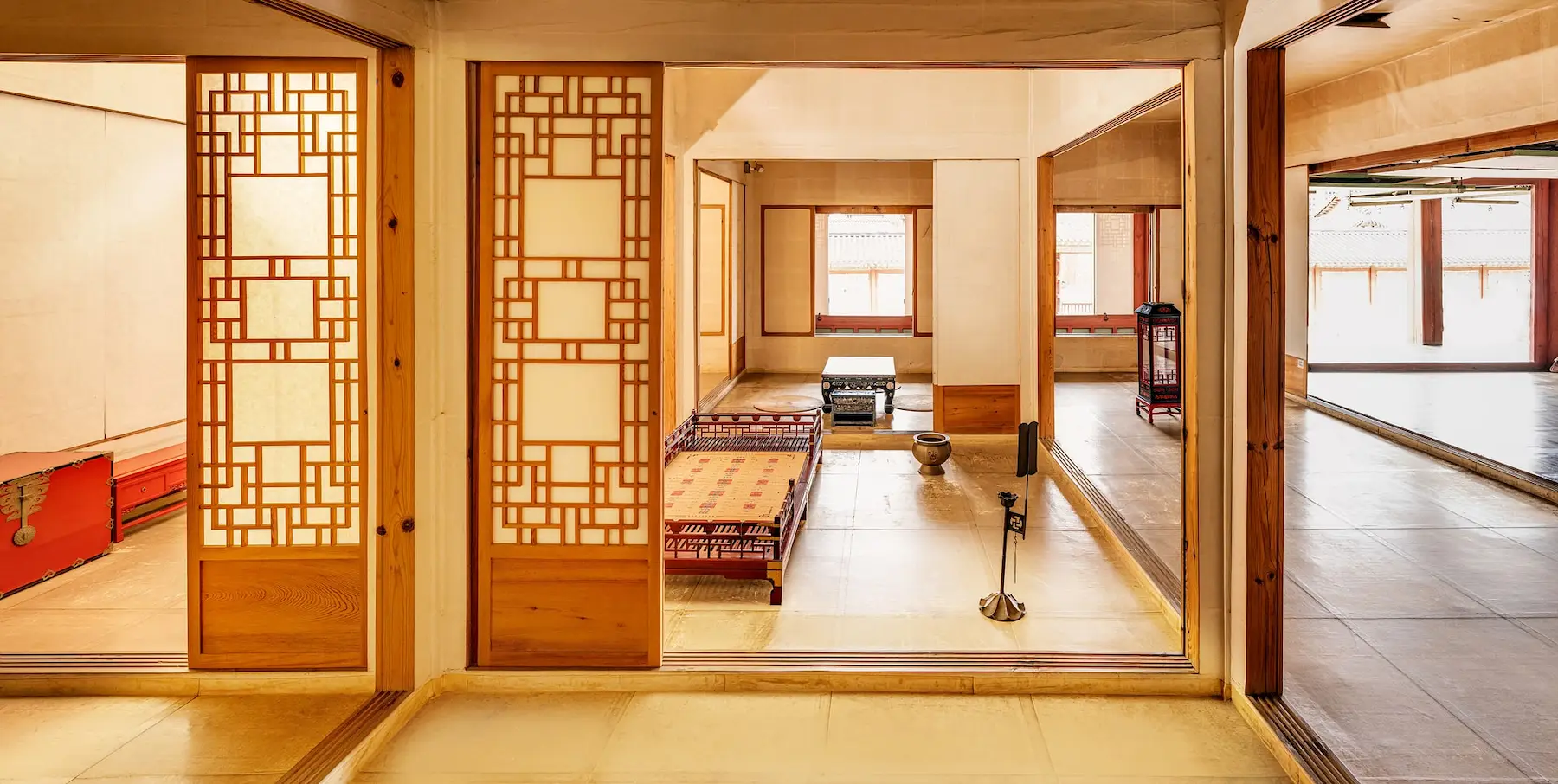
The king’s and queen’s private residences. Gangnyeongjeon (“health and tranquility”) is arranged in a 井-shaped layout of nine rooms, the king occupying the center. Its roof notably has no ridge beam — tradition holds that because the king himself is the dragon, no ridge is needed.
Gyotaejeon (“heaven and earth in harmonious union”), the queen’s quarters, features the remarkable Amisan garden behind it — four hexagonal chimney stacks carved with the Four Gentlemen plants and Ten Symbols of Longevity, designed to ward off evil and invite long life. Both halls were dismantled in 1917 for use in Changdeokgung repairs and rebuilt here in 1995.
자경전 · 십장생굴뚝
Treasure
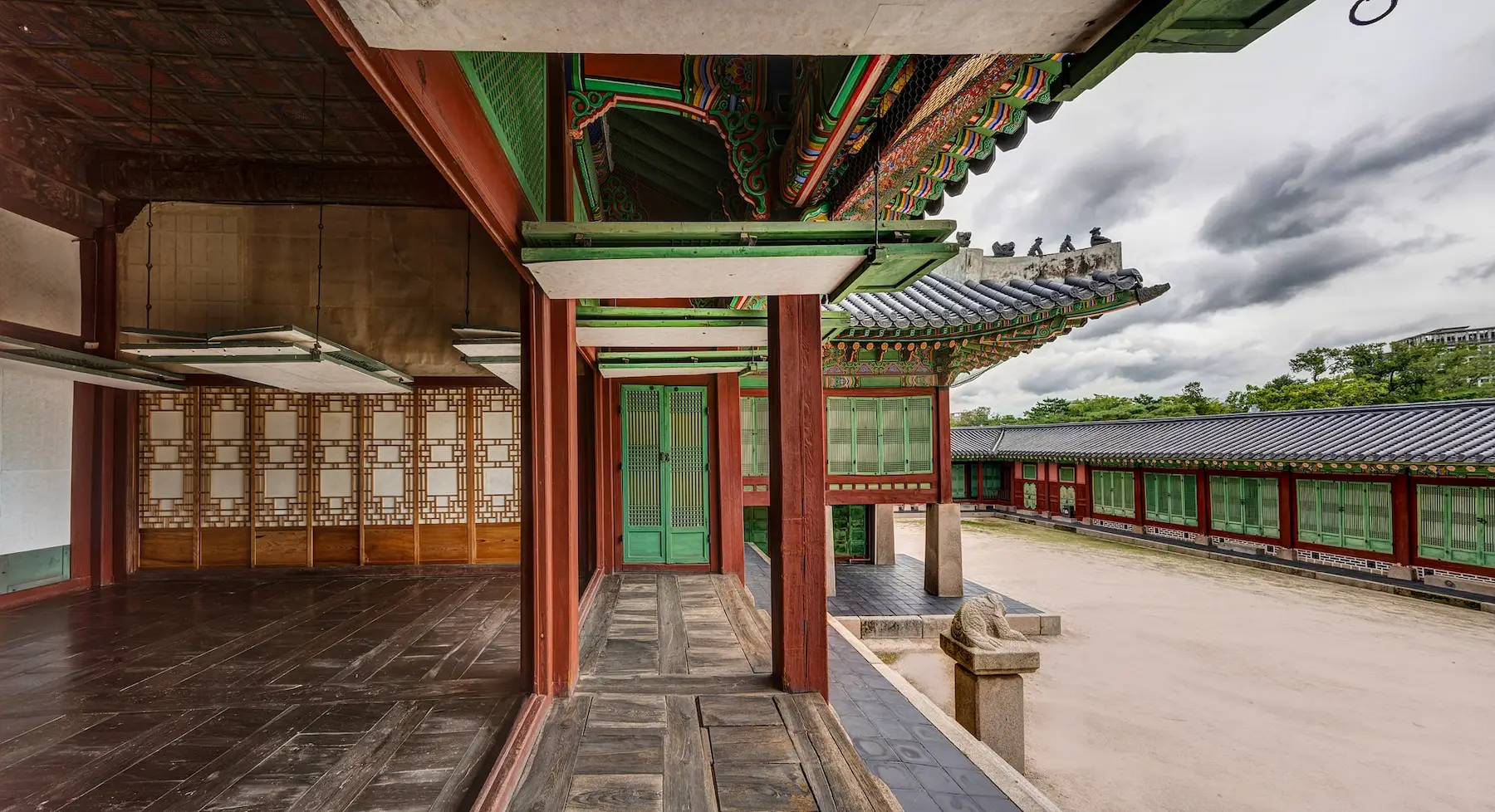
Built by King Gojong in 1867 for the Queen Dowager, this is the only surviving royal dowager’s residence in Gyeongbokgung. The large chimney on its north wall — the Sipjangsaeng Chimney — is considered the finest palace chimney in all of Joseon. Decorated with the ten symbols of longevity alongside cranes and mythical creatures, it is a masterpiece of functional art. Designated Treasure 1985.
향원정
Treasure
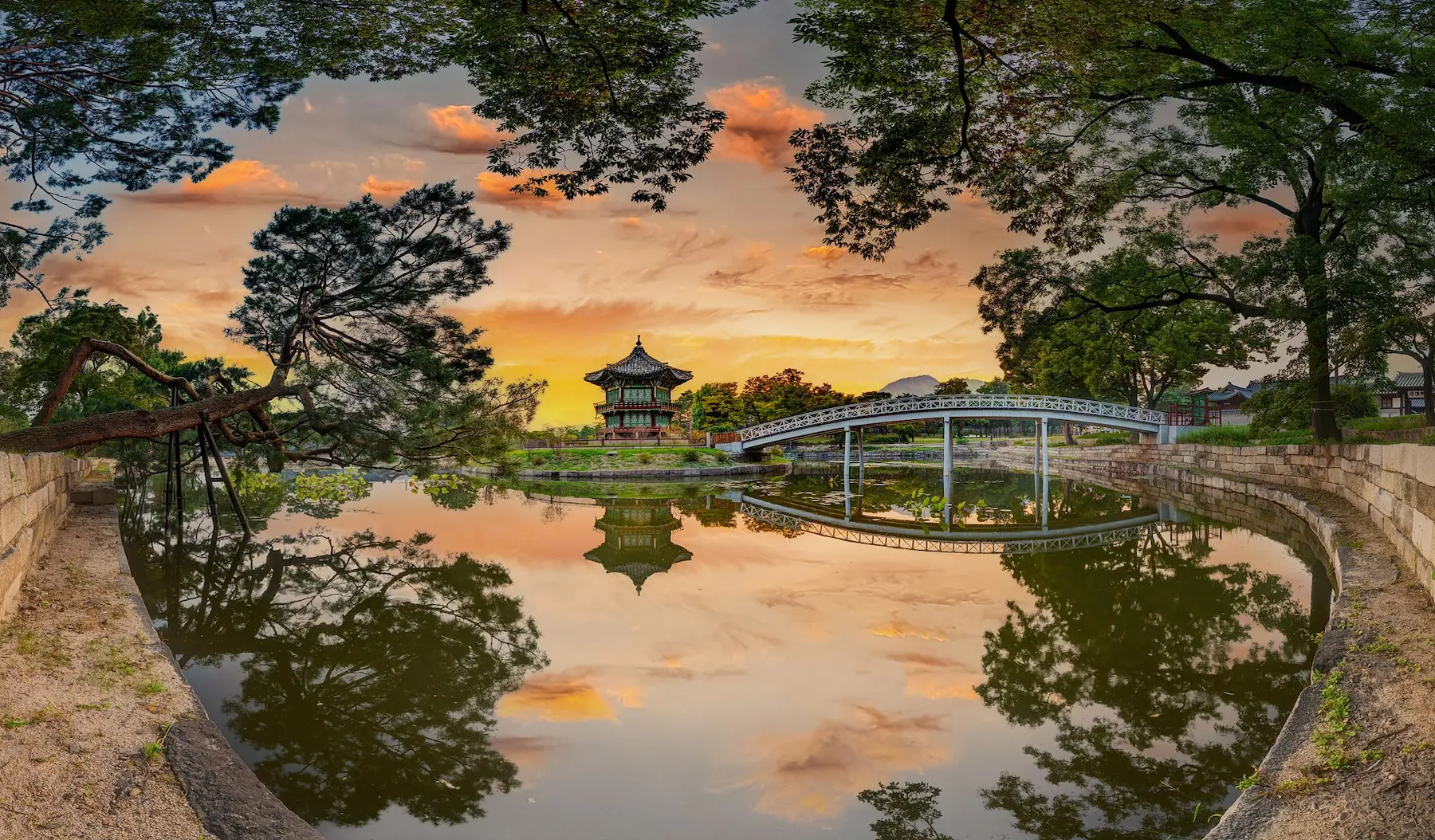
“Fragrance travels far.” Built in 1873 when King Gojong constructed the adjacent Geoncheonggung complex, this small hexagonal pavilion rises from the center of a lotus pond. It is reached via Chwihyanggyo — the “bridge of intoxicating fragrance.” Where Gyeonghoeru served diplomacy and spectacle, Hyangwonjeong was the royal family’s private retreat — a place of stillness amid power. The bridge was restored to its original northern position after a 2017–2020 renovation. Designated Treasure 2012.
건청궁
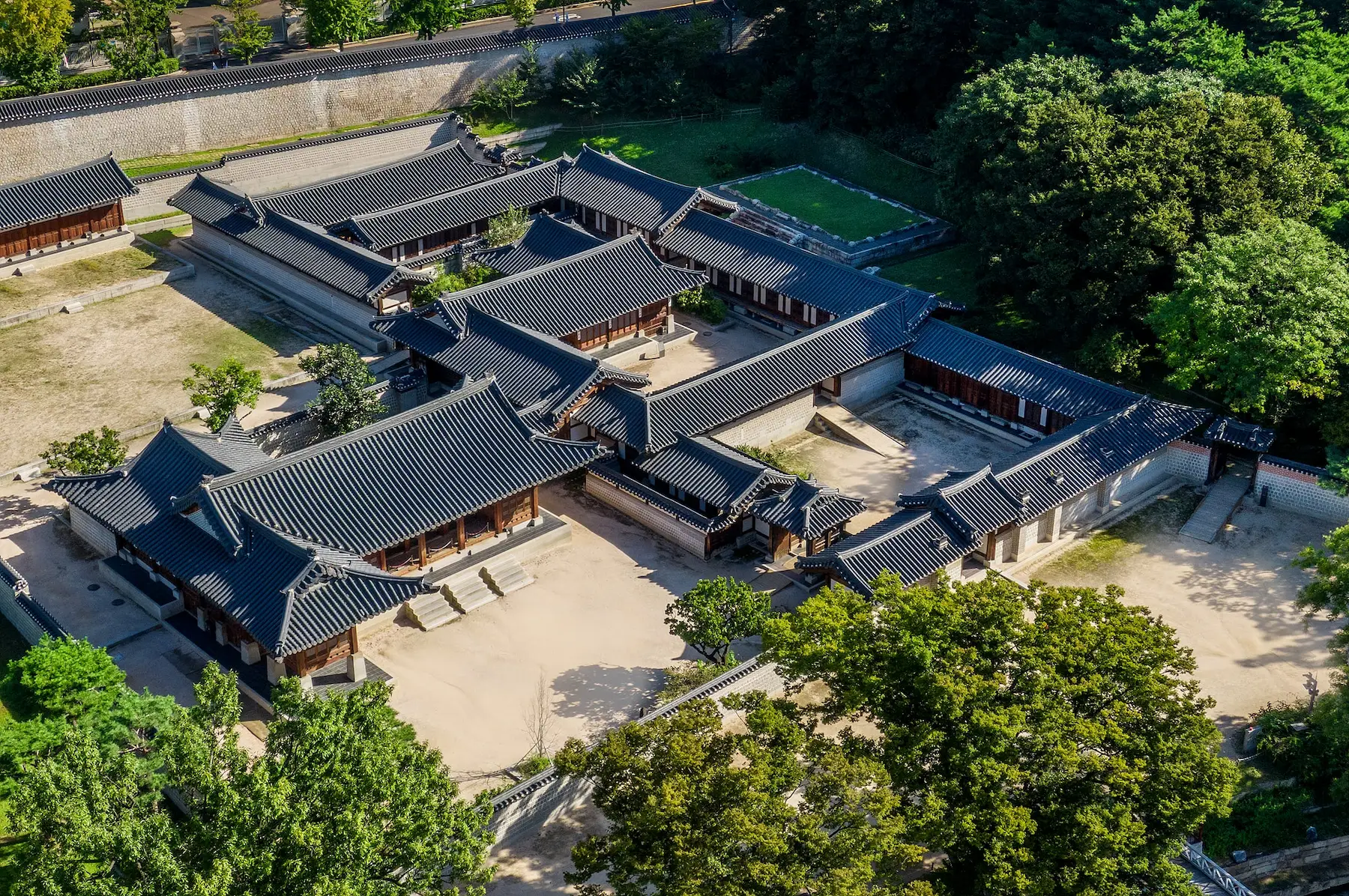
A palace within the palace, built in 1873 as King Gojong’s private villa. It was here that Queen Myeongseong was assassinated by Japanese agents in October 1895 — one of the most shocking events of Korea’s modern history. King Gojong fled to the Russian legation the following year. The complex was demolished in 1909, restored in 2007. It remains the most intimate site of Joseon’s tragic final chapter — and a place of striking contradictions: it was also the first location in Korea to have electric lighting installed, making it a symbol of both modernization and loss.
집옥재
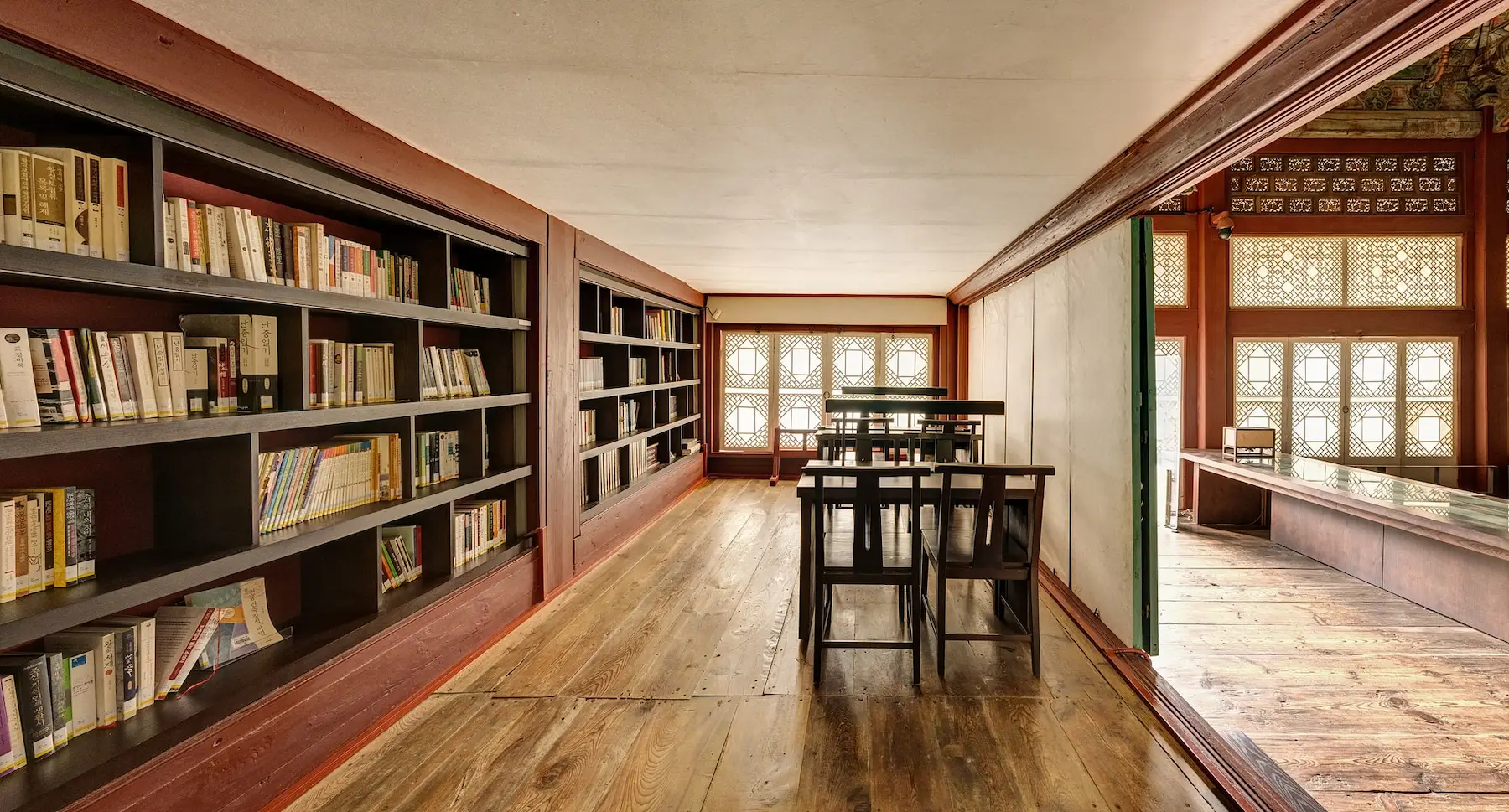
King Gojong’s personal library and reception hall for foreign guests — and the most architecturally unusual building in the palace. Built entirely in Qing Chinese style: single-storey from outside, two-storey within. The octagonal Palwujeong pavilion to its left has glass windows and ornately carved columns. The three connected structures feel like a different world within the palace walls. Note: Jipokjae’s signboard is the only one in the palace hung vertically.
태원전
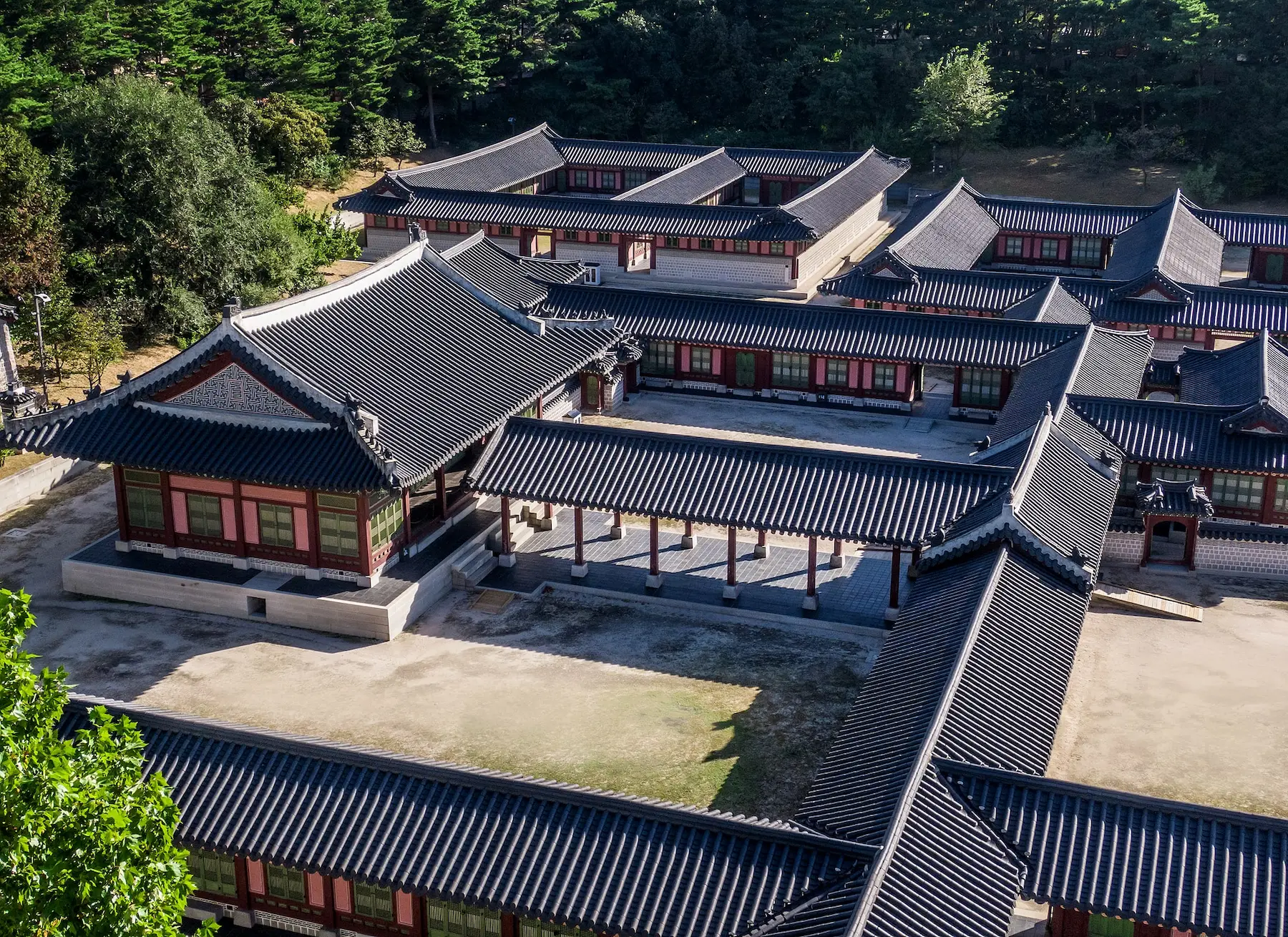
Named for “heaven,” this hall housed King Taejo’s royal portrait and later served as the binjeon — where the remains of Queen Dowager Sinjeong and Queen Myeongseong rested before their state funerals. The final stop on the palace tour route; demolished during the colonial era and restored in 2006.
Also Worth Seeing
- Donggung (동궁) — Crown Prince’s quarters: Jasonodang (residence), Bihyeongak (study), and Gyejodan — the hall where the crown prince conducted official affairs, restored and opened to the public in 2023.
- Hamhwadang & Jipgyeongdang — King Gojong’s chambers; among the few buildings never demolished in the colonial era
- Heungbokjeon — Gojong’s foreign diplomacy reception hall, restored 2020
- Sojubang (소주방) — Royal kitchen complex, now open for cultural experience programs
- National Palace Museum of Korea (Free) — Left of Gwanghwamun. 40,000+ royal artifacts. Visit before the palace for full context.
- National Folk Museum of Korea (Free) — Inside the east side of the palace. Everyday Joseon life — a striking contrast to royal grandeur.
Recommended Visit Routes
🗺 Full Route — 3 to 4 Hours (South → North)
⚡ Essential Route — 1.5 to 2 Hours
- 1Gwanghwamun Gate
- 2Geunjeongjeon
- 3Gyeonghoeru Pavilion
- 4Sajeongjeon
- 5Gangnyeongjeon · Amisan Chimneys
- 6Hyangwonjeong
- 7Geoncheonggung
📸 Photography Route
- 1Gwanghwamun (Bugaksan backdrop)
- 2Geunjeongjeon courtyard
- 3Gyeonghoeru pond reflection
- 4Amisan chimneys
- 5Sipjangsaeng chimney
- 6Hyangwonjeong bridge
- 7Jipokjae (Chinese-style)
| Zone | Key Buildings | Est. Time |
|---|---|---|
| South Gate | Gwanghwamun, Heungnyemun, Geunjeongjeon | 30–40 min |
| West-Central | Sujeongjeon, Gyeonghoeru | 15–20 min |
| Inner Quarters | Sajeongjeon, Gangnyeongjeon, Gyotaejeon | 20 min |
| East Side | Jagyeongjeon, Donggung, Sojubang | 15–20 min |
| North | Heungbokjeon, Hamhwadang, Hyangwonjeong, Geoncheonggung | 25–30 min |
| Far North | Jipokjae, Taewonjeong | 15 min |
| Total | 2–3.5 hours |
Special Programs & Events
👮 Royal Guard-Changing Ceremony
Daily free performance in full ceremonial armor with court music in front of Gwanghwamun. One of the most popular free experiences at the palace. Check the schedule at the entrance — closed Tuesdays.
🌙 Night Palace Tour
Held in spring (Apr–Jun) and autumn (Sep–Oct) only. Exact dates vary each year — check the official website before your visit.
🎭 Gungnyuk Moonlight Festival
Annual spring and autumn cultural festival with court music, dance performances, and ceremonial reenactments held across the palace grounds.
👘 Free Entry with Hanbok
Wearing a full traditional hanbok grants free admission. A hanbok with the basic form intact (jeogori top + skirt or pants) qualifies — but overly modernized or revealing styles may not. When in doubt, rental shops near the palace will always meet the standard.. Rental shops are plentiful near Gwanghwamun. The last Wednesday of every month is also free for all visitors.
Practical Information
| Admission | Adults ₩3,000 · Youth ₩1,500 · Under 6 Free |
| Hours (Spring/Autumn) | Mar–May, Sep–Oct · 09:00–18:00 |
| Hours (Summer) | Jun–Aug · 09:00–18:30 |
| Hours (Winter) | Nov–Feb · 09:00–17:00 |
| Last Entry | 1 hour before closing |
| Closed | Every Tuesday |
| Address | 161 Sajik-ro, Jongno-gu, Seoul |
| Subway | Line 3 Gyeongbokgung Station, Exit 5 (1 min walk) |
| Gates | Gwanghwamun (S/main) · Yeongchunmun (W) · Geonchunmun (E) · Sinmumun (N) |
| Guided Tours | Korean, English, Japanese, Chinese + 2 languages · Free · No reservation under 10 people |
Visitor Tips
- Arrive at 9am — crowds build fast after 10am, especially around Geunjeongjeon
- Hanbok rental is worth it — free entry and perfect backdrops. Traditional style only (modernized hanbok does not qualify for free admission)
- Visit the National Palace Museum first — 30 minutes here makes the entire palace make more sense
- Enter via Yeongchunmun (west gate) if coming from Seochon — puts you right next to Gyeonghoeru
- Morning light hits the Gyeonghoeru pond from the east — best reflections in the first hour after opening
- Night tour tickets sell out fast — check Interpark the moment spring/autumn tickets go on sale
Book Your Gyeongbokgung Experience
Curated experiences to make the most of your visit
Final Thoughts
Of Seoul’s five grand palaces, Gyeongbokgung was the first to rise, the most completely destroyed, and the most symbolically restored. The stories of founding and collapse, loss and recovery, are all layered into a single space.
A palace is stone and timber. But Gyeongbokgung is something more. Walk the path from Gwanghwamun to Geunjeongjeon and you are not simply sightseeing. You are tracing the spine of a civilization.
Explore More of Seoul
Planning your time around the palace? These guides will help you make the most of the neighbourhood.