Yesan · Chungcheongnam-do · Korea
Sudeoksa Temple
A 1,400-Year-Old Baekje Temple
Complete Walking Guide · National Treasure No. 49 · Templestay
History
1,400 Years on the Slopes of Deoksungsan
Sudeoksa Temple sits on the southern slopes of Deoksungsan Mountain in Yesan, South Chungcheong Province. Founded during the Baekje Kingdom, it is one of Korea’s oldest surviving Buddhist temples. A record states that the monk Hyehyeon lectured on the Lotus Sutra here during the reign of King Mu of Baekje (600–641 AD), confirming the temple existed even before that date. Baekje-era roof tiles discovered on the temple grounds further support this ancient origin.
During the Goryeo period, the monk Naong rebuilt the temple under King Gongmin. In the late Joseon era, the great Zen master Gyeongheo revived the practice of Seon Buddhism here, and in 1898 his disciple Mangong oversaw a major restoration, establishing Sudeoksa as one of the foremost centers of Korean Seon Buddhism.
Today Sudeoksa serves as the head temple of the 7th district of the Jogye Order of Korean Buddhism, overseeing 36 affiliated temples across South Chungcheong Province. It is also the seat of Deoksungchongnim — one of only five comprehensive Buddhist training centers in Korea.


Getting There
Parking, Access & Restaurants
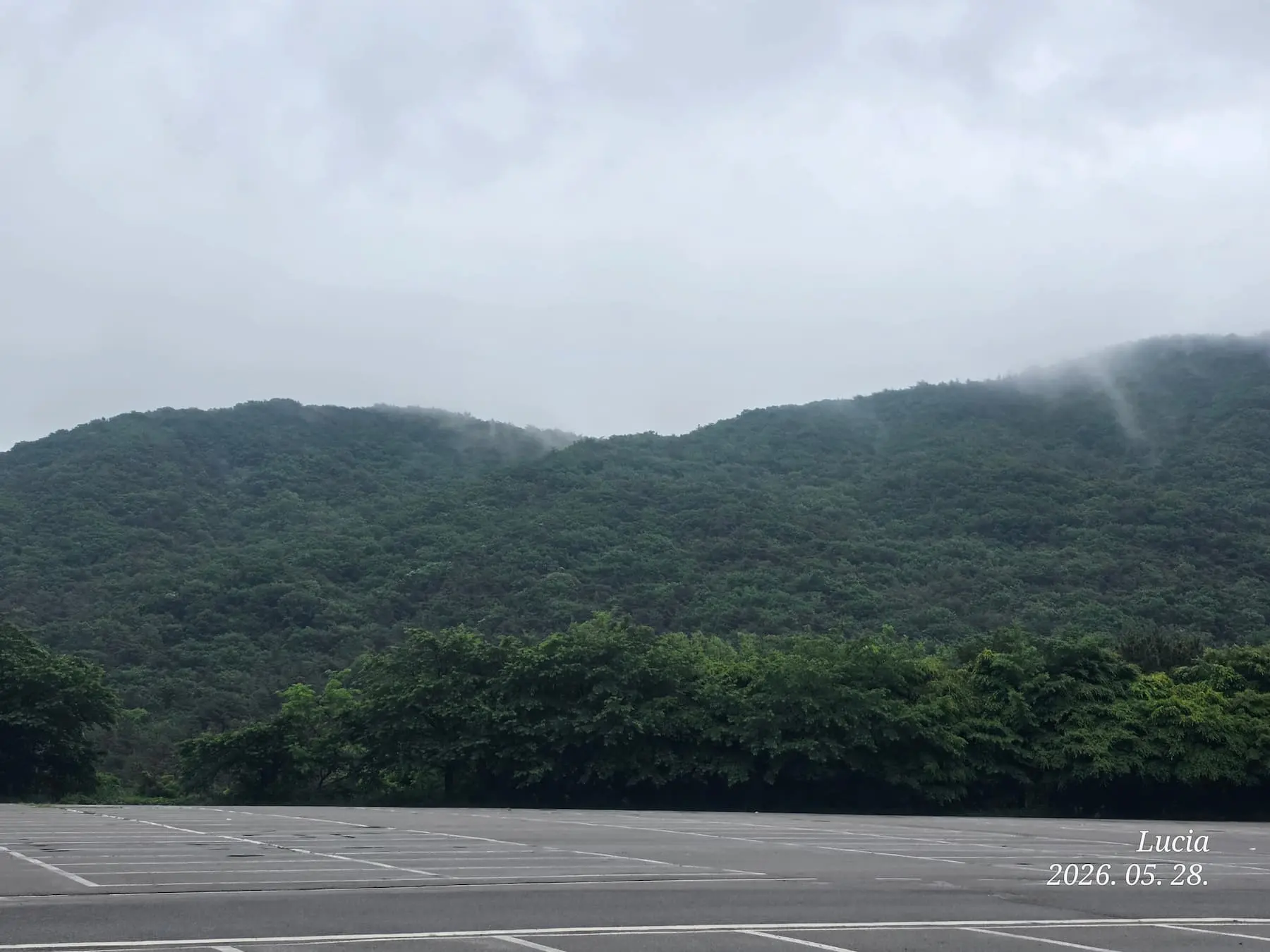
Sudeoksa has a large free parking lot right at the entrance — one of the most accessible major temples in Korea for visitors arriving by car. From the parking lot, it’s a pleasant 10–15 minute walk to the temple gates.
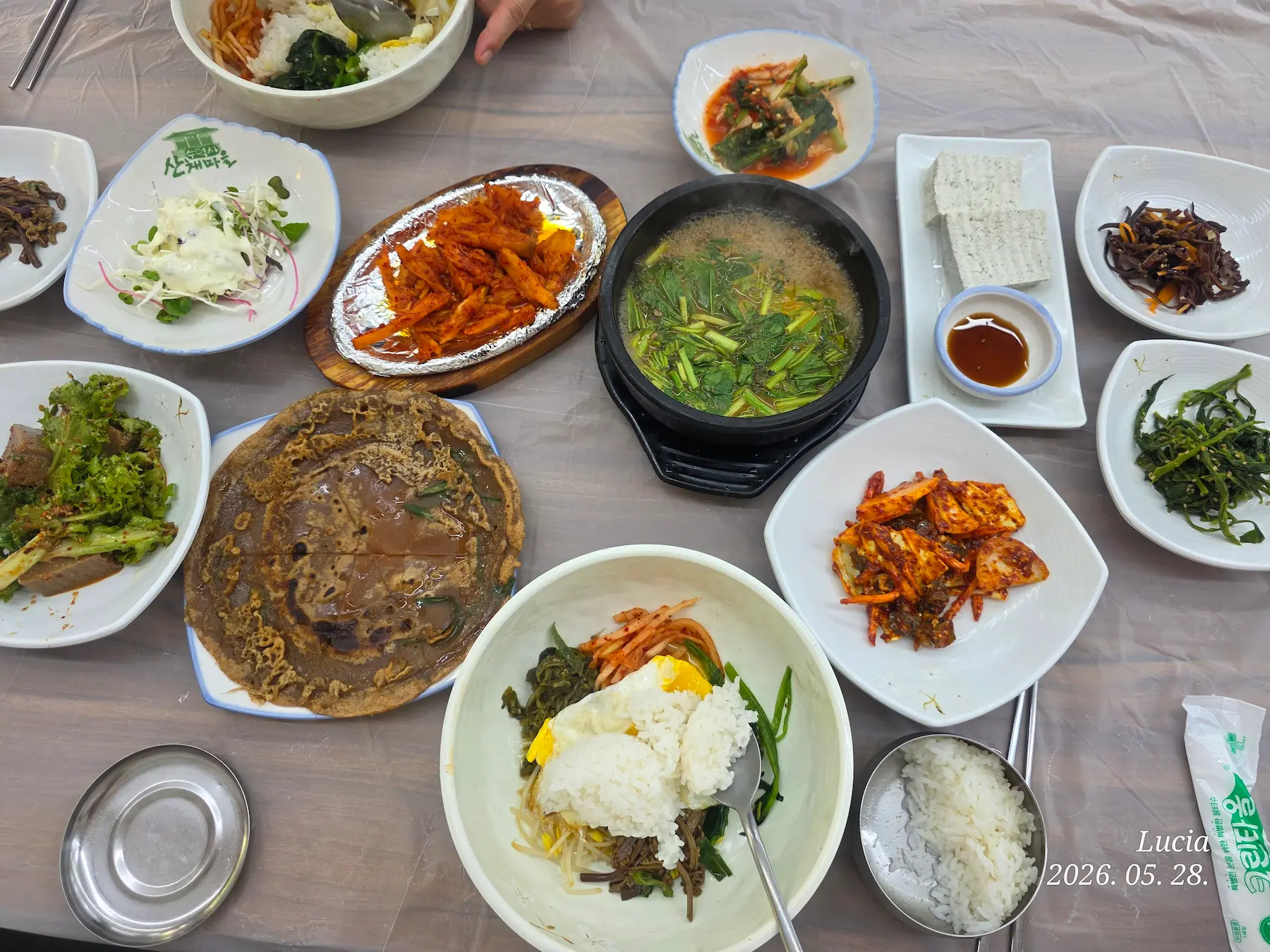
Along this path, you’ll find a lively strip of restaurants and traditional teahouses. The area is particularly known for dubu (tofu) cuisine and sanchae jeongsik (mountain vegetable set meals) — a perfect meal before or after your visit.
Watch
Feel the Stillness for Yourself
Words and photographs can only go so far. Watch the full walk through Sudeoksa — and feel the stillness for yourself.

Walking Tour
Through the Gates, Into the Mountains
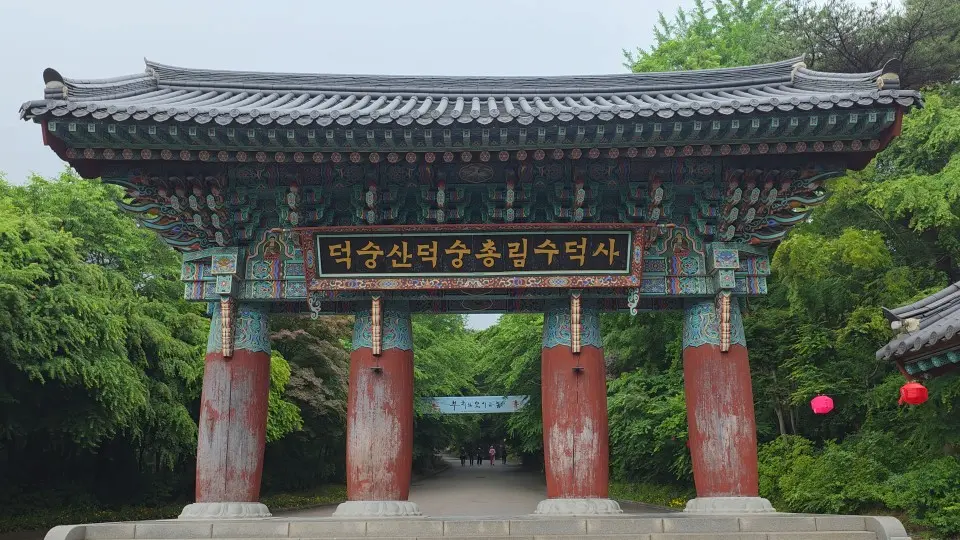
The first gate of Sudeoksa. Passing through here marks the transition from the noise of everyday life into a space of practice and stillness. The hanging board reads Deoksungchongnim Sudeoksa — announcing one of only five comprehensive Buddhist training centers in all of Korea.
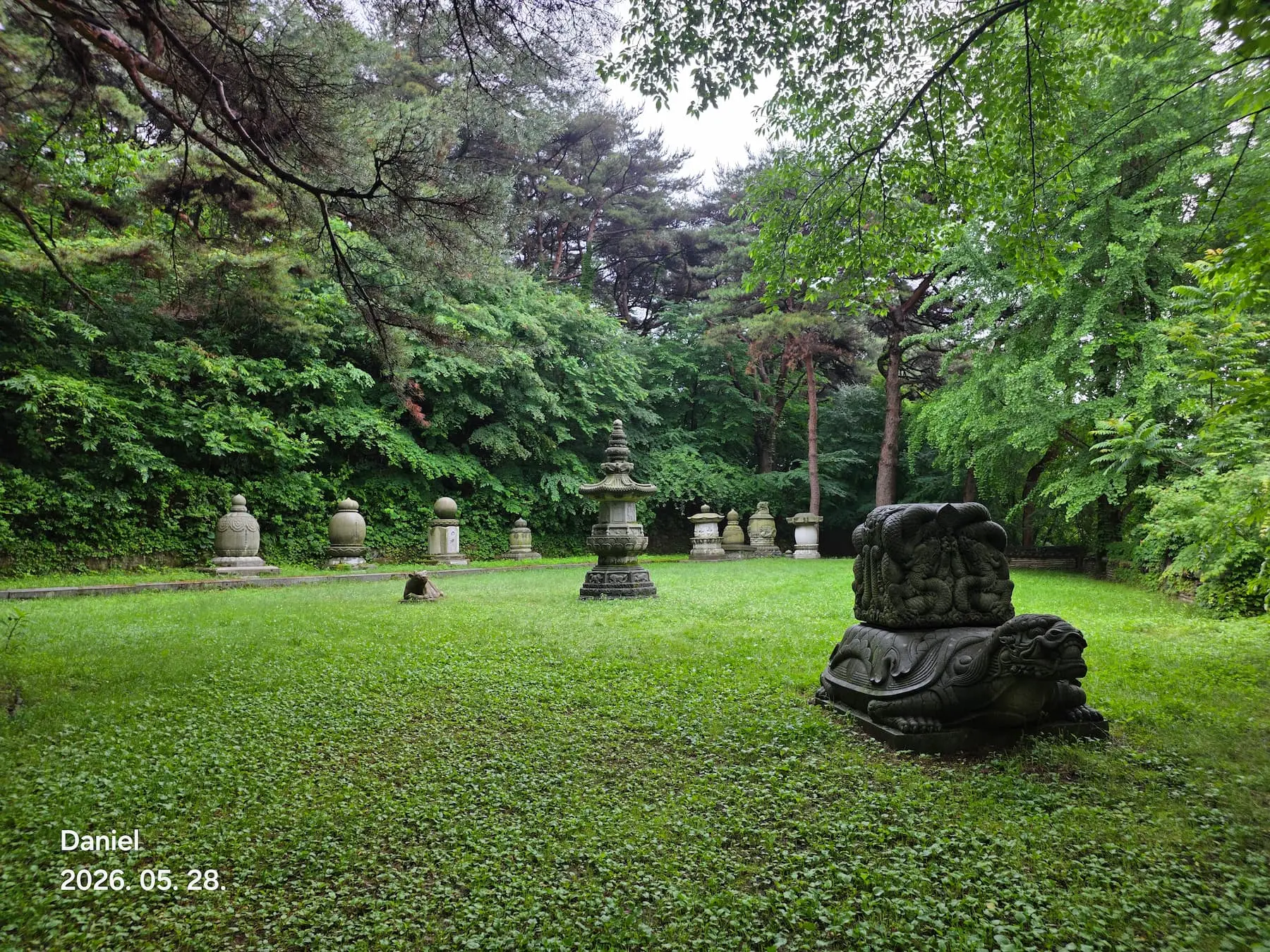
A quiet garden of stone stupas holding the relics of eminent monks who practiced at Sudeoksa. Each tower represents a lifetime of dedication to Buddhist practice.
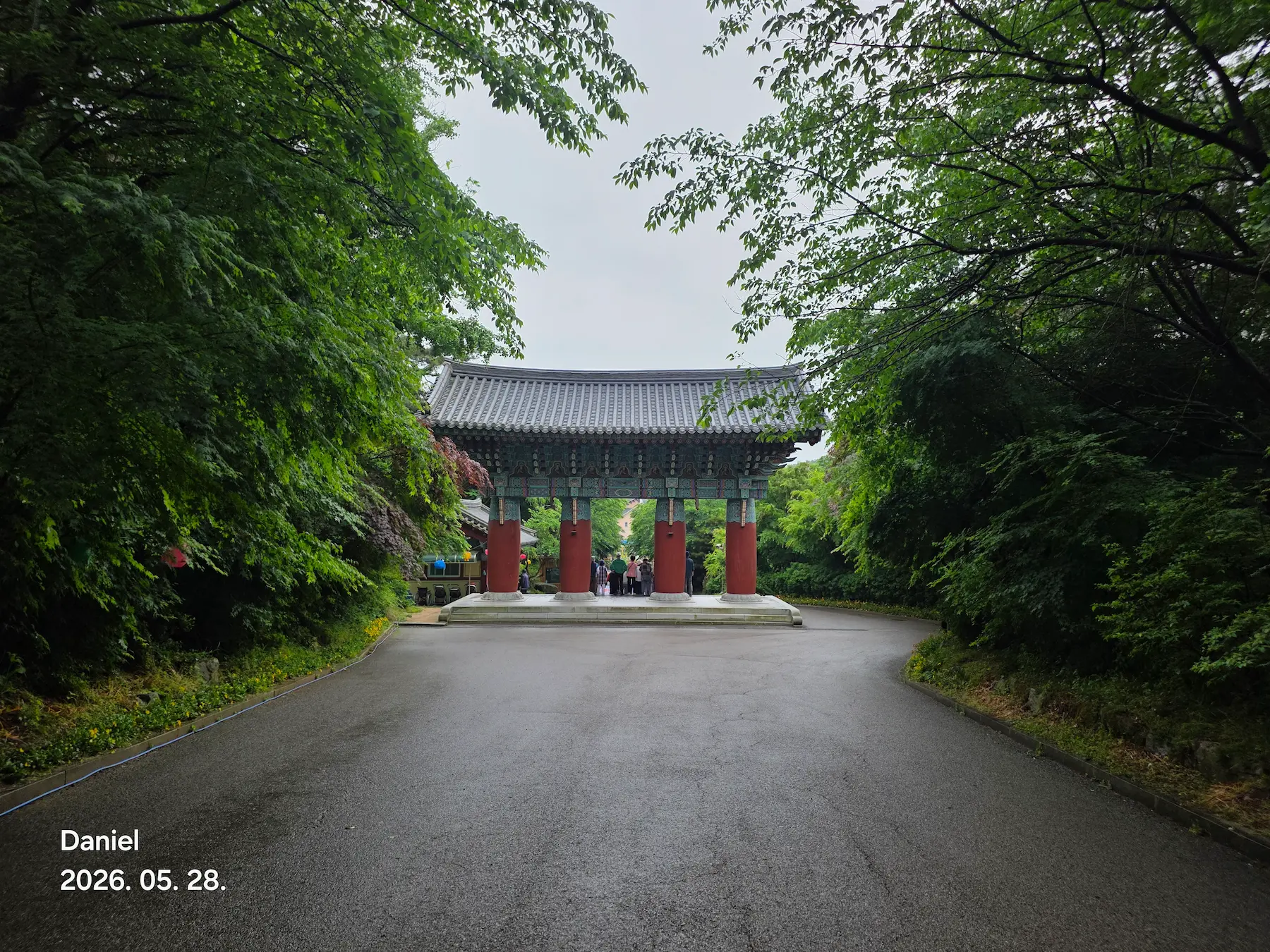
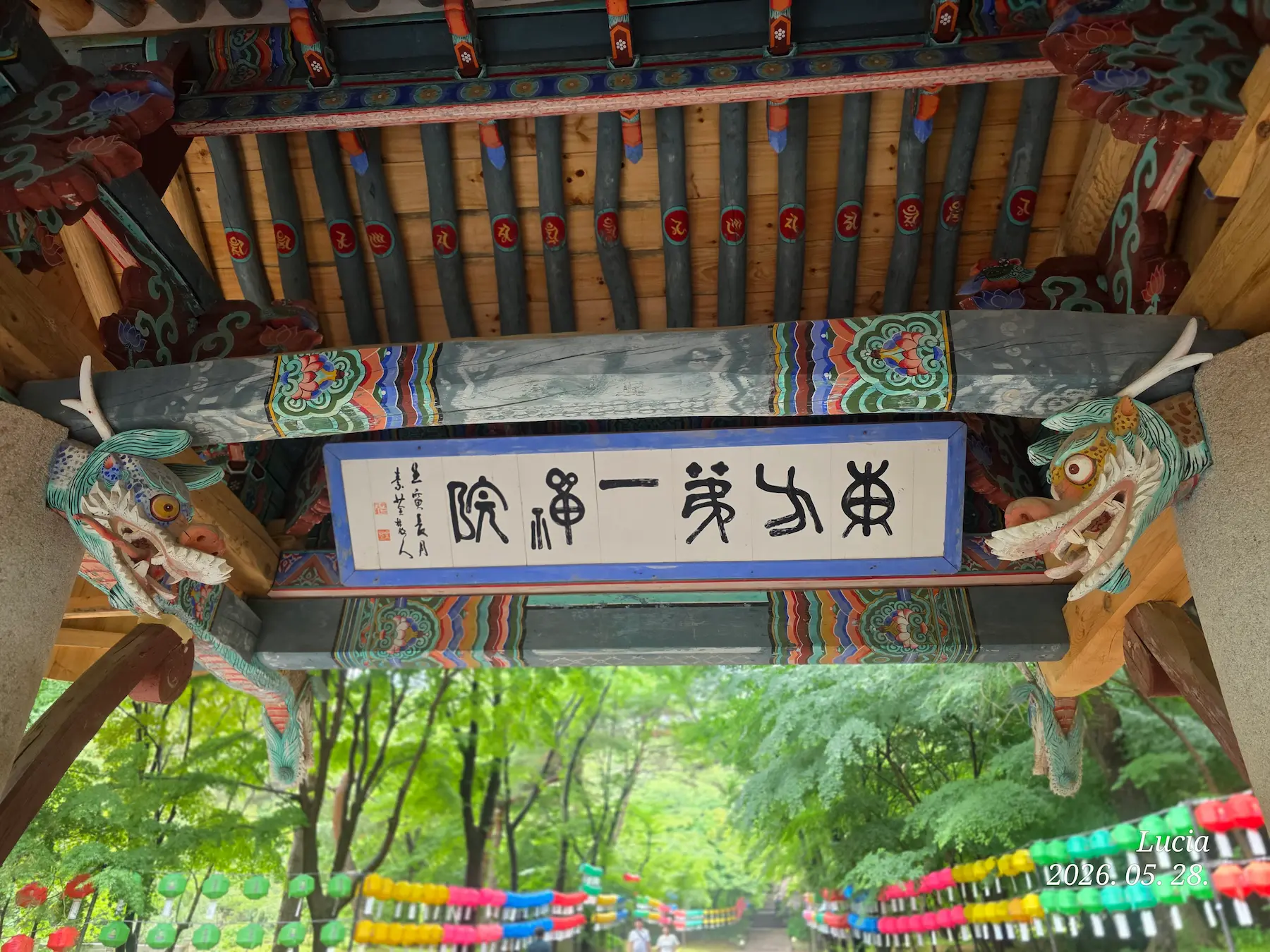
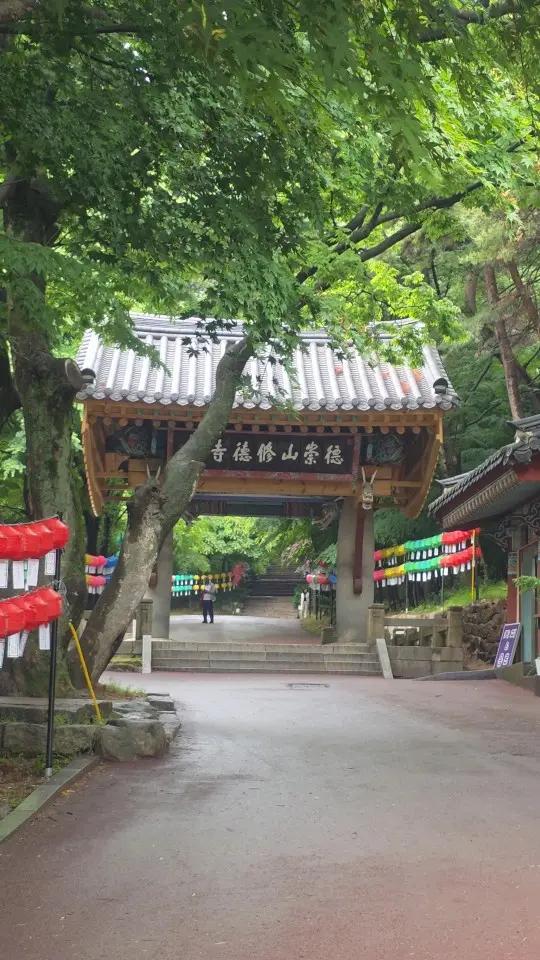
The “single-pillar gate” — its columns aligned in a single row, symbolizing the one-pointed mind needed to enter the Buddhist path. The inscription above reads Deoksungsan Sudeoksa.
Cultural Heritage Site
Just past the Iljumun gate stands the historic Sudeok Yeogwan — once home to Goam Yi Eung-no (1904–1989), one of Korea’s most celebrated modern painters. He purchased the inn in 1944, sheltered here during the Korean War, and stayed until he left for France in 1959.
In the courtyard, two abstract rock carvings he made in 1969 still remain. When asked their meaning, Yi Eung-no replied: “This is the way people live — the rise and fall of all things. Here is you, and here is me.”
The inn, the well, and the carvings — spanning approximately 1,504㎡ — are designated as a Chungcheongnam-do Monument.


The second gate is guarded by two Vajra Warrior statues — fierce protectors of Buddhist law. Wielding thunderbolt weapons, they repel evil spirits and warn the impure of heart.
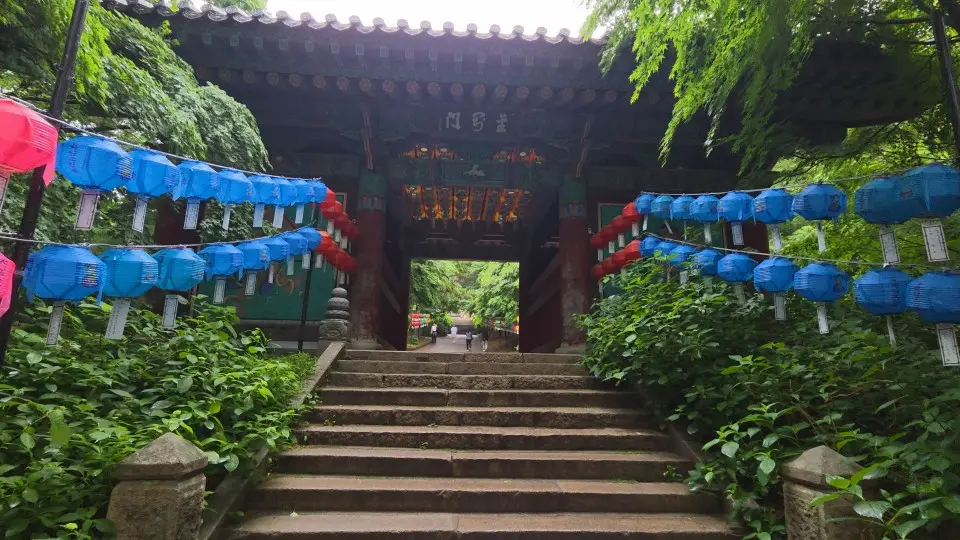
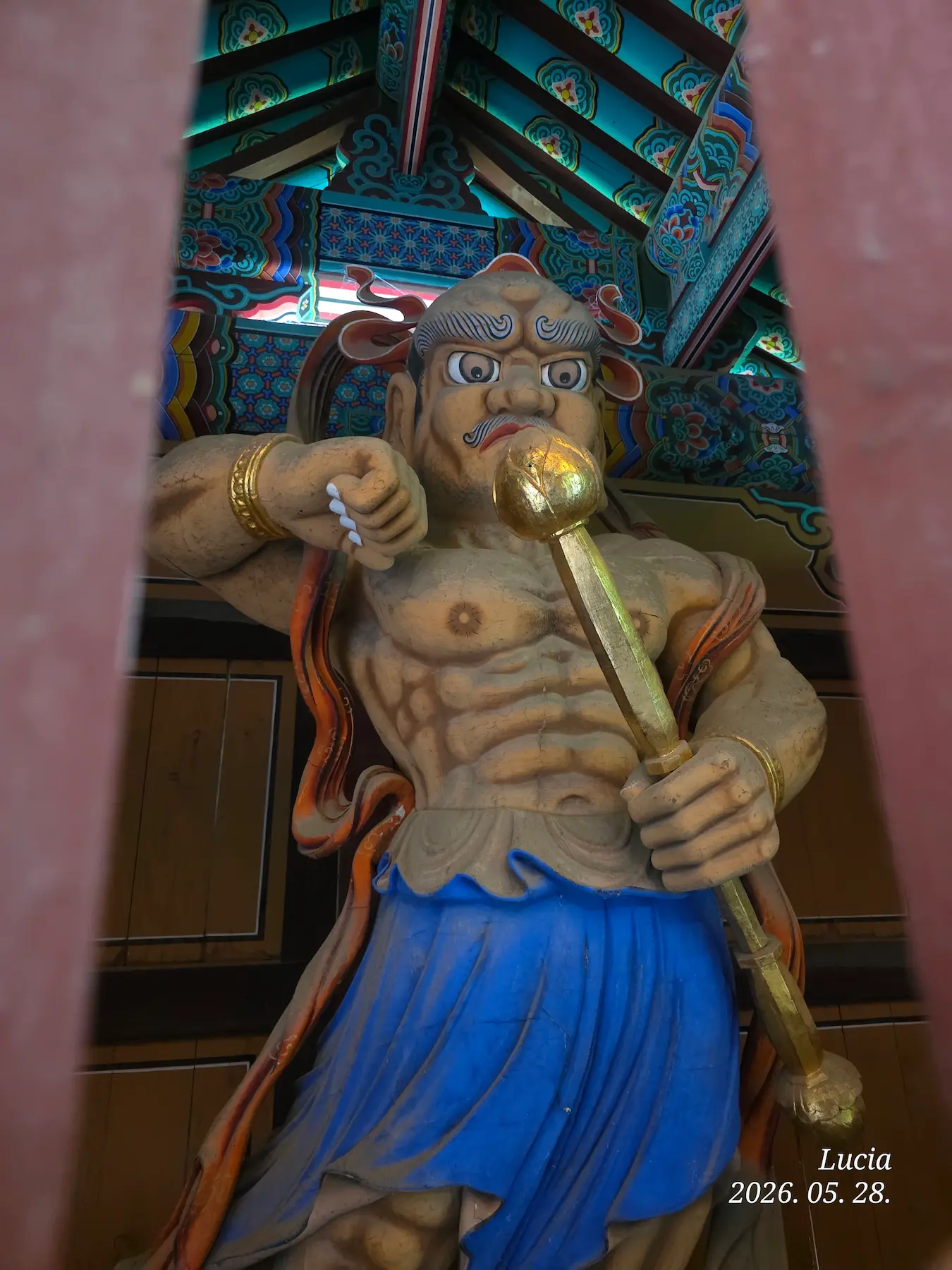
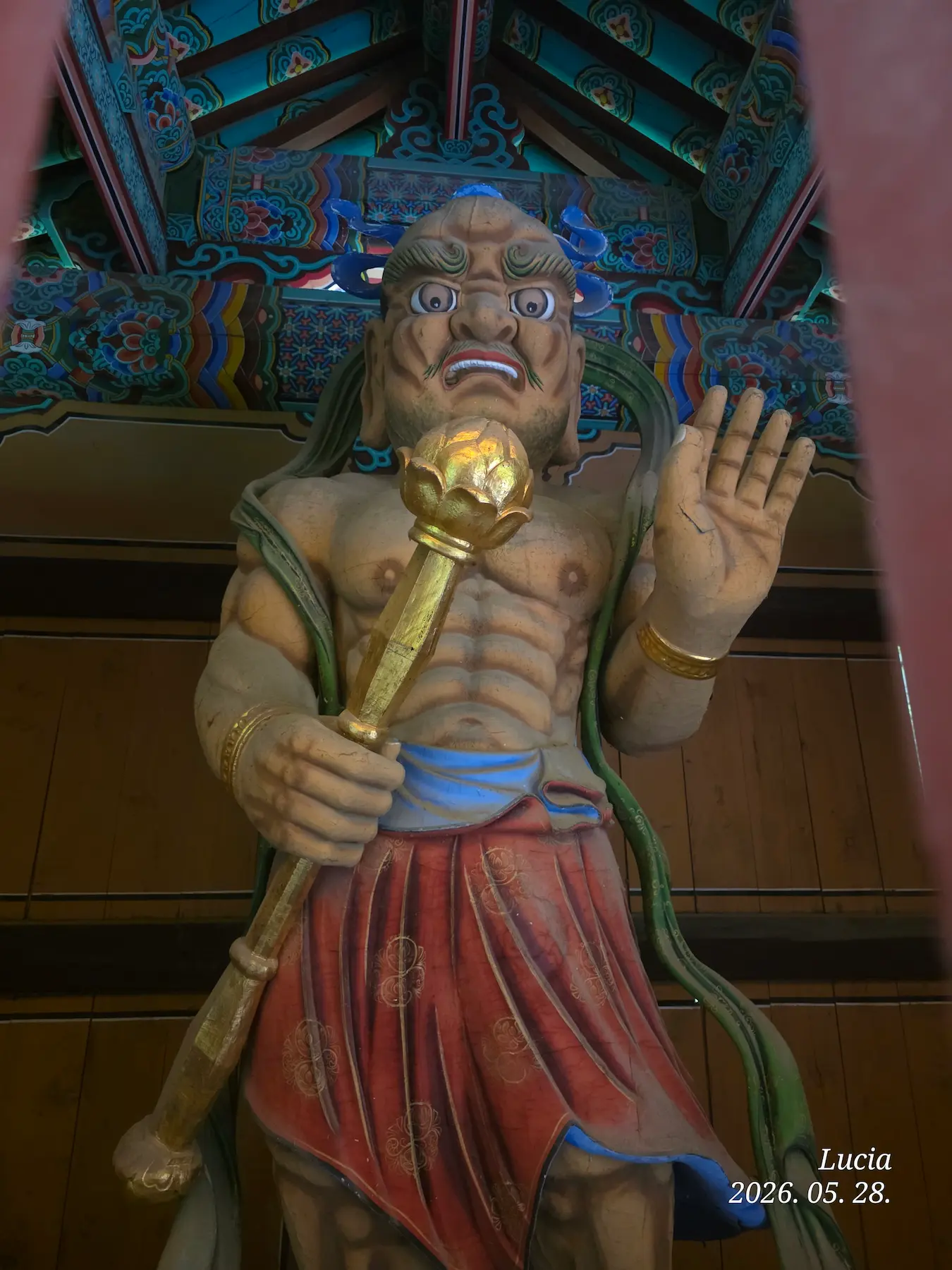
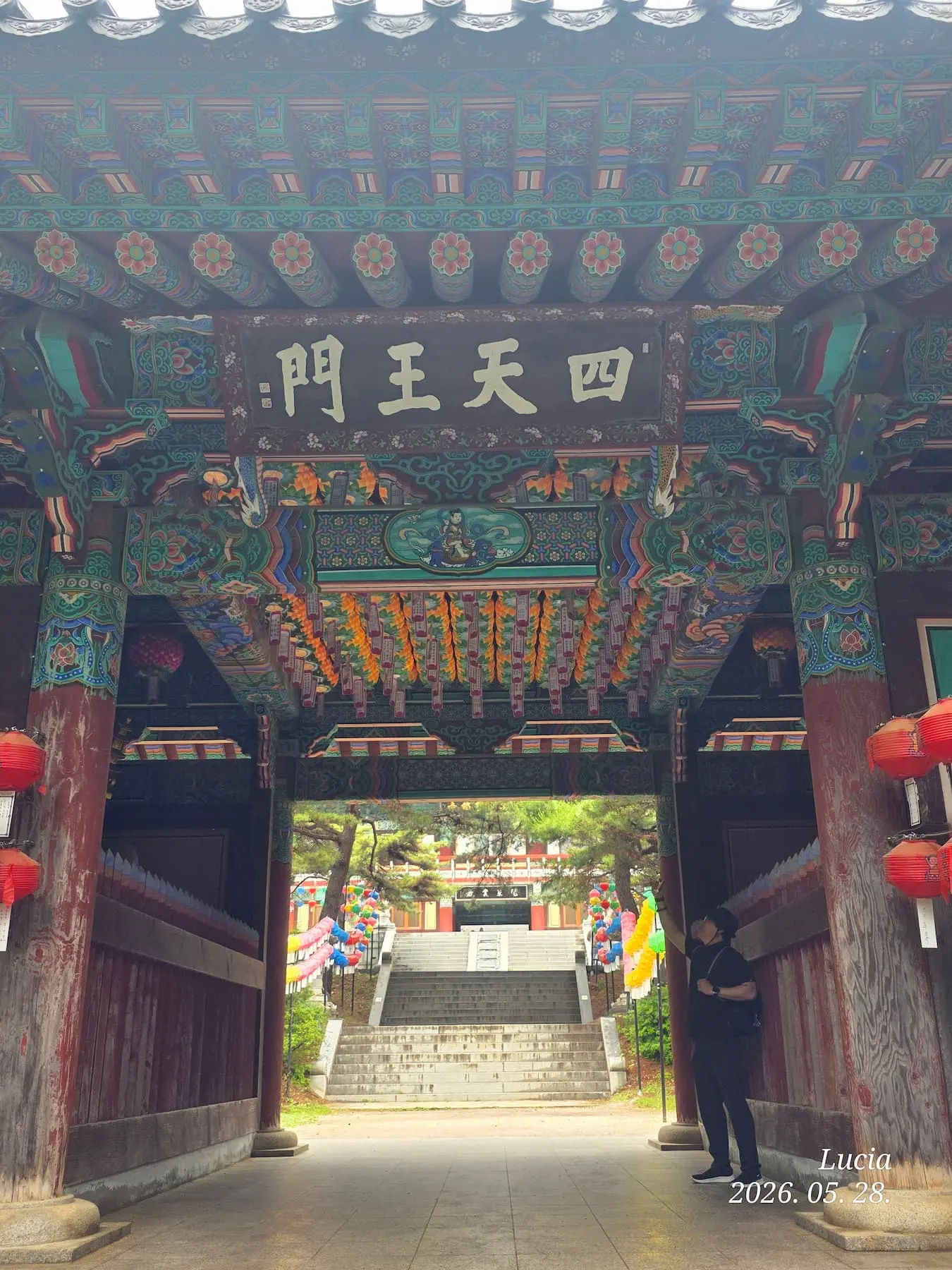
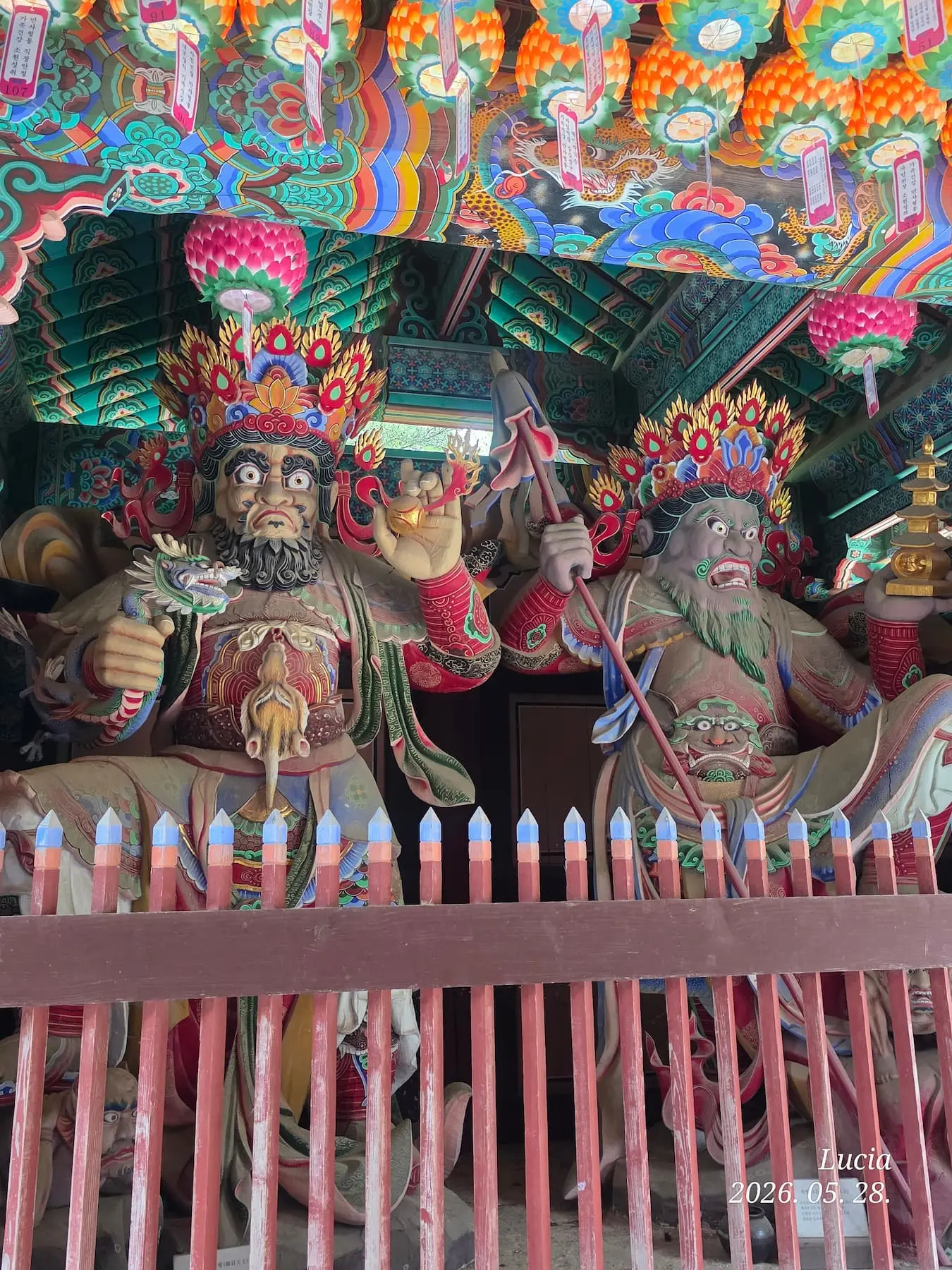
The third and final gate before the inner temple, housing four wooden guardian statues carved in 2000. Each Heavenly King protects one cardinal direction — holding a lute, sword, dragon, or pagoda.
Built in 1931 by the great Zen Master Mangong — a symbol of modern Korean Buddhist history standing in the main courtyard.
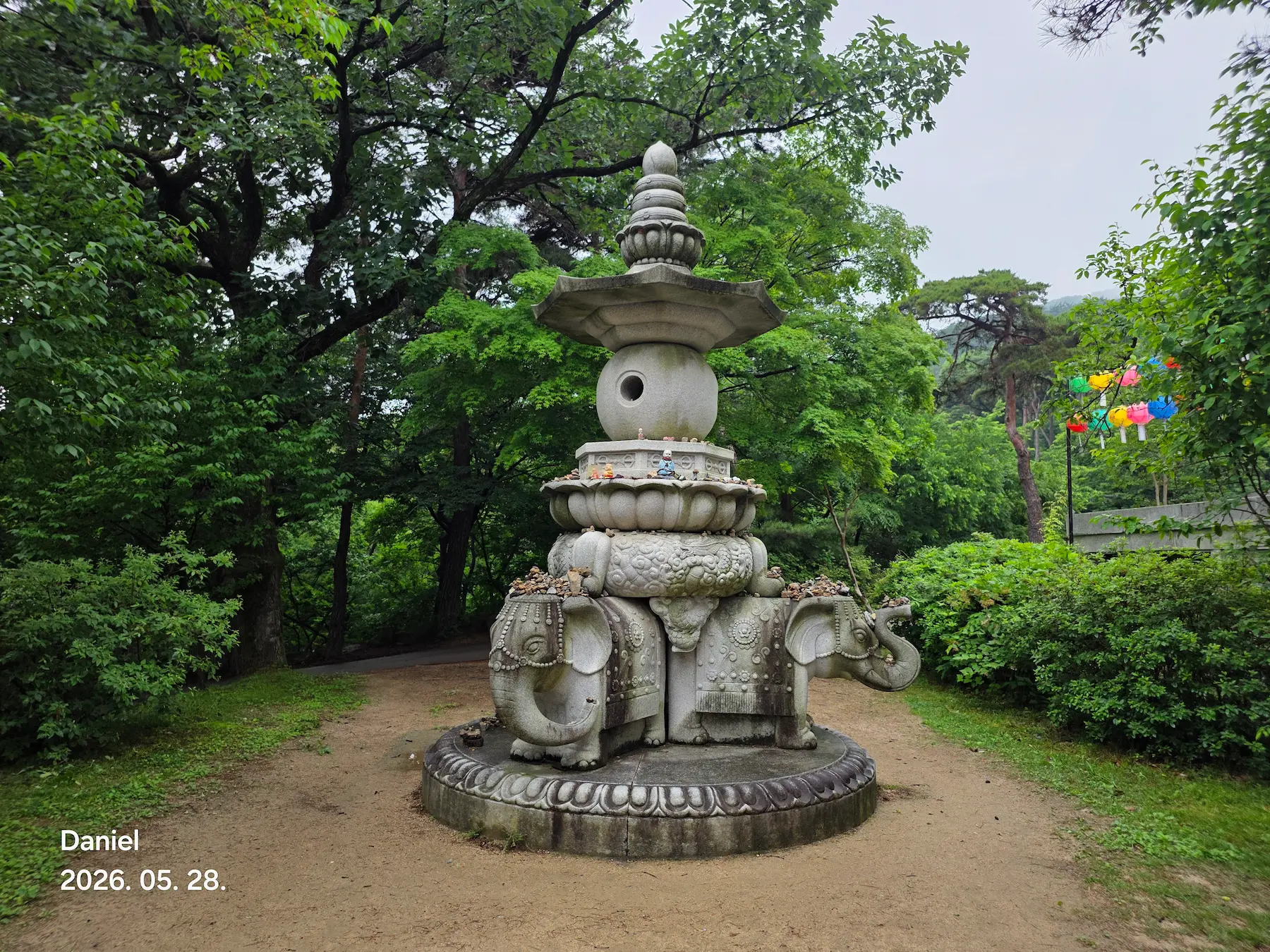
A rare stone lantern whose base is carved in the shape of elephants — an extremely unusual motif in Korean Buddhist art, where lions are the traditional choice. In Buddhism, elephants symbolize wisdom and the power to overcome obstacles.
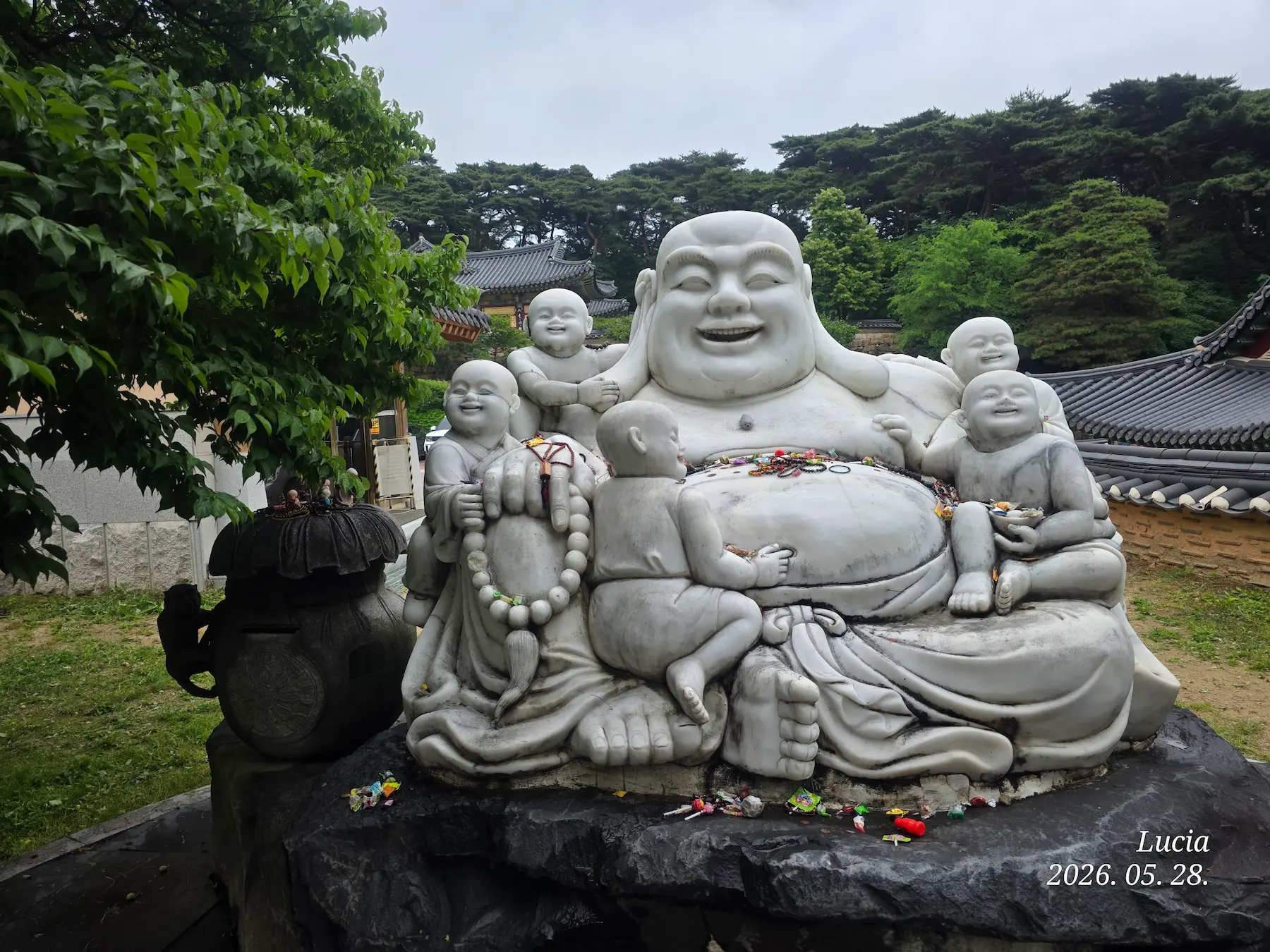
The round, laughing figure often mistaken for the Buddha — Budai is actually a beloved Chinese Zen monk. In Korean Buddhism he represents contentment and good fortune. Rub his belly for luck!
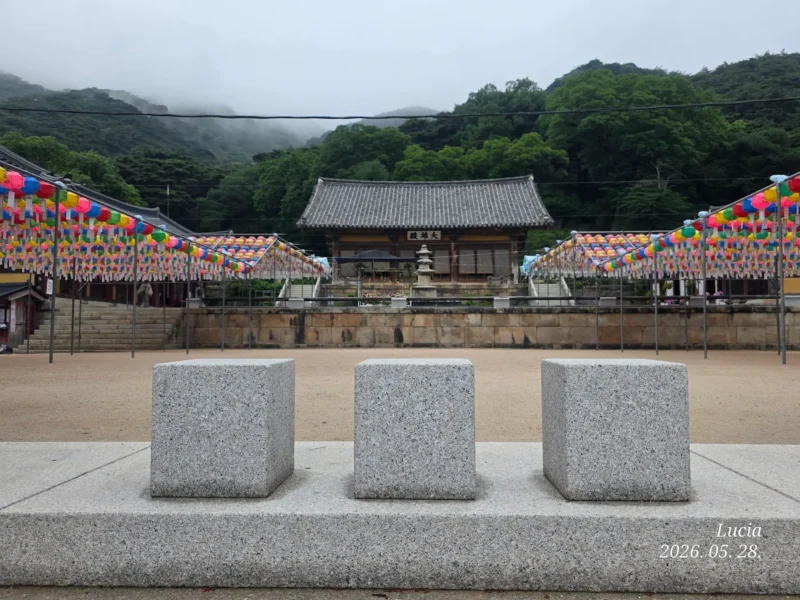
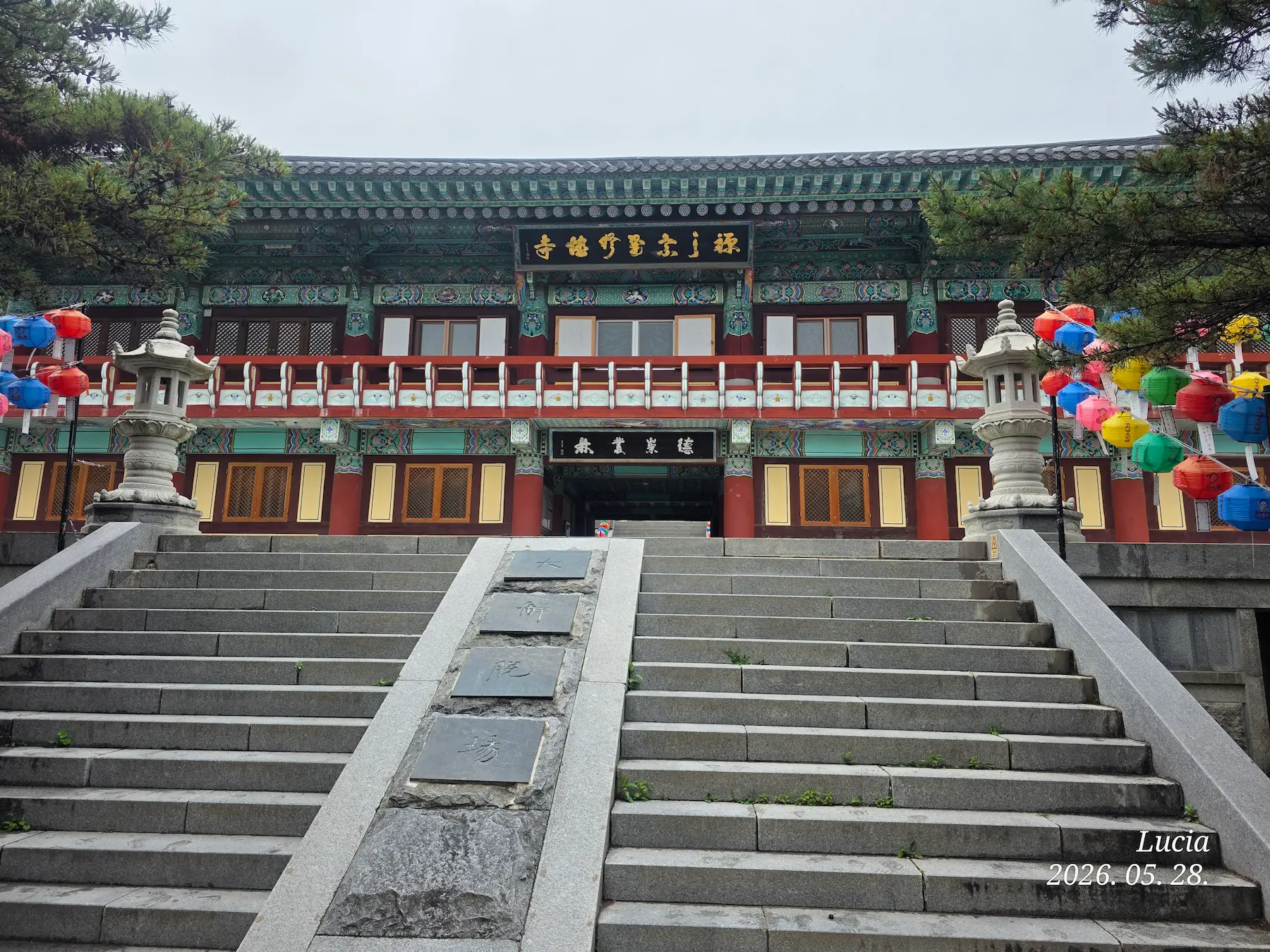
The final gateway before the Daeungjeon. Built on a steep slope with stone foundations. Pass through the ground-floor corridor and climb the stone steps — the Daeungjeon reveals itself at the top. Sunday services are held here every week.
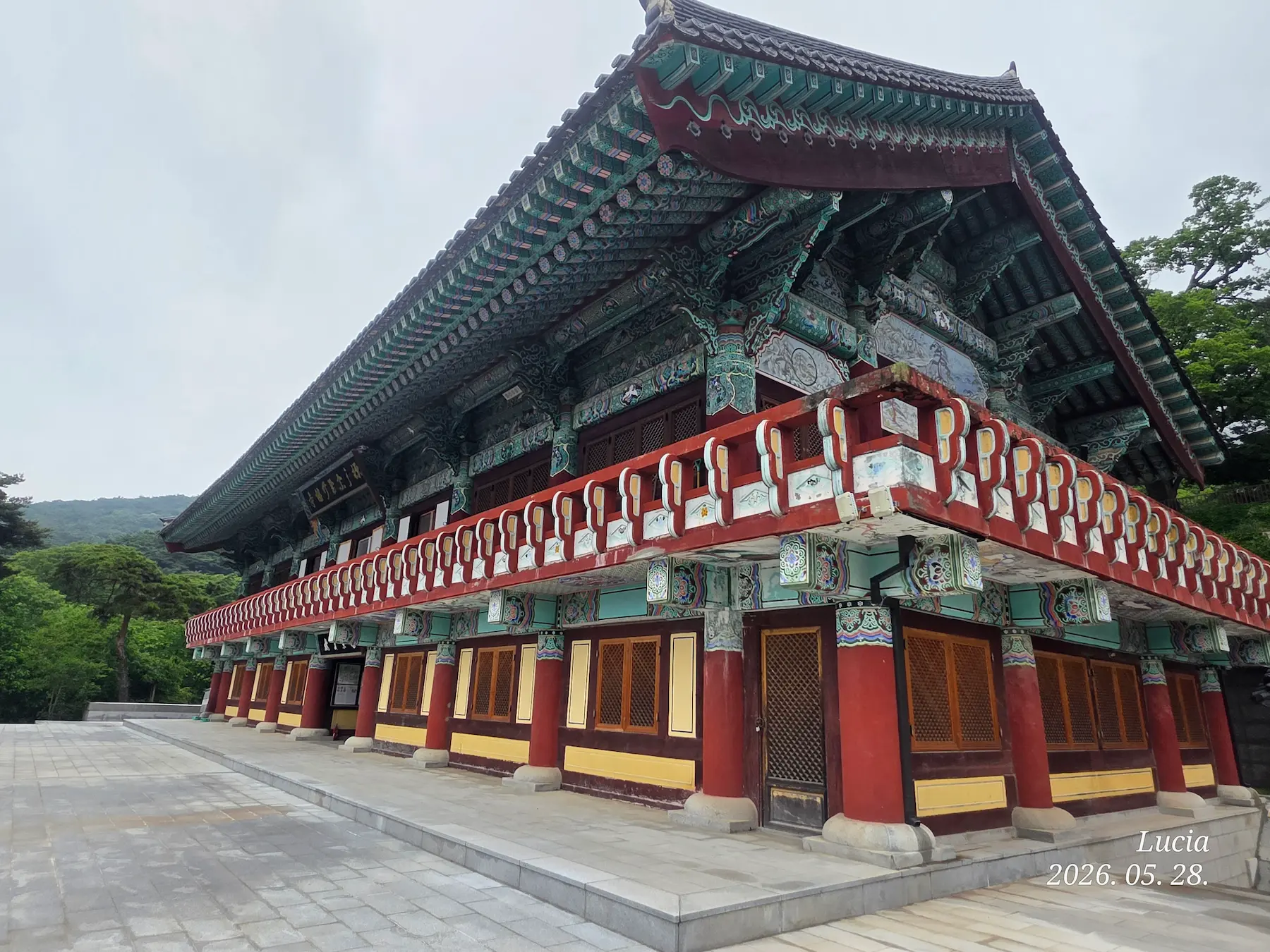
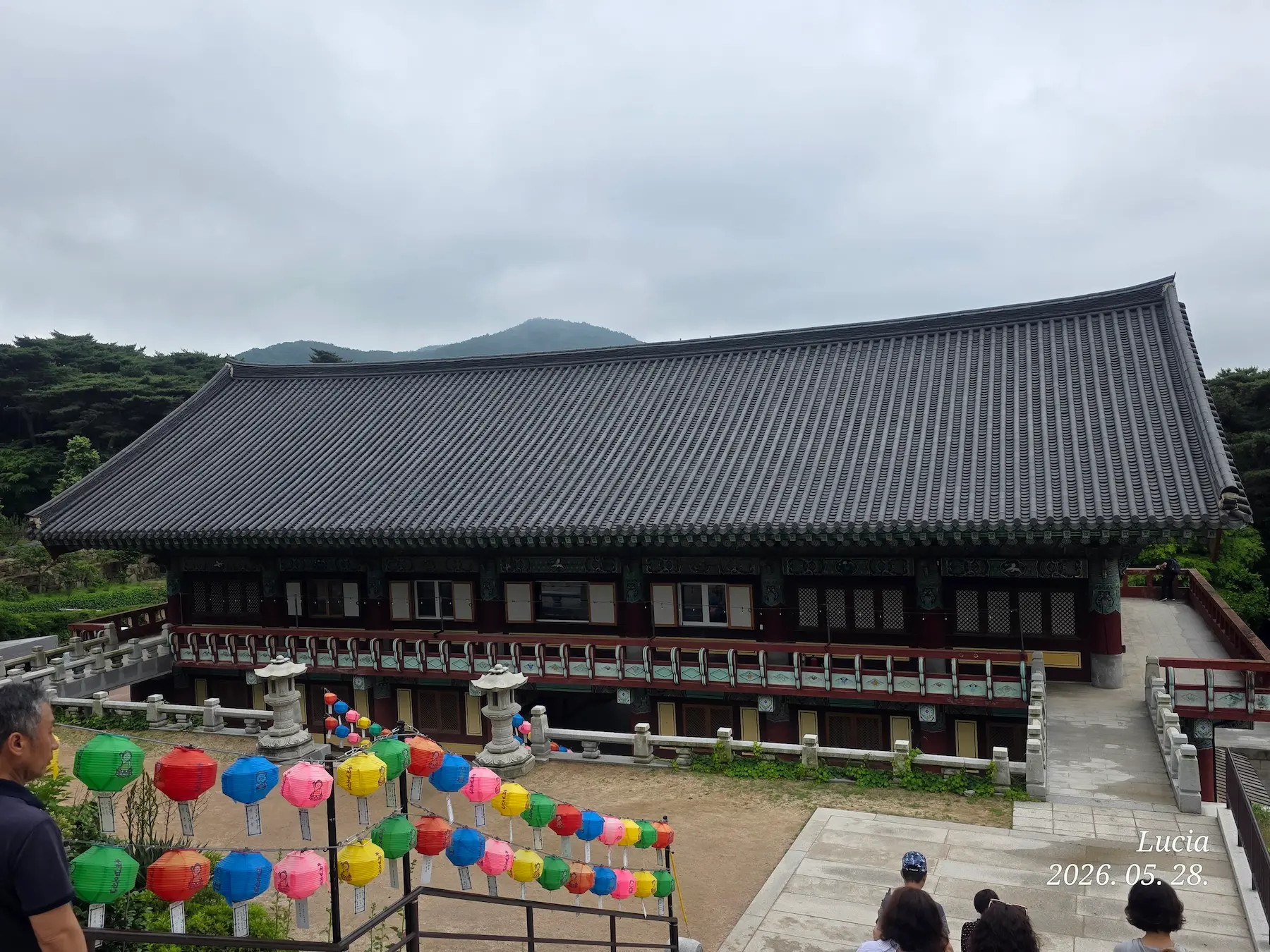
Built in 1973, the Bell Pavilion houses a 4-ton bronze bell cast to recreate the sound of Gyeongju’s famous Emille Bell. One strike resonates for over 2.5 minutes — heard up to 12km away.
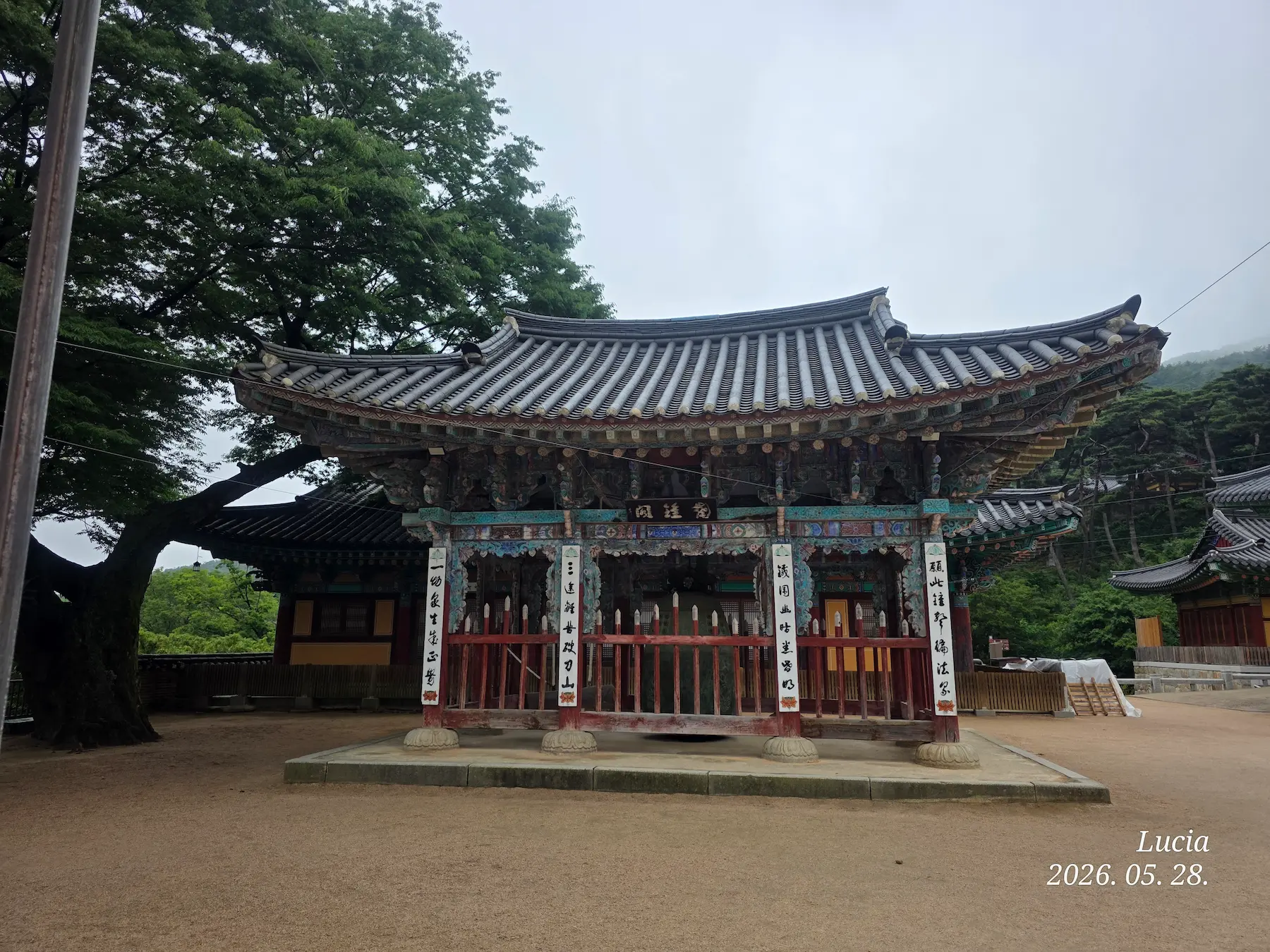
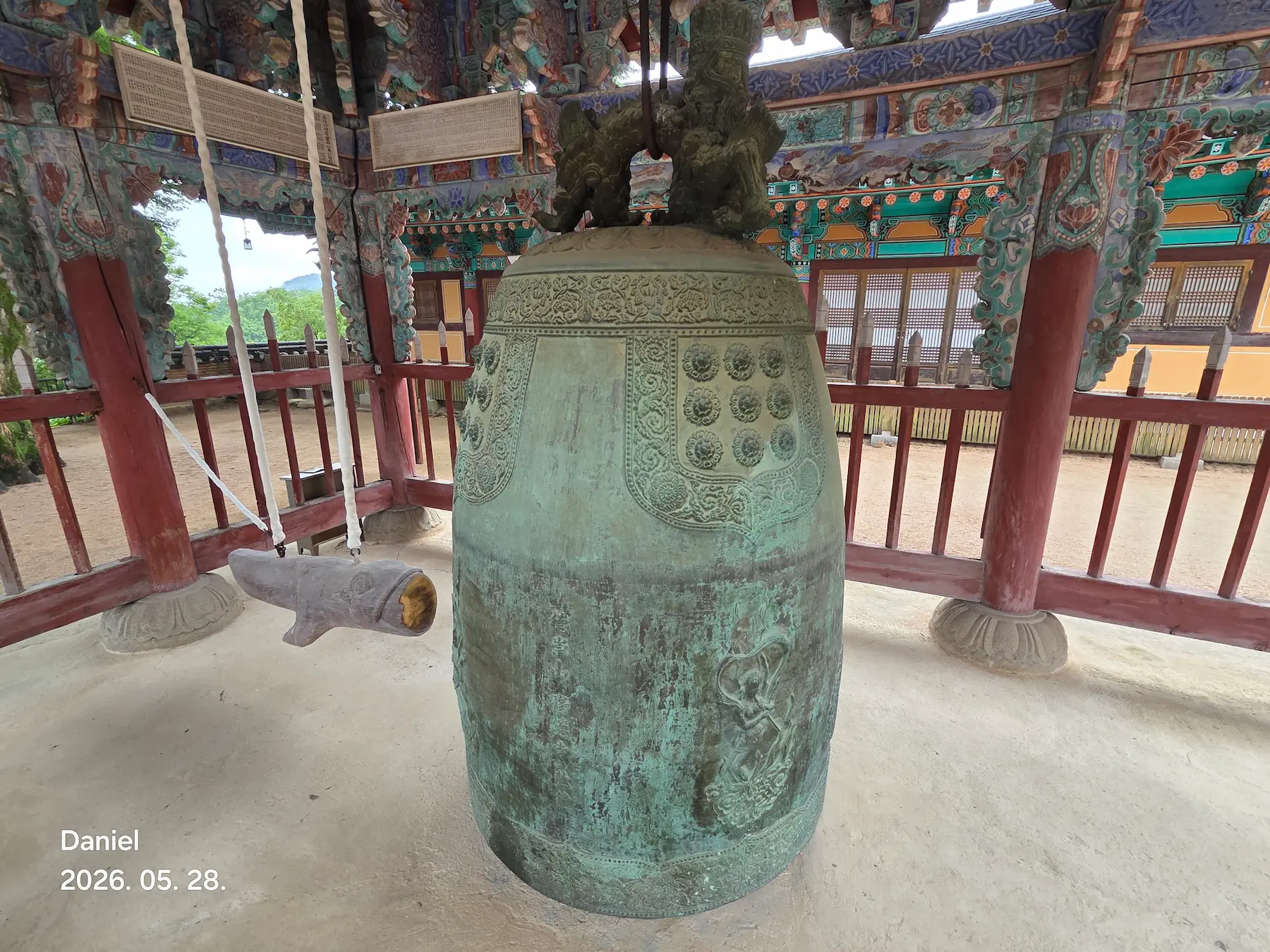
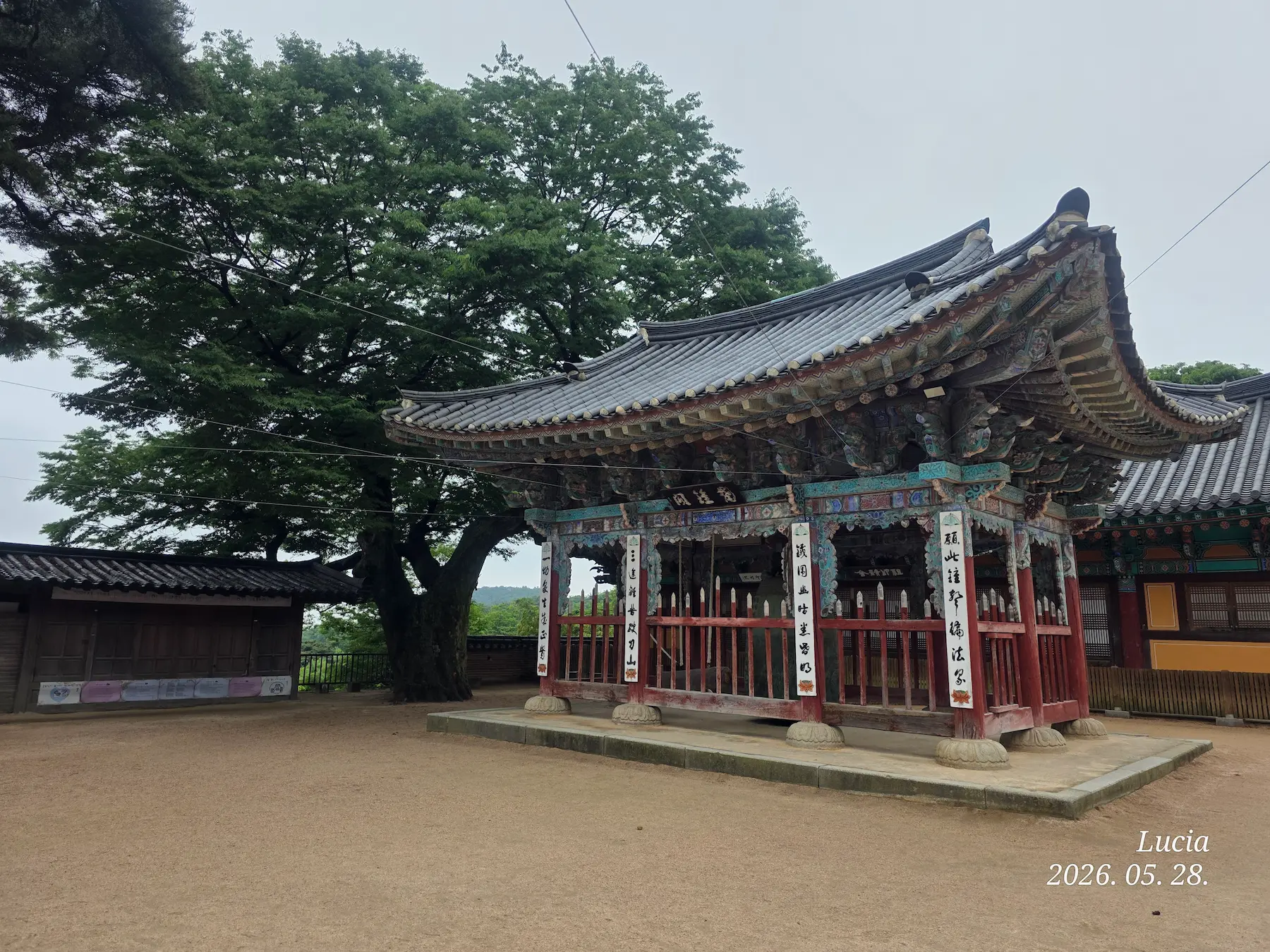
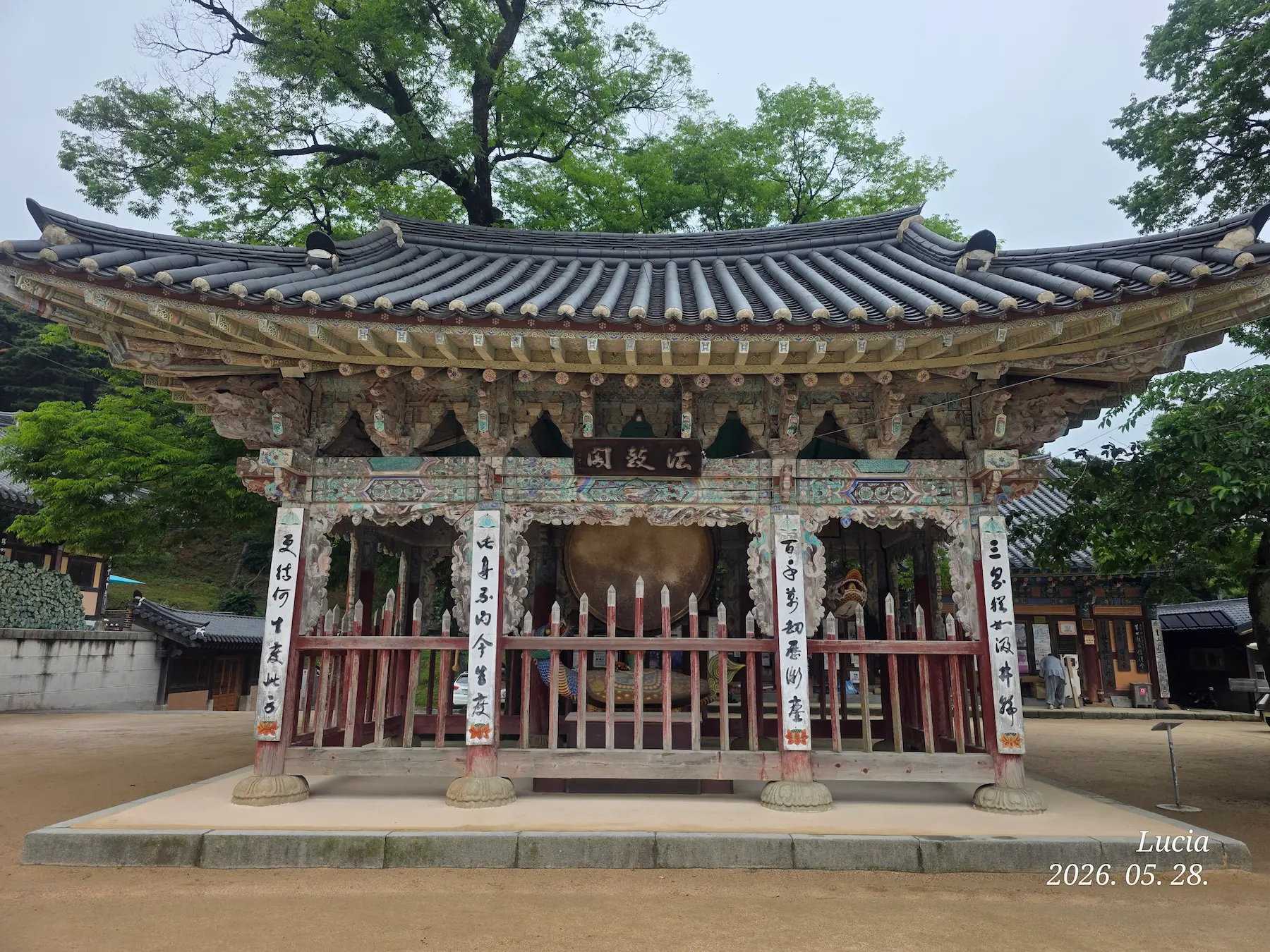
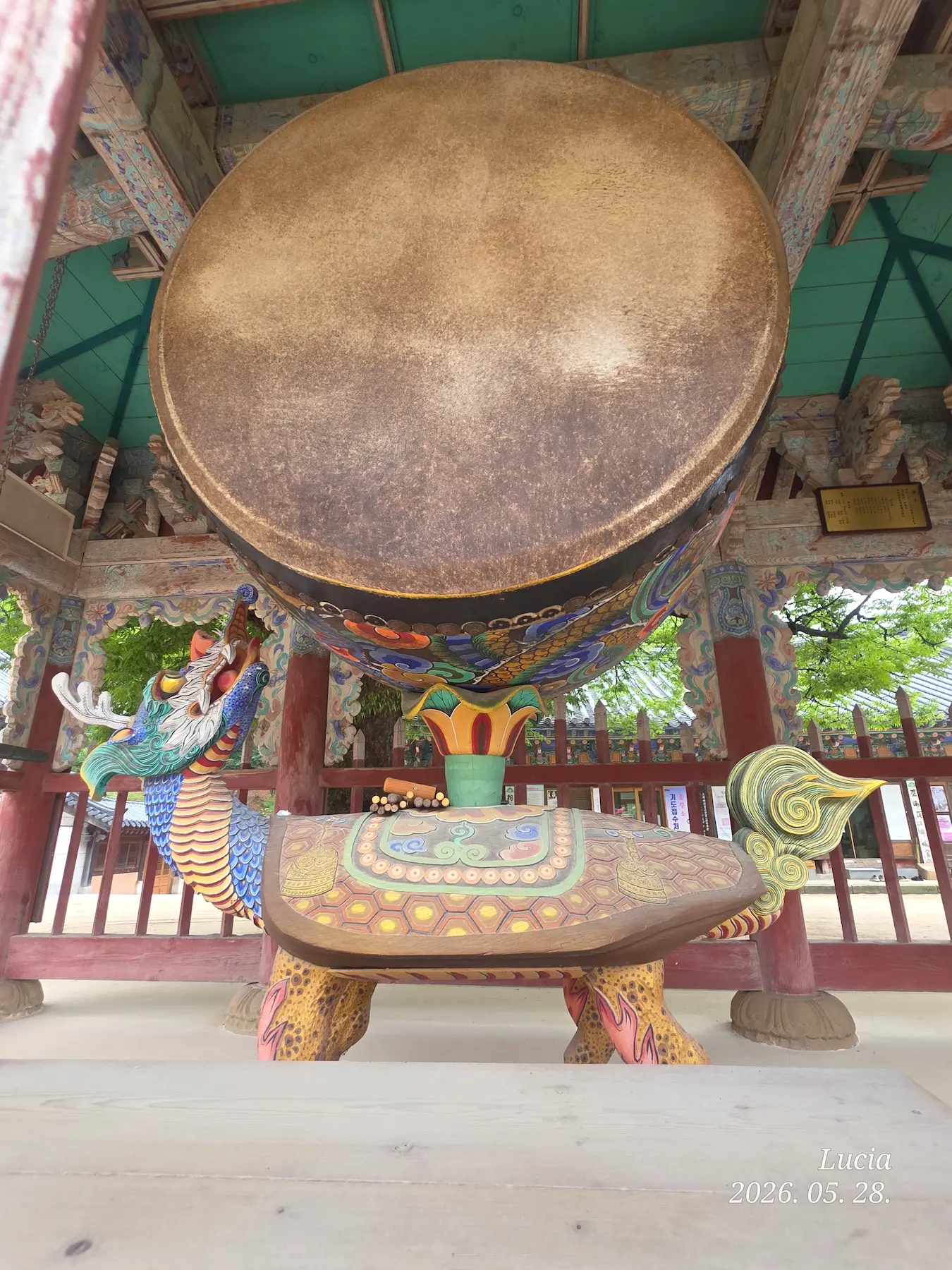
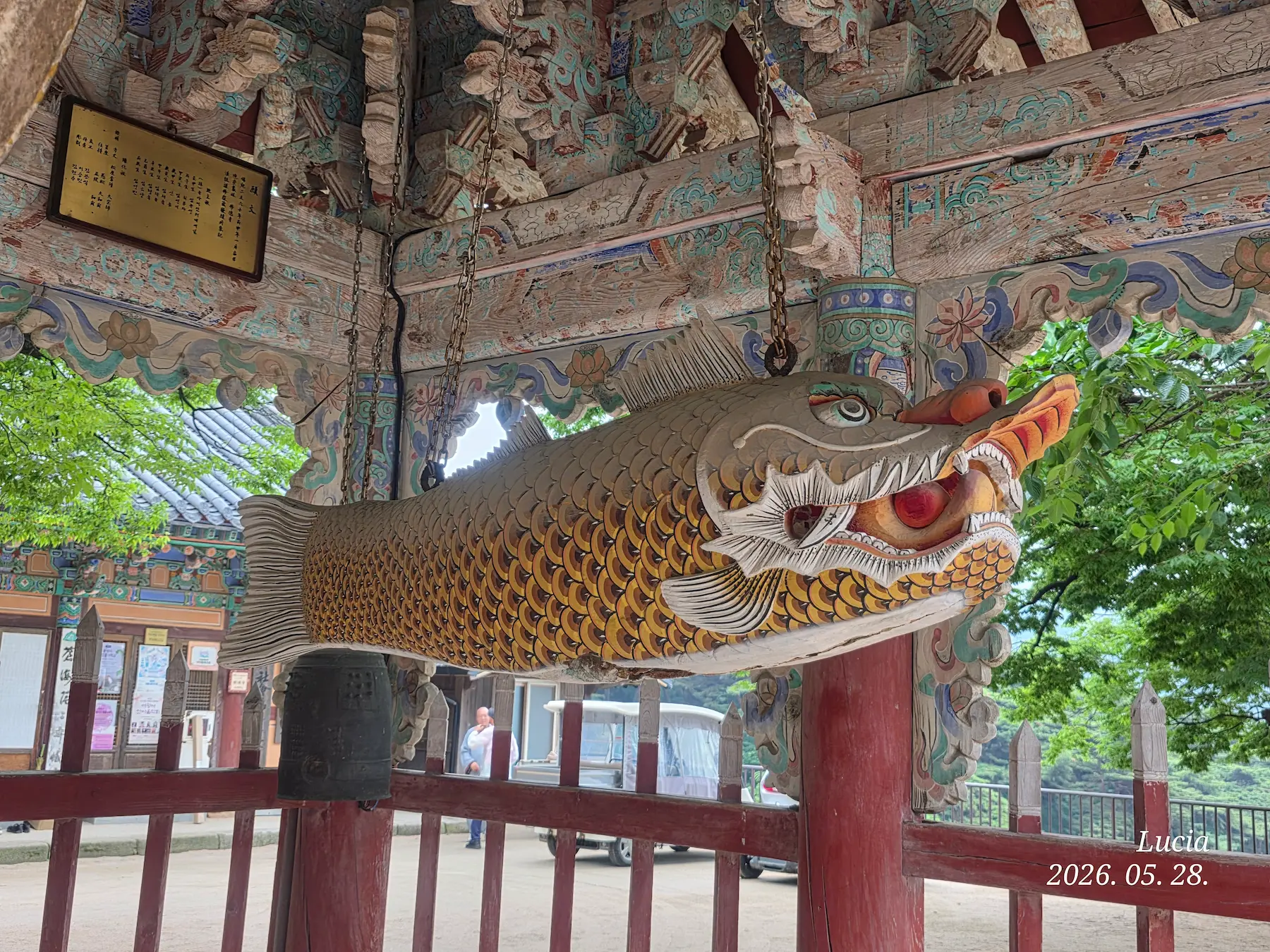
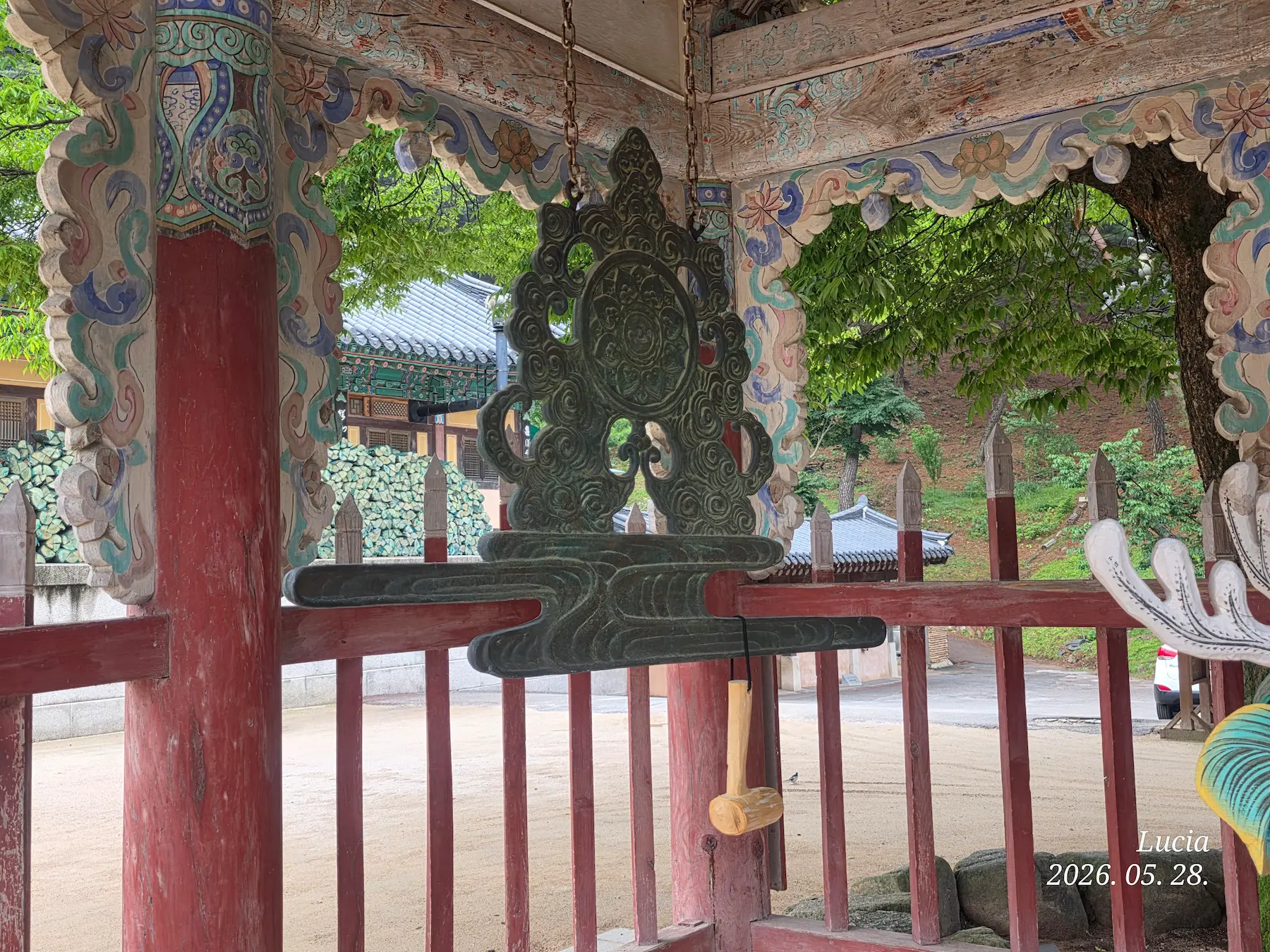
Home to four ritual instruments: the bell (for beings in hell), the drum (for land creatures), the wooden fish (for water creatures), and the cloud gong (for beings of the air). Together they carry a single wish — liberation for all living beings.
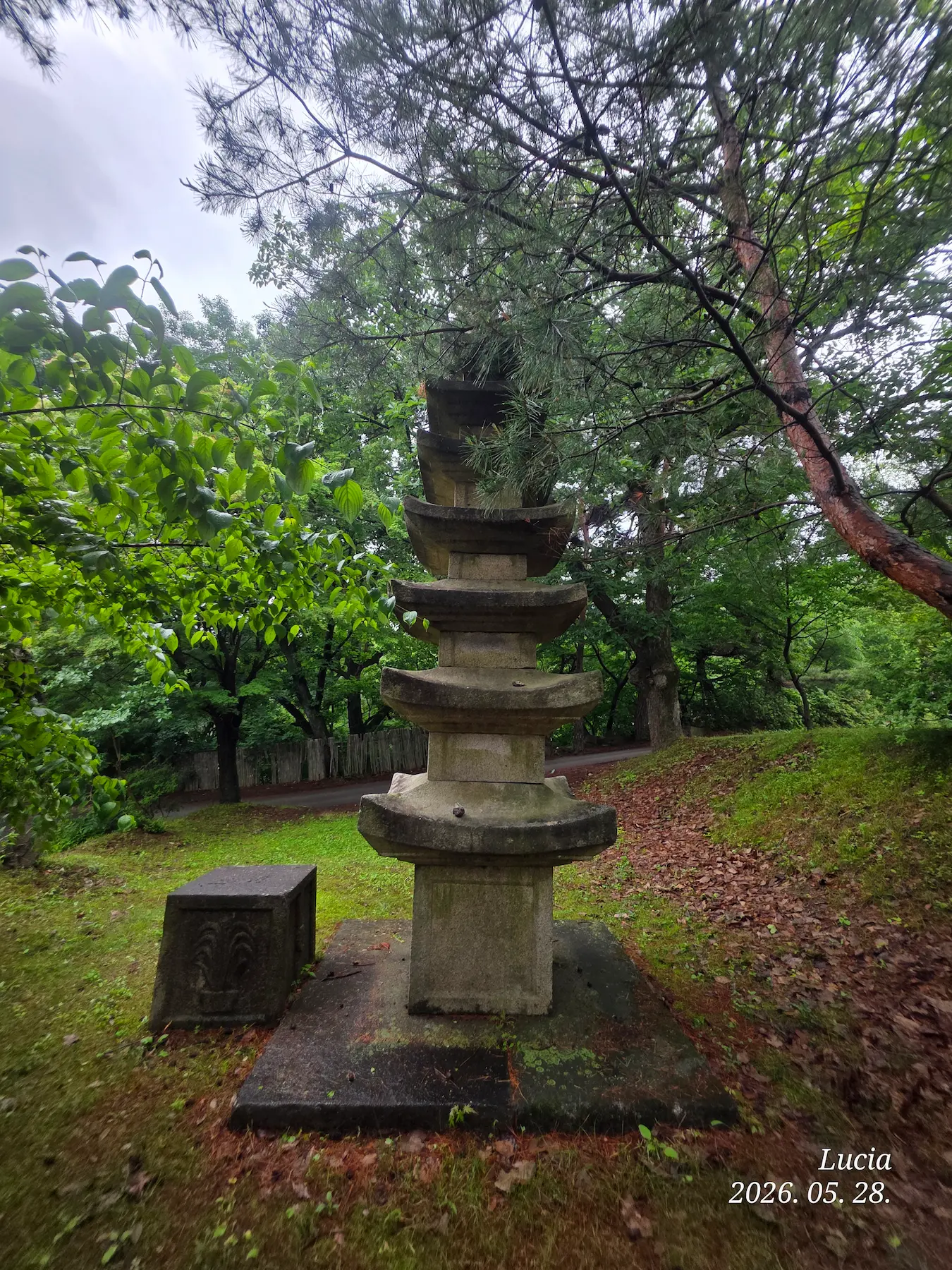
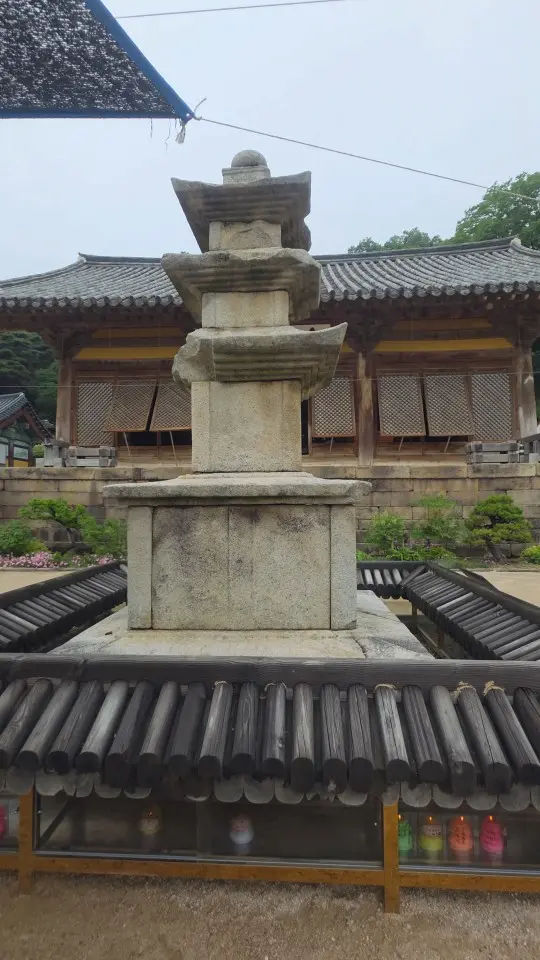
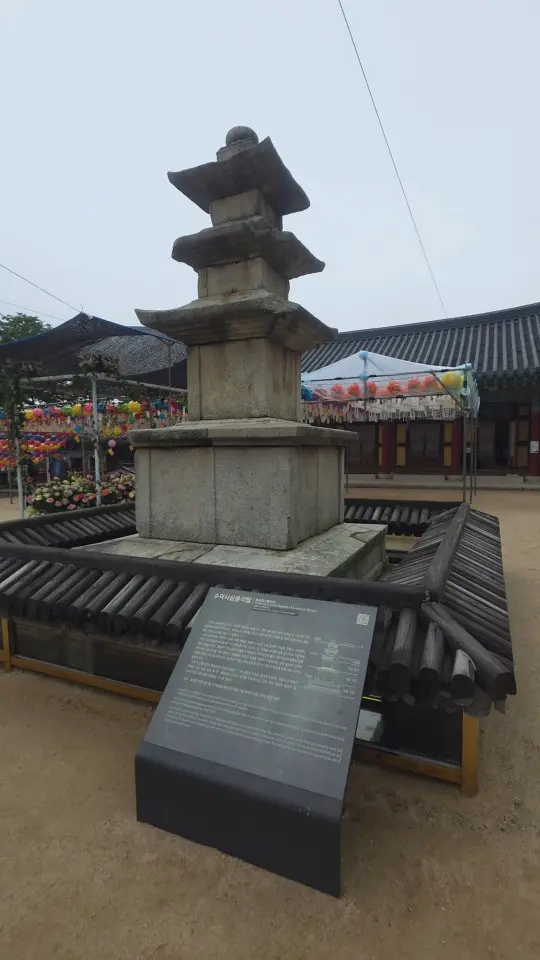
A Goryeo-period stone pagoda designated as a Chungcheongnam-do Cultural Heritage. Its four-tier roof supports and gently upturned corners reveal the graceful refinement of early Goryeo stonework. Worshippers walk clockwise around it while chanting — an act of devotion known as tapdori.
National Treasure
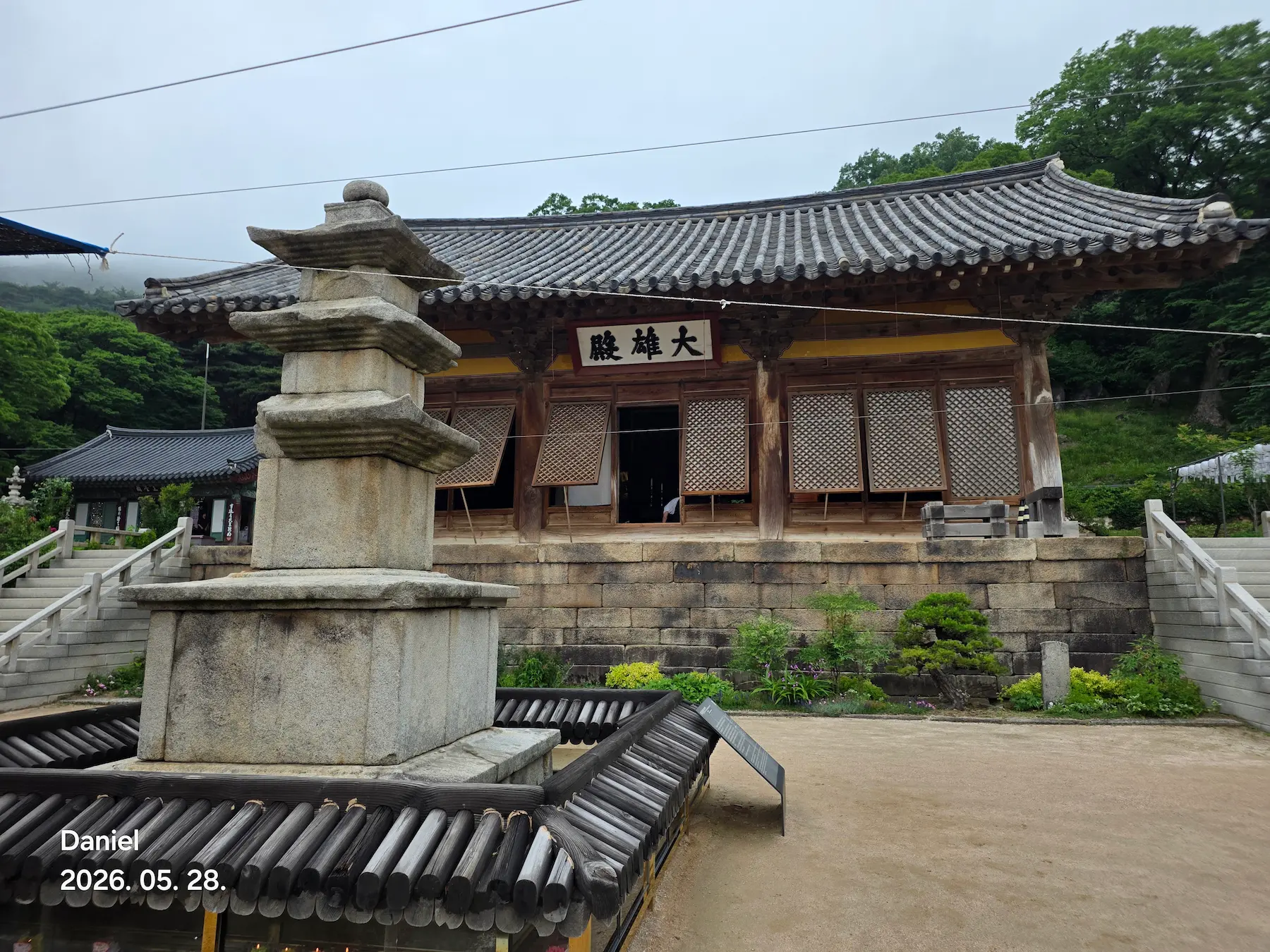
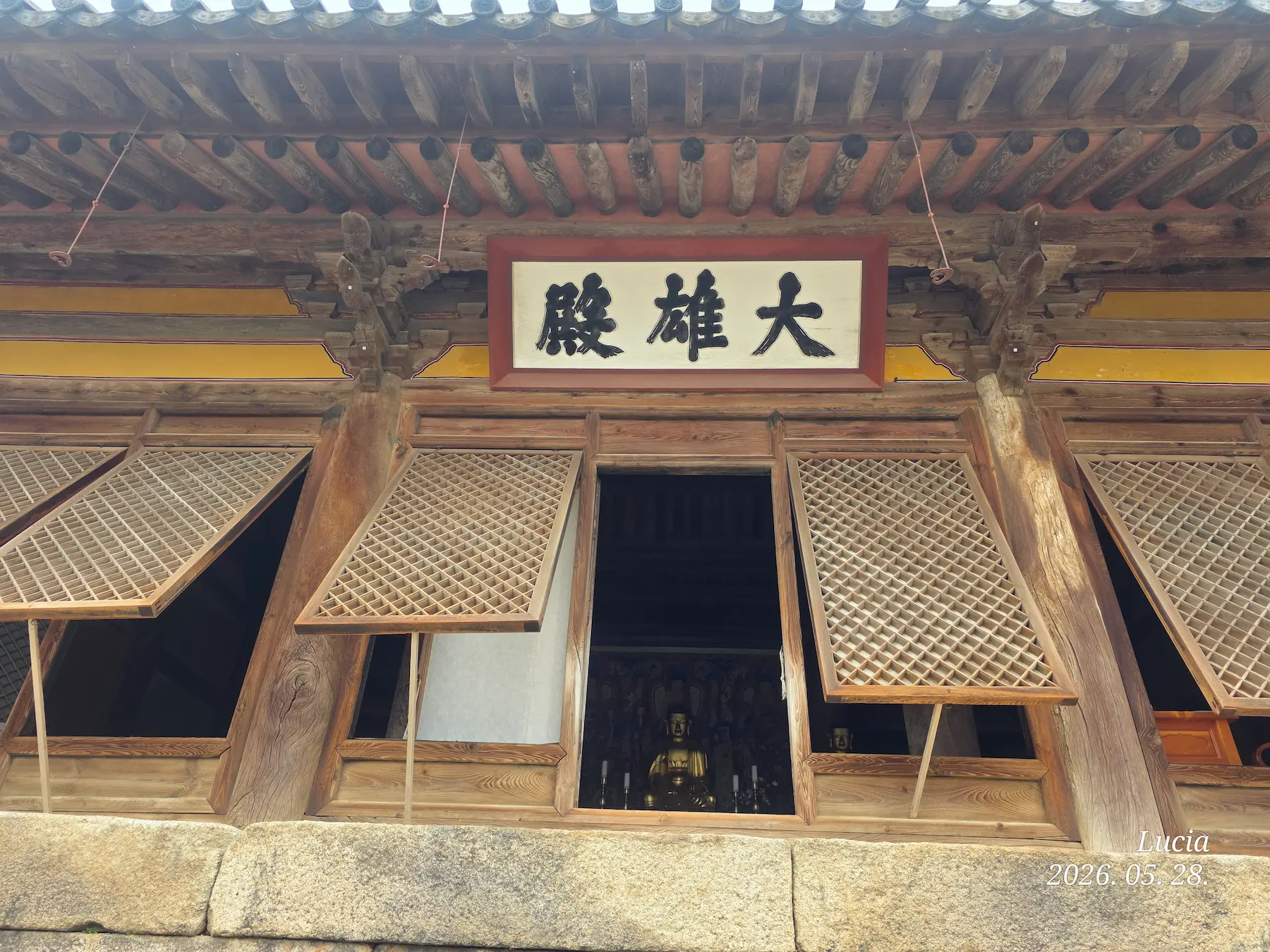
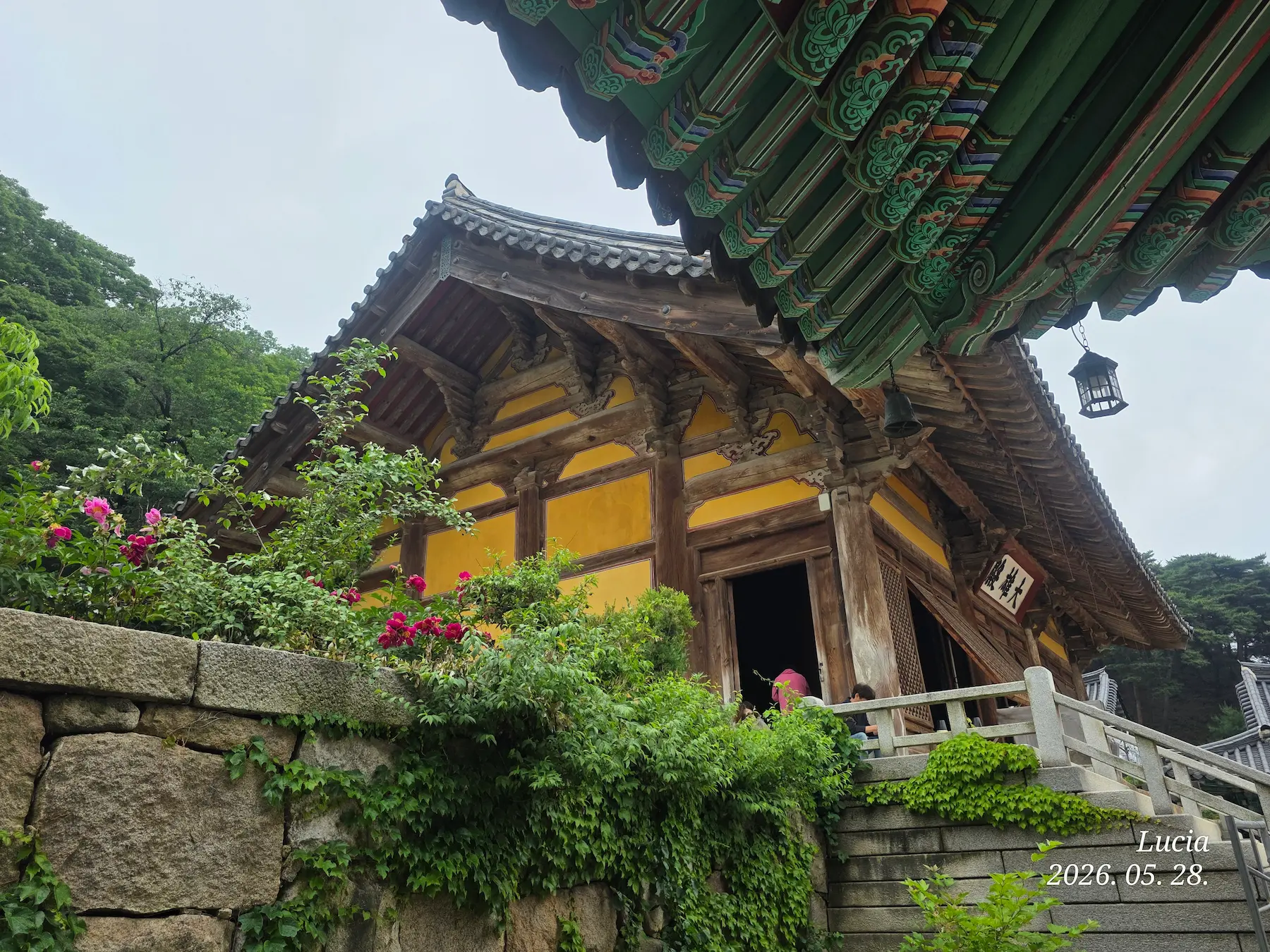
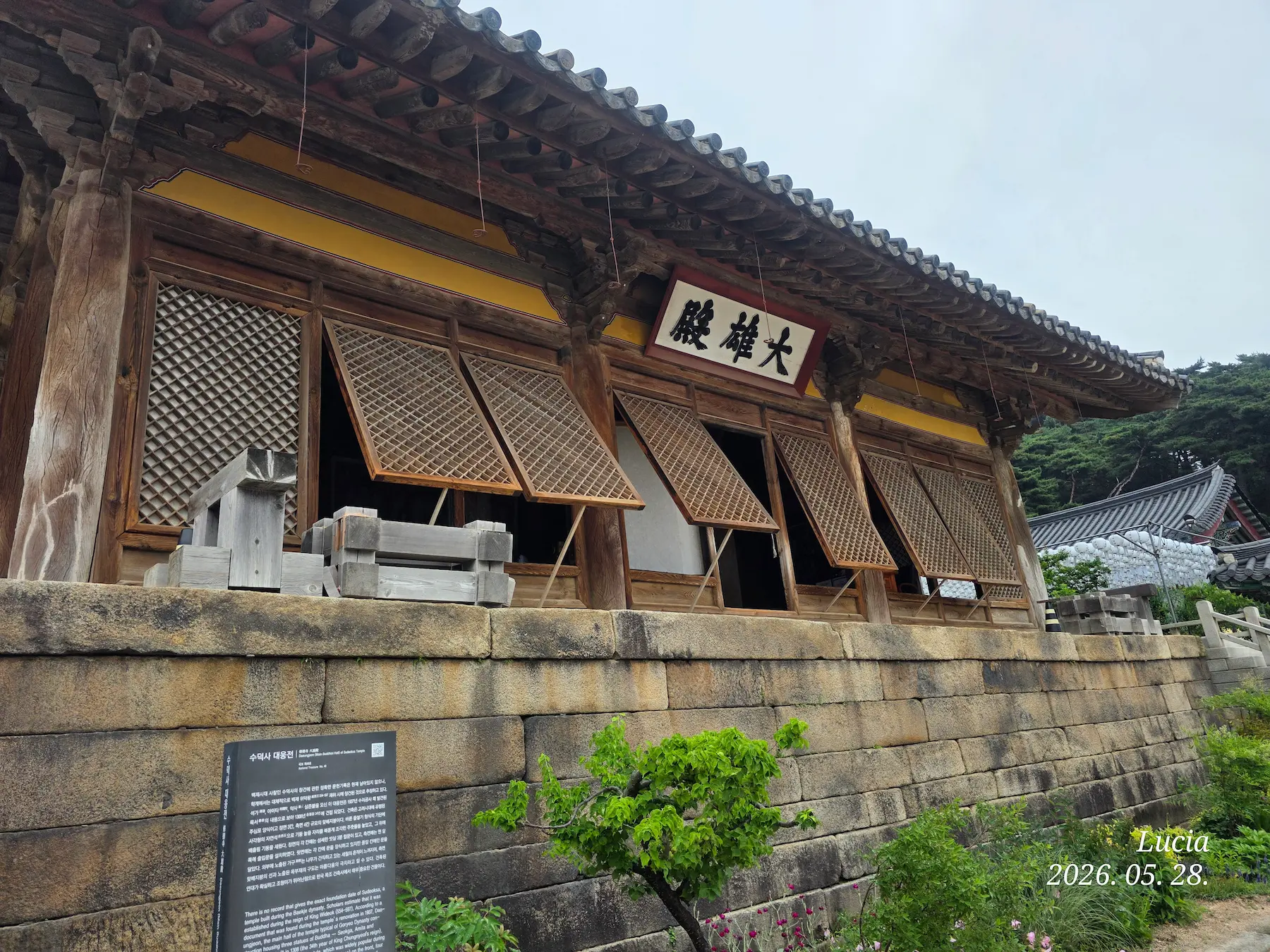
The undisputed highlight of Sudeoksa. Built in 1308 during the Goryeo Dynasty, the Daeungjeon is Korea’s oldest wooden structure with a confirmed construction date — verified by an inscription found inside a roof beam during a 1937 restoration.
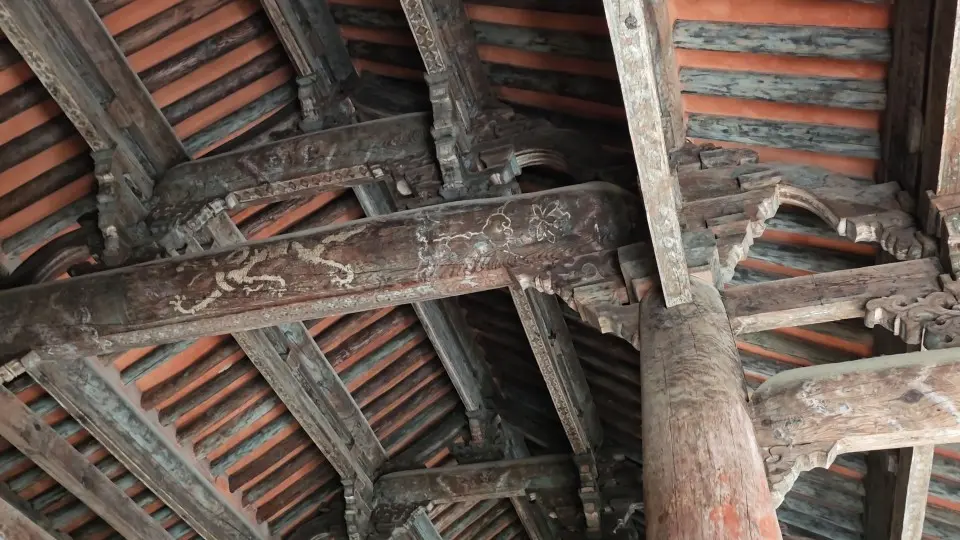
What makes it extraordinary
The gabled roof and column-top bracket system create a masterpiece of restrained Goryeo elegance. The columns are slightly wider in the middle — the classical entasis technique, the same principle used in ancient Greek and Roman architecture.
Perhaps most striking: there are no painted decorations. The dancheong faded naturally over centuries, leaving the bare wood grain exposed. A beauty born entirely from time itself.
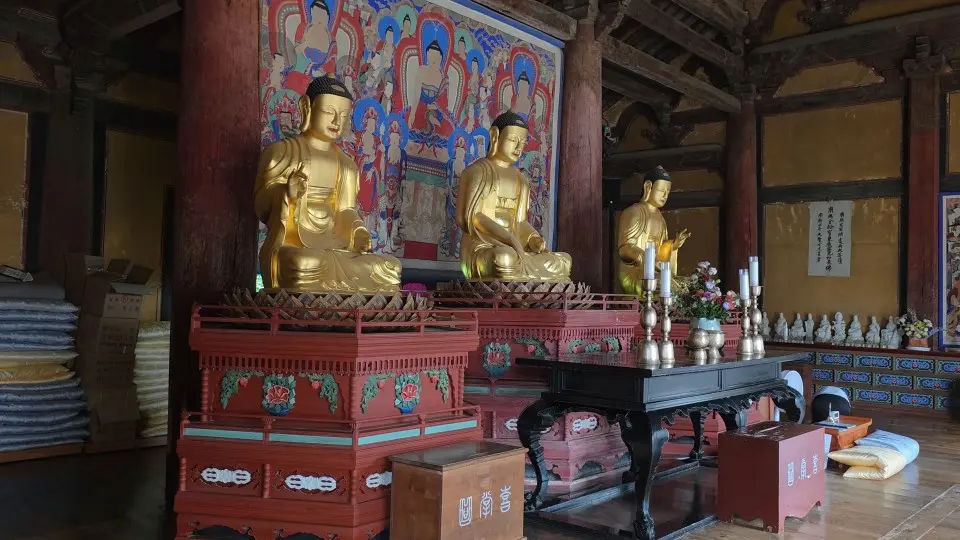
Inside, three gilt Buddha statues are enshrined. The exposed wooden framework above reveals the full artistry of Goryeo construction. Traces of ancient murals remain on the walls.
White lanterns bearing the words “peaceful passage” stand before this hall. Inside, Jijang Bosal and the Ten Kings of the Afterlife are enshrined. Families come here to pray for loved ones who have passed, their memorial tablets kept within.
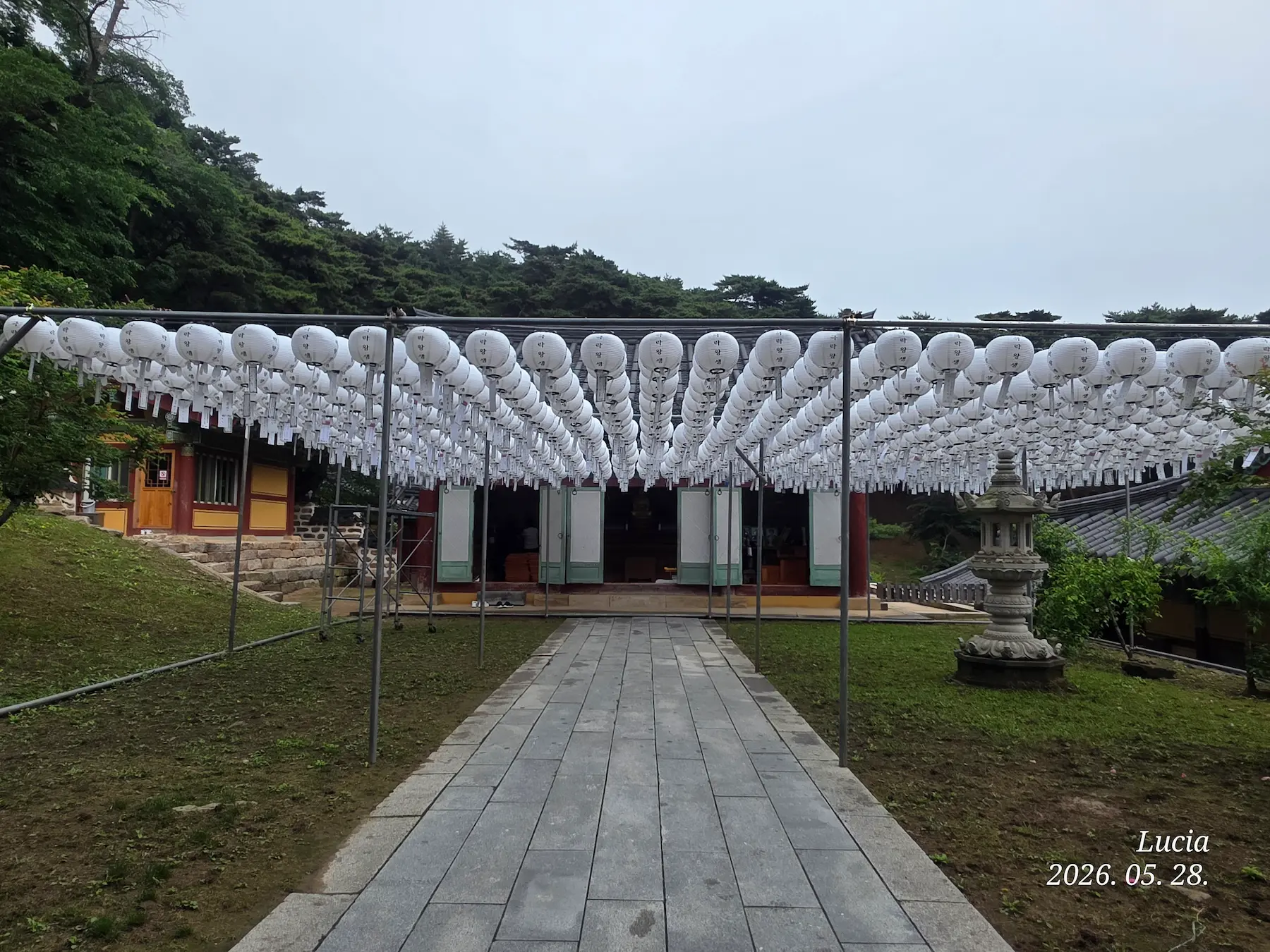
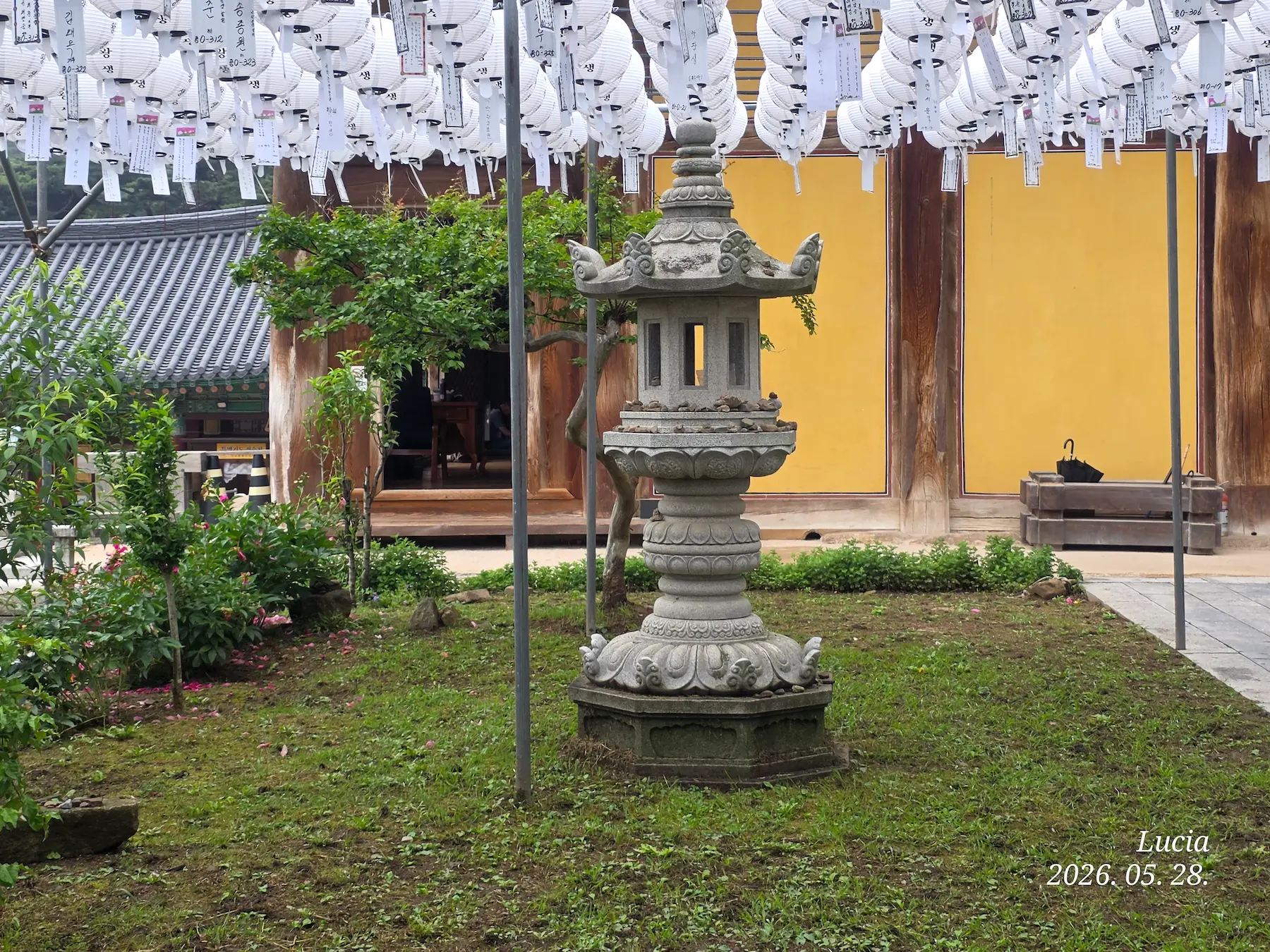
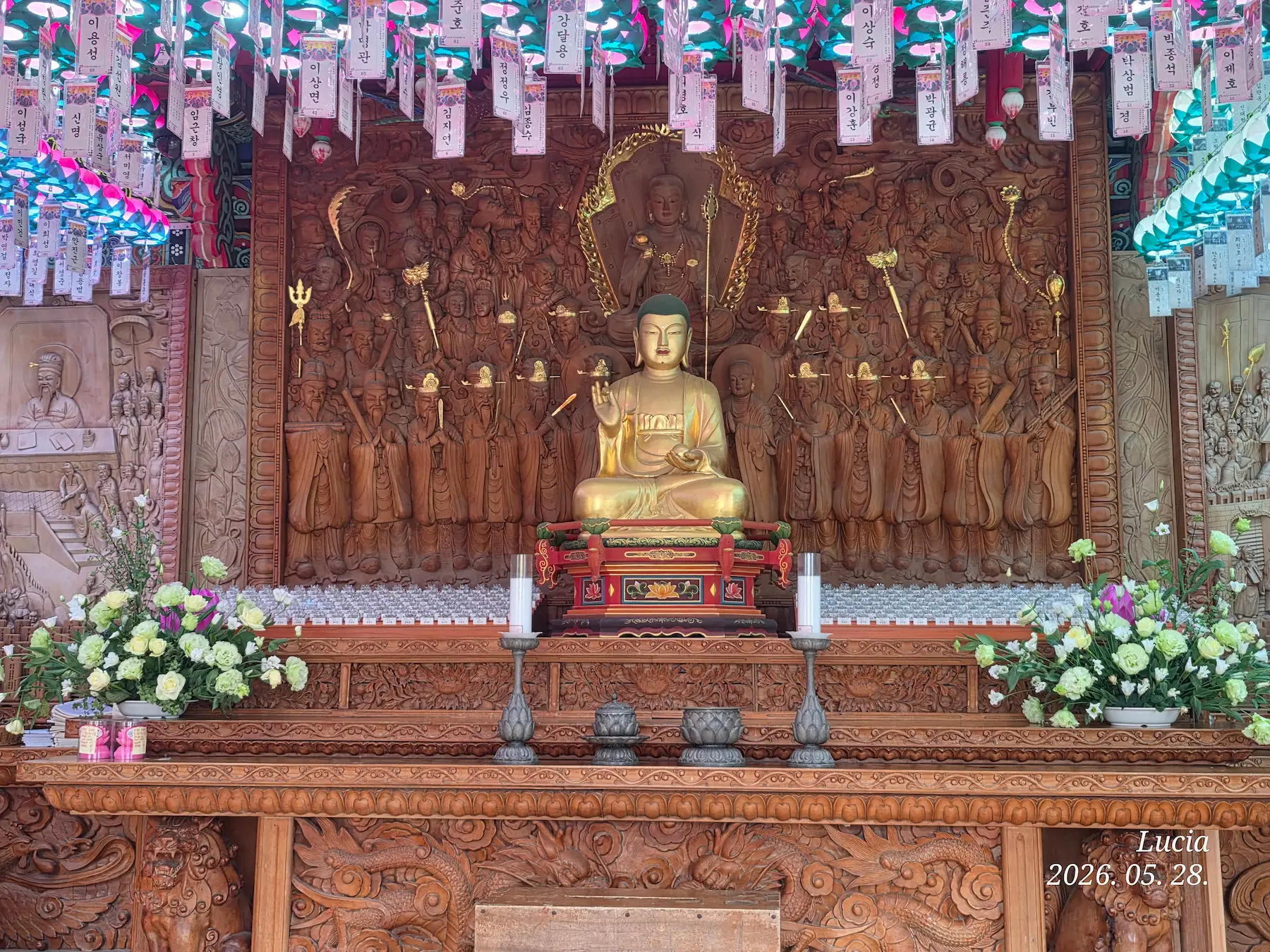
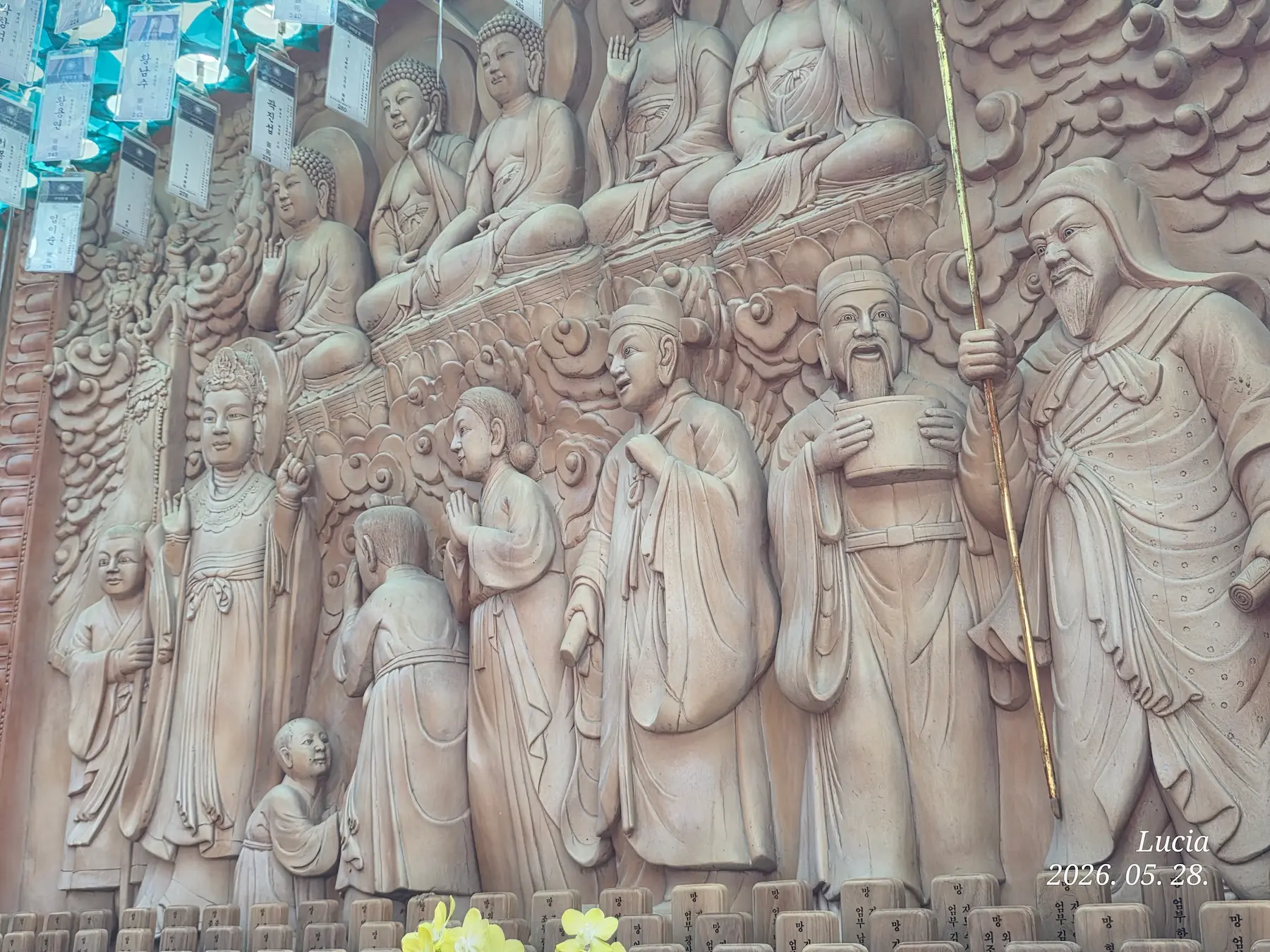
At the highest point of the temple, this hall enshrines the Mountain Spirit, the Seven Stars, and the Recluse. A rare space where Buddhist teaching meets Korea’s ancient folk beliefs.
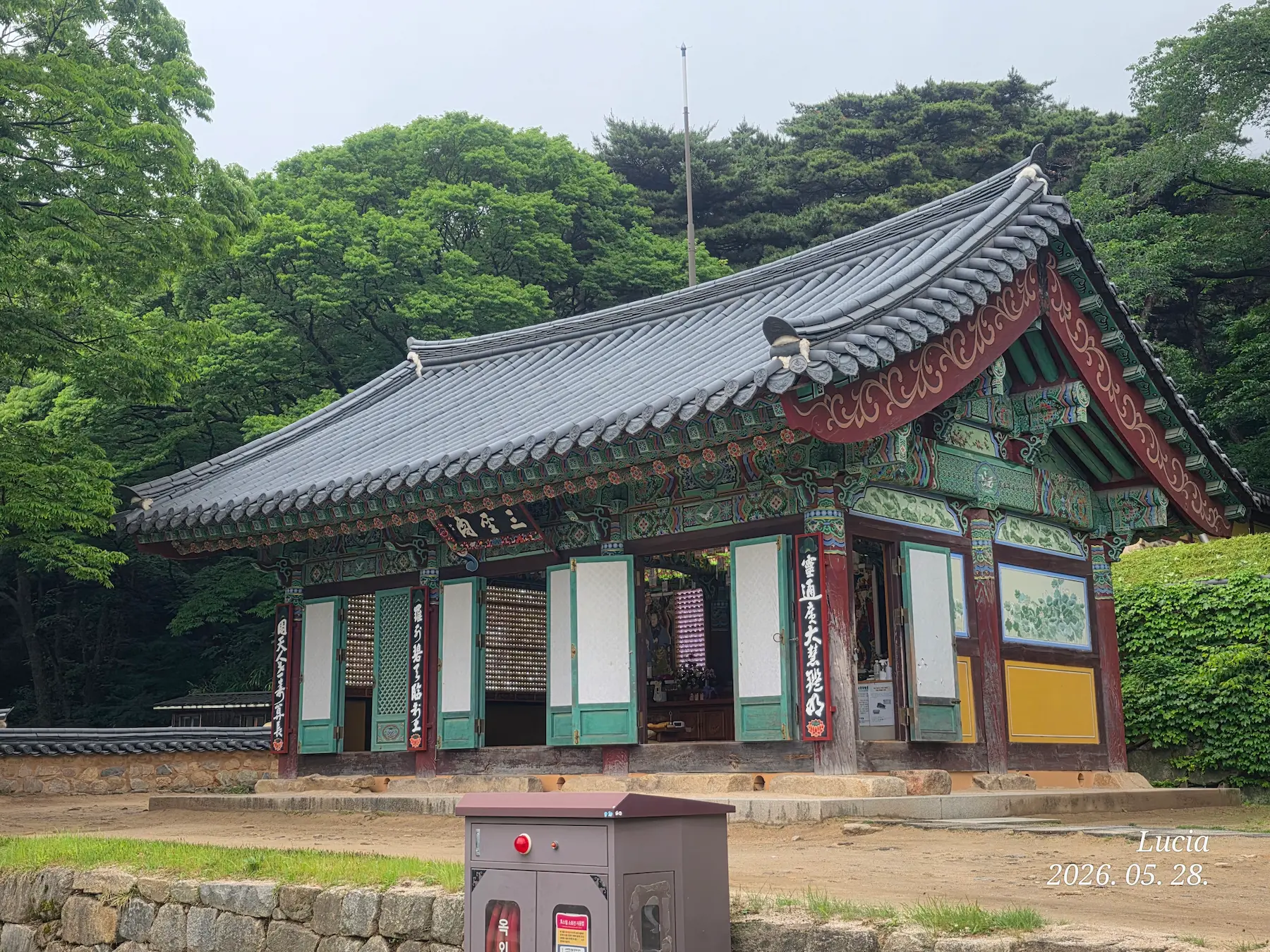
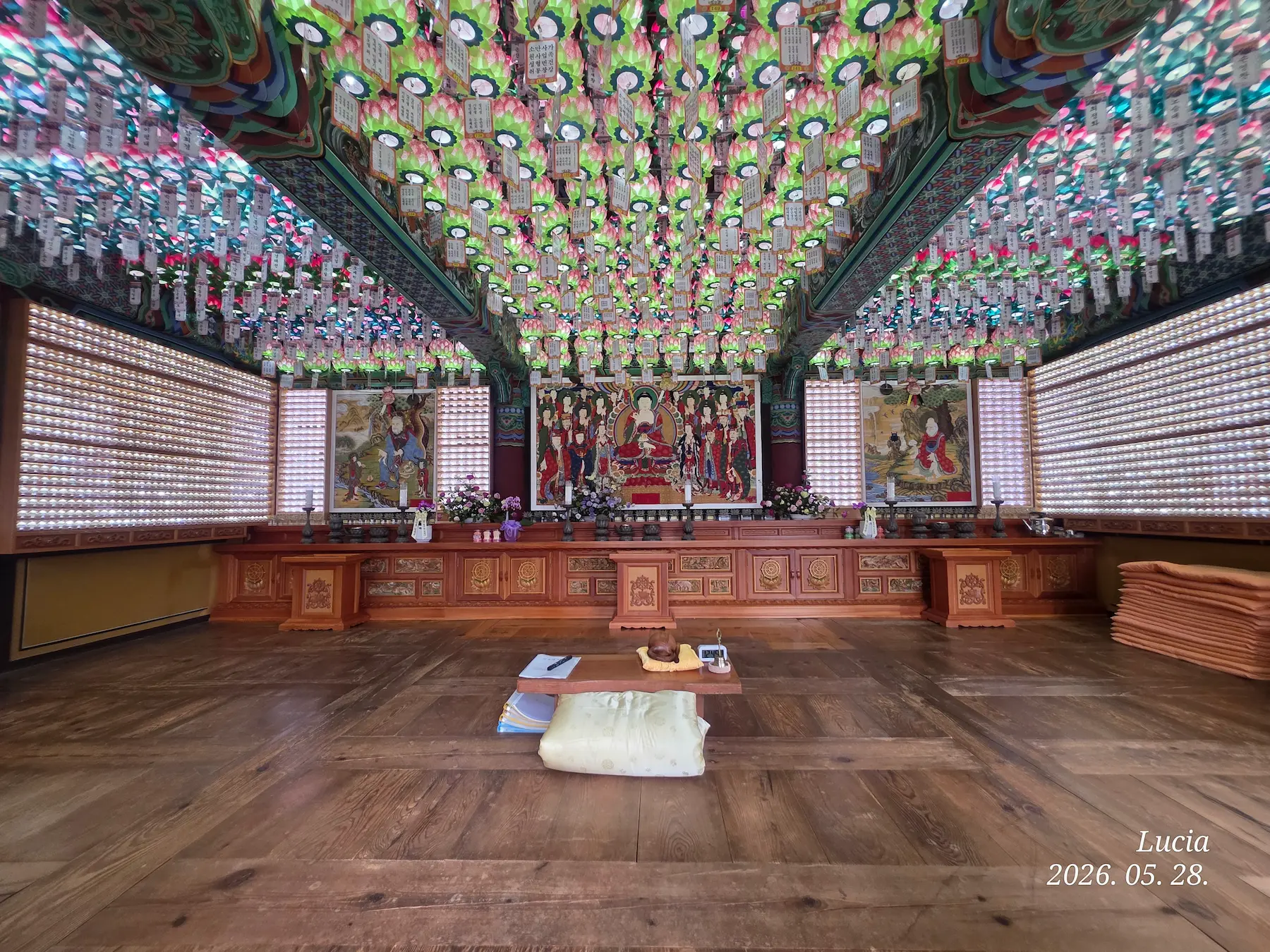
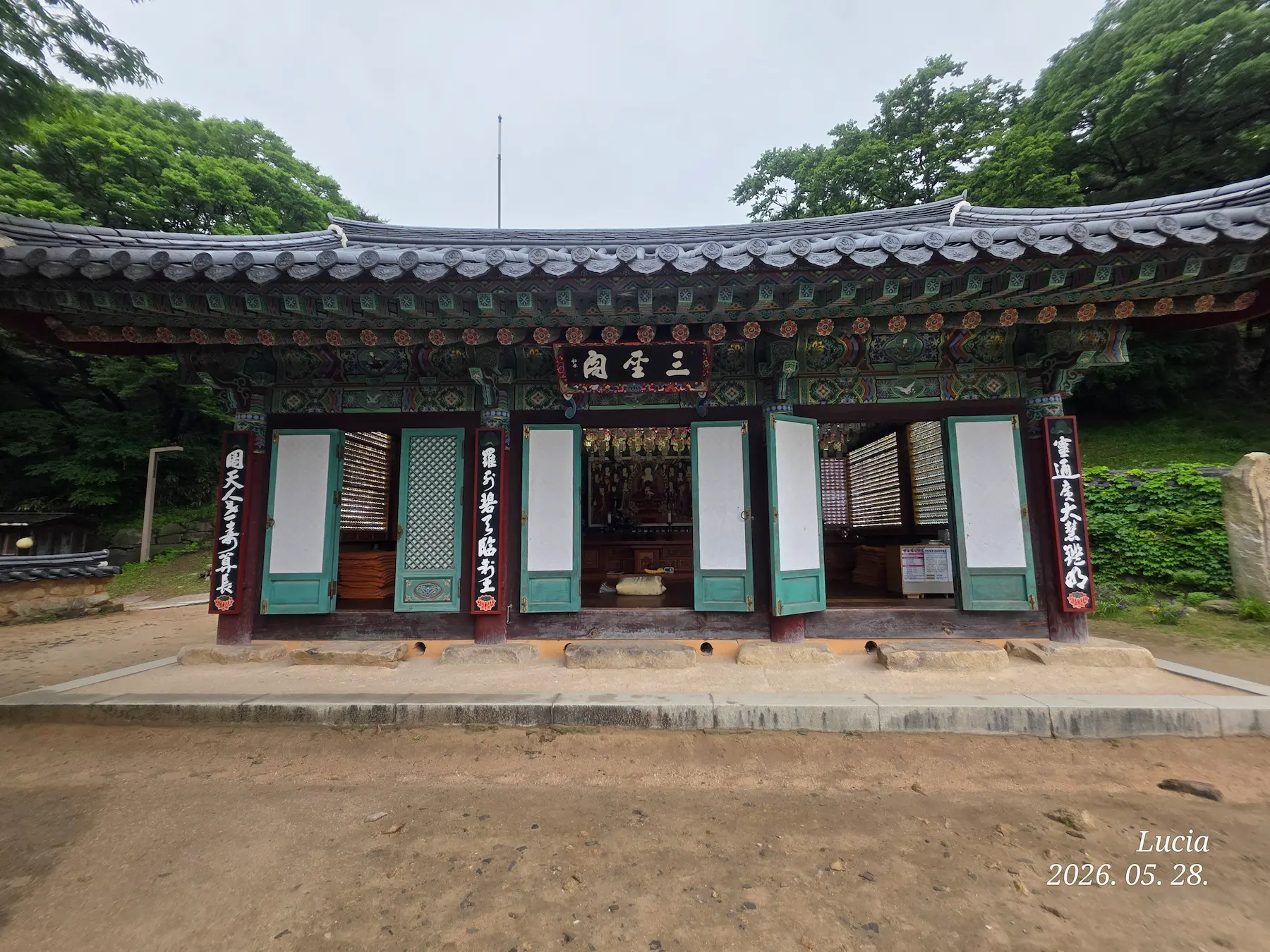
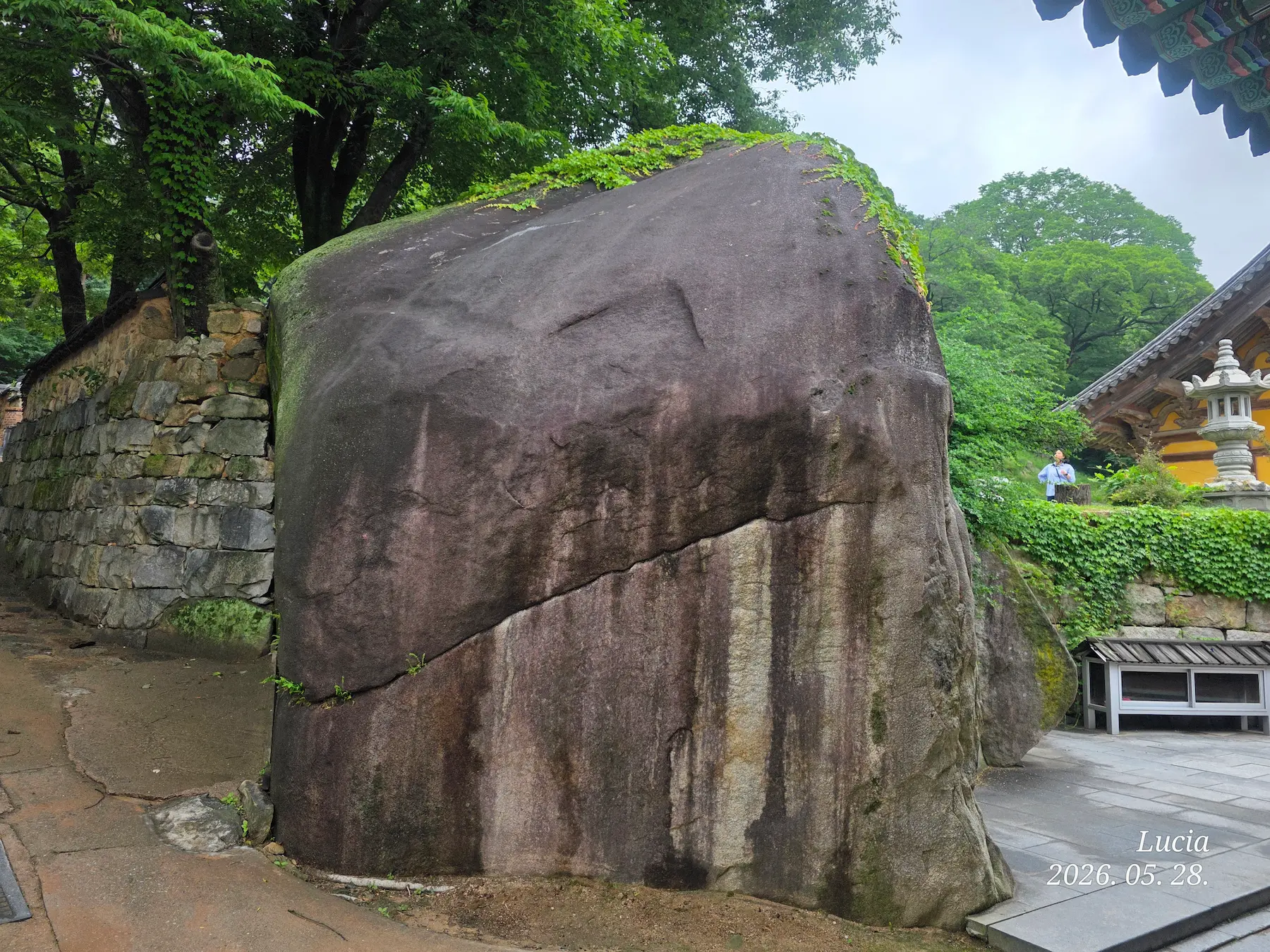
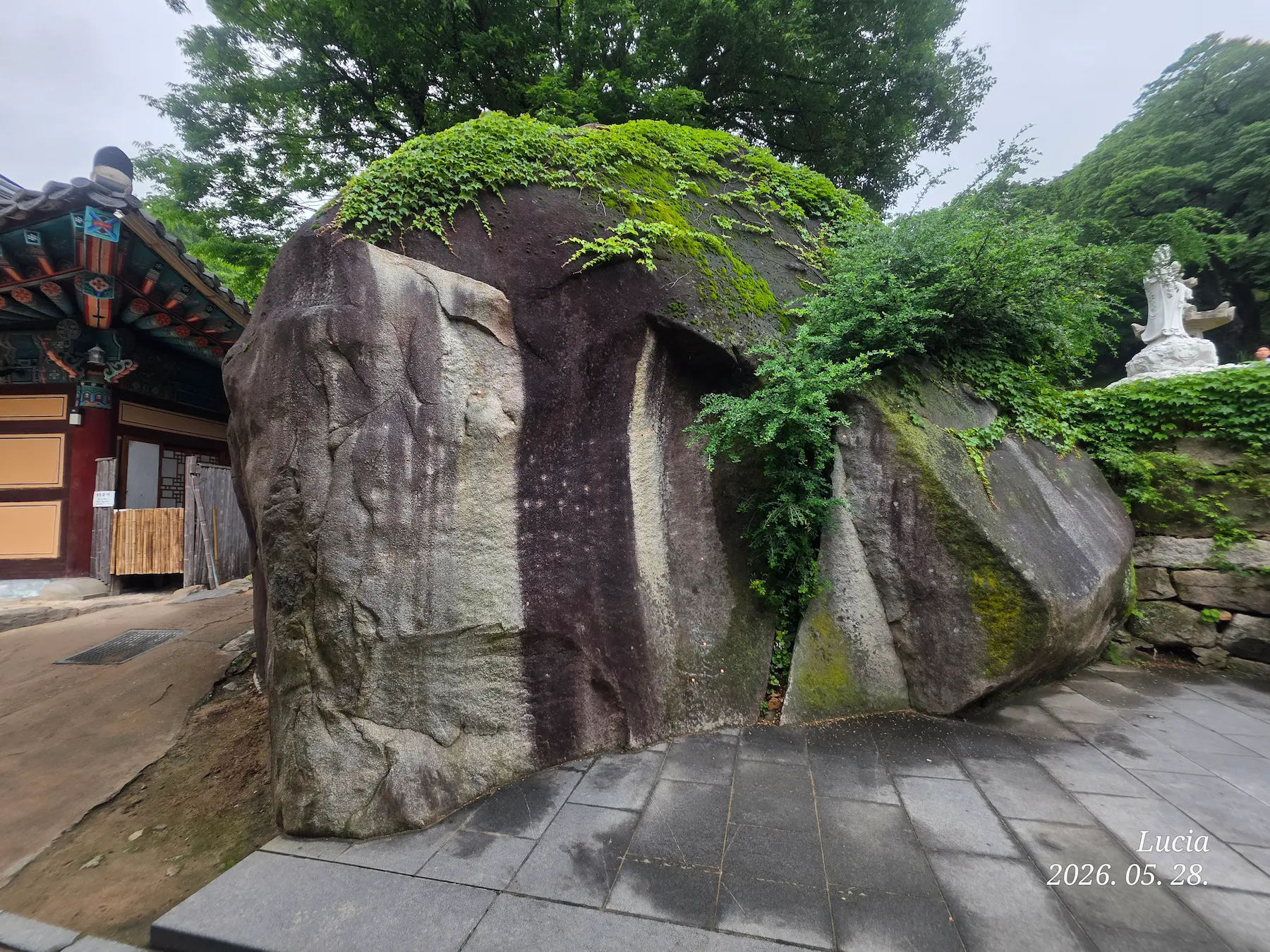
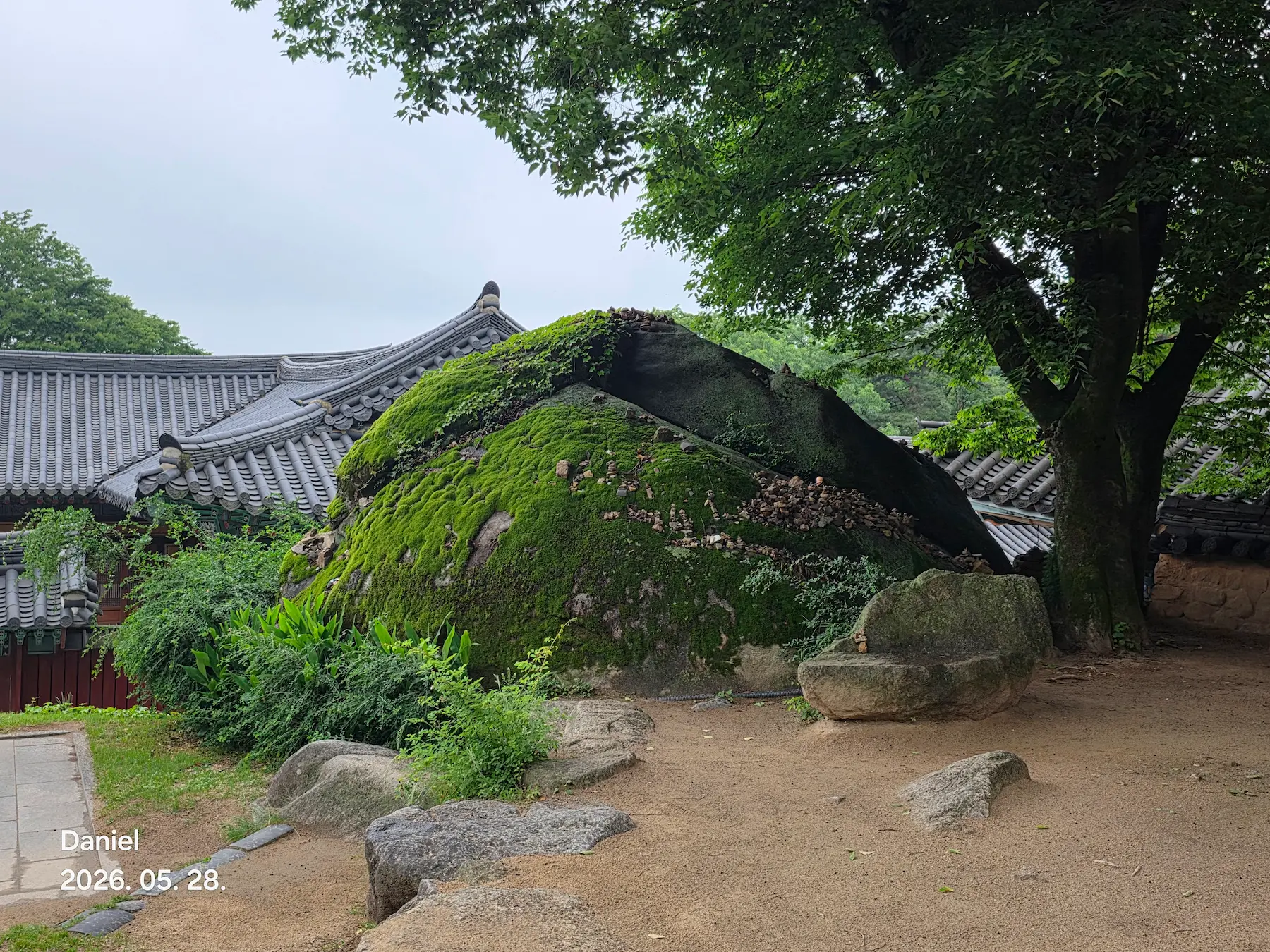
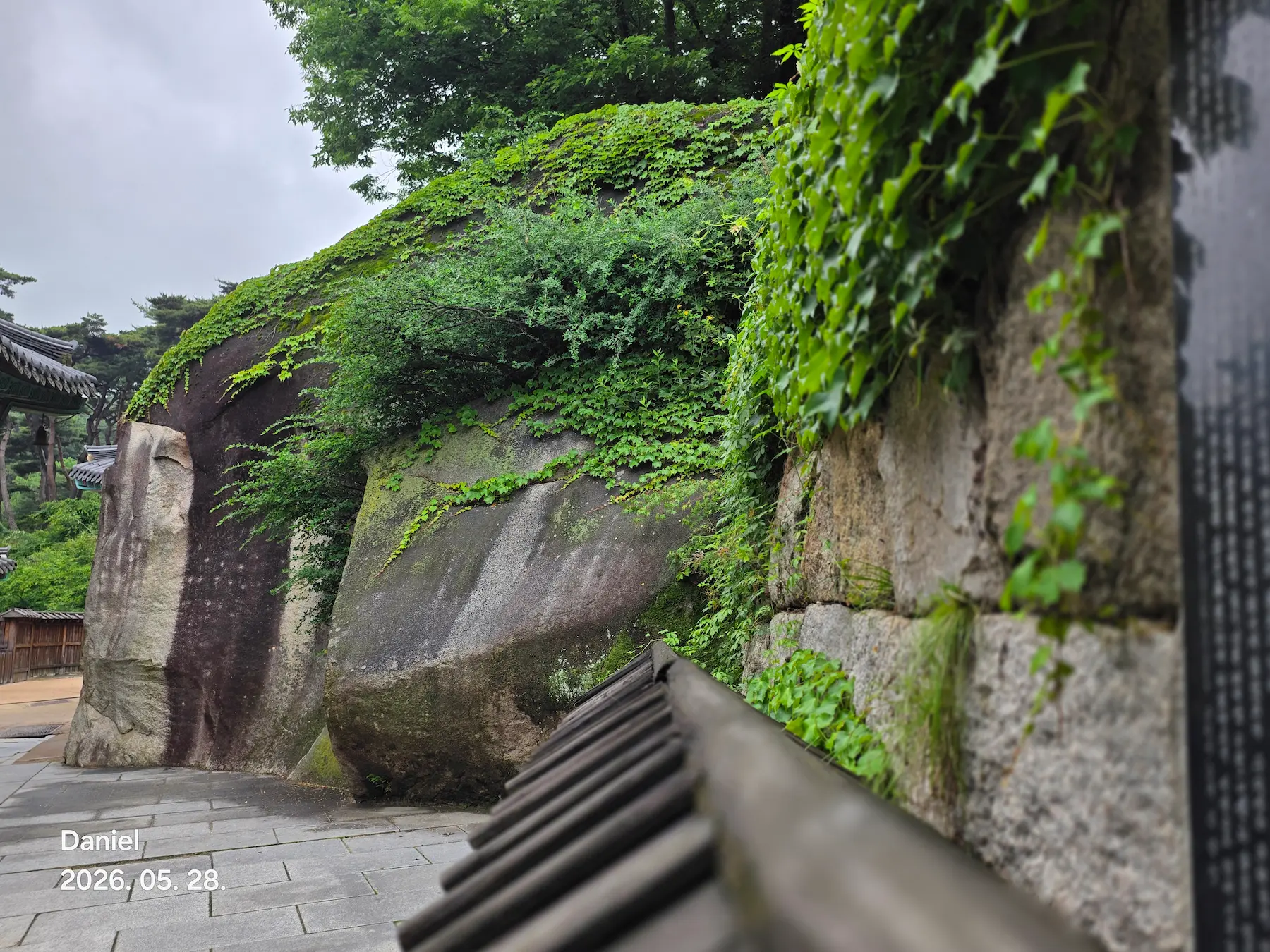
Behind the Gwaneum Hall, a natural rock face emerges from the mountain. Prayers offered here are believed to be heard directly by the Bodhisattva of Compassion — the most sacred space in all of Sudeoksa.
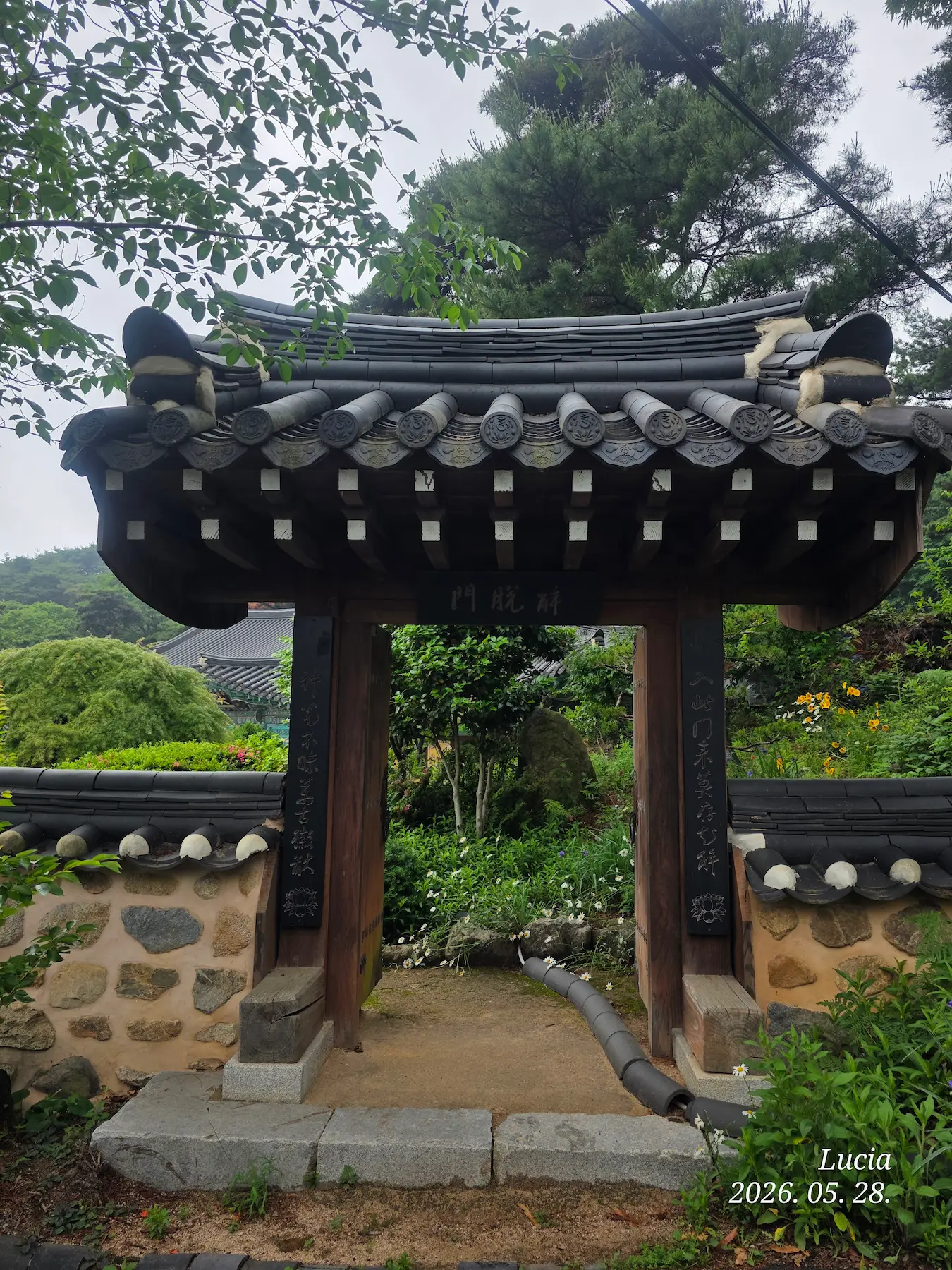
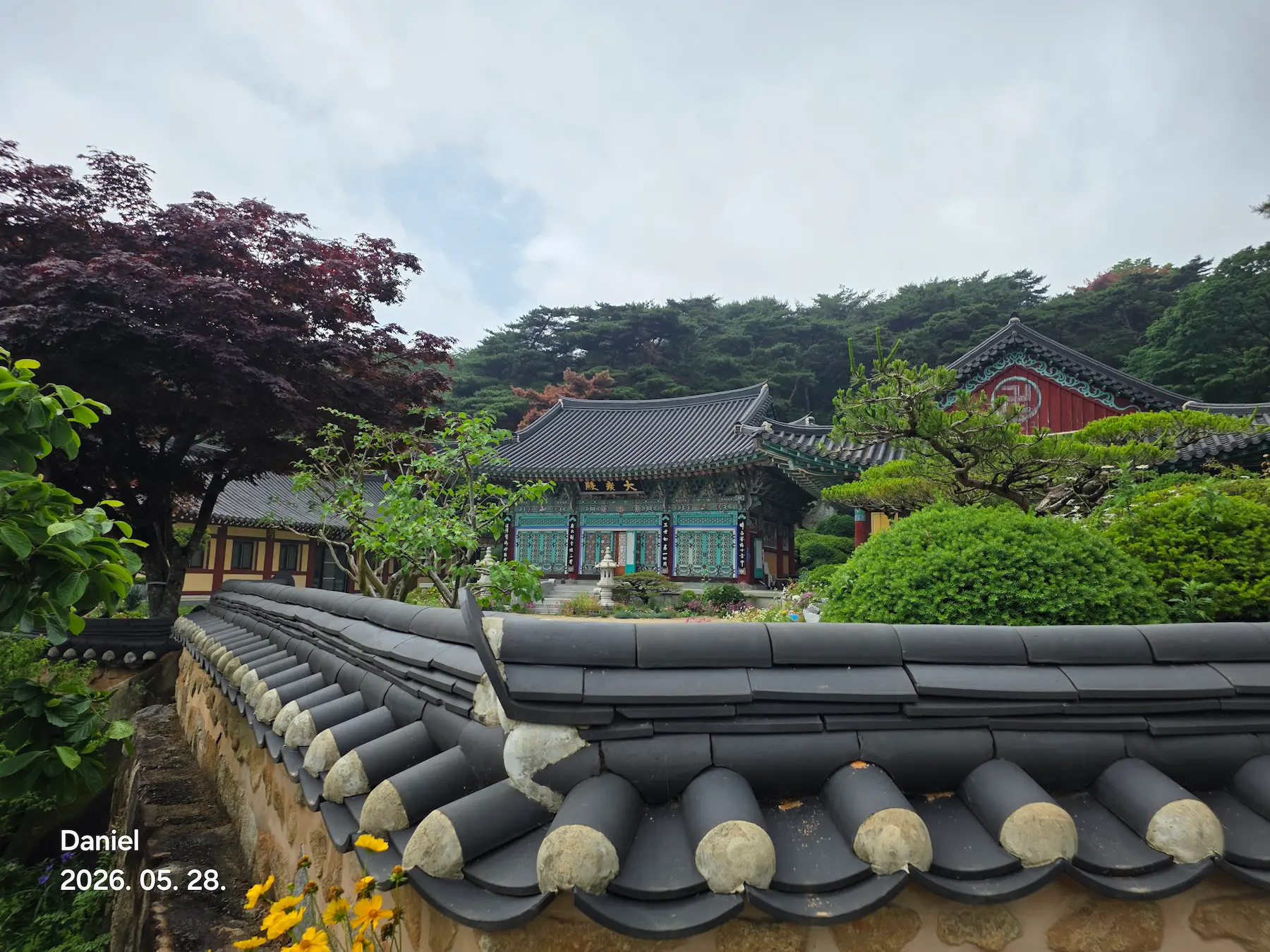
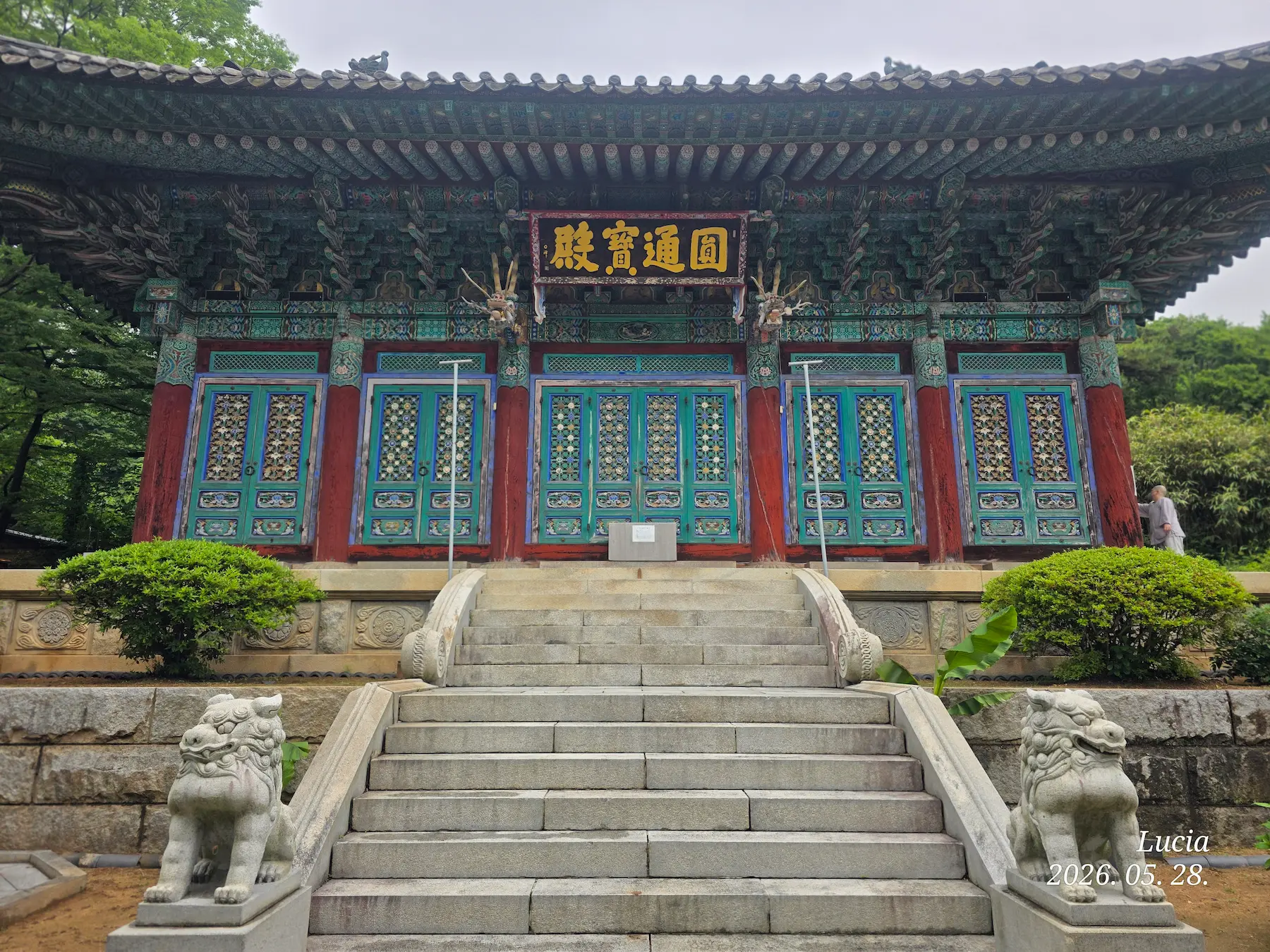
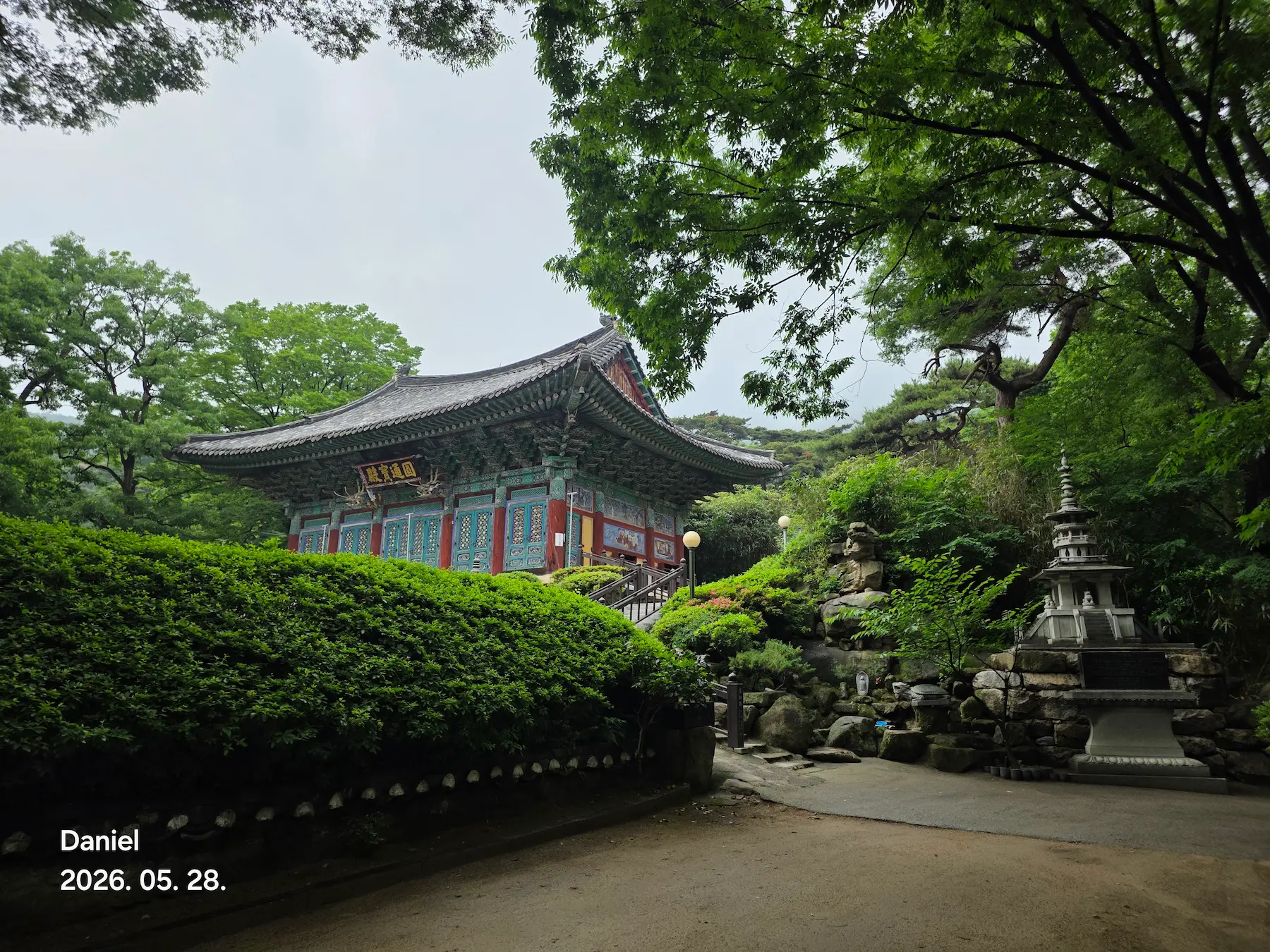
A short walk beyond the main temple grounds, Hwanghidae is a nunnery founded by Zen Master Mangong in 1926. Its main hall, Wontongbojeon, is dedicated to the Bodhisattva of Compassion.
Templestay
A Night in the Mountains
Sudeoksa offers one of Korea’s most beloved Templestay programs, with four dedicated guesthouses: Baekundang (White Cloud Hall), Simyeondang (Deep Stillness Hall), Wanwoldang (Moon Gazing Hall), and Gamrodang (Sweet Dew Hall).
Guests wake before dawn to join the monks for morning chanting, learn Buddhist tea ceremony, try prayer bead making, and experience the profound stillness of mountain temple life.


Reservations: templestay.com
Travel Tips
Before You Go
Yesan-gun, Chungcheongnam-do
Sunrise to sunset, year-round
Free
Free large lot at entrance
Tofu cuisine & mountain vegetable set meals along the entrance path
Spring (cherry blossoms) and autumn (foliage)